I once read somewhere that around 60% of women are horror fans. The number seemed like an exaggeration at first, mostly because, like many, I’d been conditioned by society to view monsters and “scary stuff” as a “man thing.” The more I mulled it over, though, the more sense it made.
As a genre, horror focuses on a protagonist’s ability to self-actualize through showing courage in the face of fear. It pits a single victim against impossible odds and a supernatural, scientifically unexplainable, or ambiguous monster that tests their limits. Horror is, at its core, a safe exploration of discomfort and power imbalances.
It’s no coincidence that some of the best-known names in classic horror are women – Anne Rice, Mary Shelley, Shirley Jackson – and some of the most popular modern pieces have been created by women: Silvia Moreno-García’s Mexican Gothic, Isabel Cañas’ Vampires of El Norte, and Michelle Garza Cervera’s Huesera, to name a few. Not surprisingly, the genre’s favorite tropes also center women: the final girl, the femme fatale, the damned victim, or the vengeful woman.
Much like how things go in real life, horror depicts women experiencing violence while men (or some type of man-coded monster, entity, or patriarchal society) inflict it upon them. Think about it: in beloved classics like the Friday the 13th franchise, Jason Voorhees tortures Alice Hardy and the various other final girls of the film series. Freddy Krueger spends most of the Nightmare on Elm Street franchise traumatizing Nancy Thompson. Even more recent examples fall into this same pattern: in the widely acclaimed Obsession, Bear forces his unrequited feelings onto Nikki, robbing her of all personhood after making his wish.
Scary movies has long been marketed towards men, which is how I ended up thinking it was a “boy thing” as a teen. But women have found catharsis for it as we face real-life fears. Like having to go back to the same college classroom where you were brutally gang-raped by a “friend” and his fraternity brothers or the alarming average of 10 femicides that occur in Mexico every day.
Because of that, the narrative has shifted in the last two decades or so. For me, everything changed after watching the 2009 comedy-horror Jennifer’s Body: a film marketed towards men (Roger Ebert described it as “Twilight for boys.”). In reality, it was a woman’s wildest revenge dream. It was also the first time that I consciously watched a pretty girl (or just, a girl, period) take her power back and inflict the horror onto others: finally, a woman who was not a victim, but a (terrifying) force to be reckoned with.
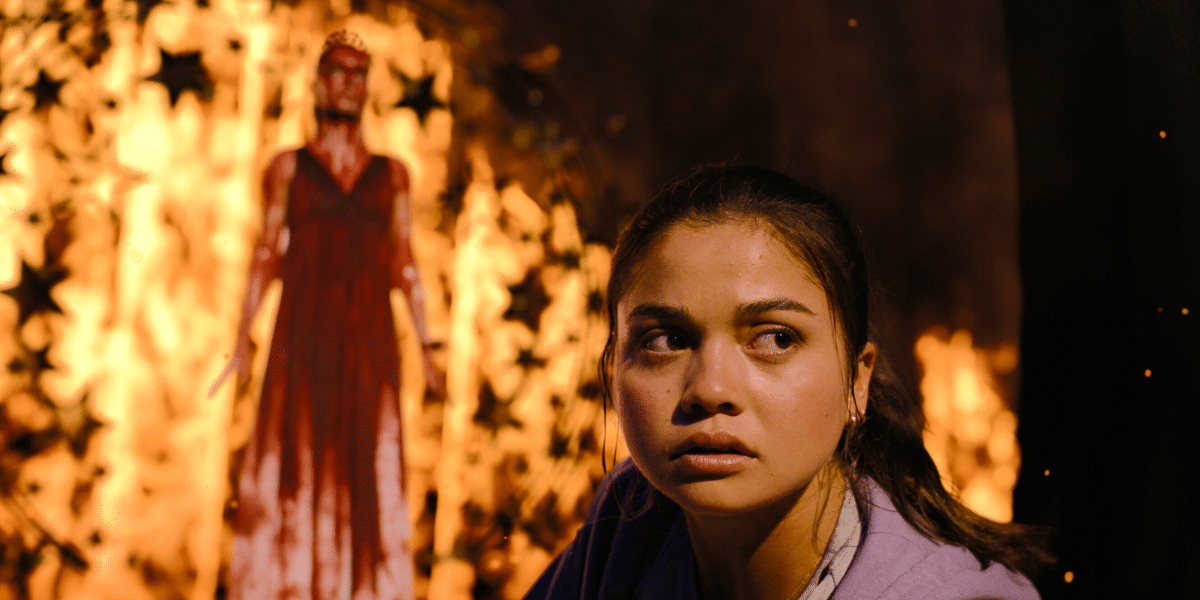
Then came Ratched, Pearl, Queen of the Cicadas, Promising Young Woman (a film that I’ve been thinking of more and more these days), and Carrie (in her many iterations, including the version by Mike Flanagan). More women taking matters into their own hands and showing us what could happen if women allowed ourselves to be our best rage-filled, monstrous selves.
This has been said a million times, but movies, shows, and books are never “just” random. Sure, they are entertaining, but the media serves as a thermometer of sorts, depicting what a society deems acceptable, horrific, shameful, joyful… Yes, even the movies that are supposed to scare the living hell out of us. Actually, I’d argue especially the ones that are supposed to scare us (which is why the rise in “tradwife” content pushed by influencers like Nara Smith and Ballerina Farm is an especially scary brand of modern horror).
I think many of us are drawn to scary movies because they provide a safe space (ironic, I know) to process systemic violence, to examine our suppressed rage, fear, and anxiety of a world that wants us weak, silent, small, or even dead. We are drawn to it because it we can explore these things and get to a victorious ending. Even in the cases where it’s women inflicting the violence onto others, it’s only natural to be drawn to a form of media that echoes our own experience and offers respite, comprehension, and catharsis.
Sure, being a woman can be a beautiful thing, but it’s also a scary one. I often see the phrase “anything you can do, I can do bleeding” thrown around online. It’s mostly used to empower (as it should be, because how is that not badass?!) even as it reflects that many girls deal with blood, discomfort, and sometimes intense pain as just part of life.
We are taught to hide our pain, our rage, our blood, our fear, our trauma, or our very nature and smile through it. Society wants us ashamed, and yet girls and women are finding ways to thrive in those conditions. How is that any different from the monsters and final girls we see on our screens?
Horror provides women with an excuse to forget and the space to explore what we would otherwise not dare. We get to experience fear, despair, and the worst bits of our psyche in a controlled manner. In these “fictional” depictions (and I use quotes because living as a woman for 34 years has taught me that so much of the violence we watch on TV is not really fiction), we don’t just survive. We exact bloody revenge and find peace along the way.
