The first question any new adaptation of Carrie has to answer is obvious: Why?
Stephen King’s 1974 novel already inspired an iconic 1976 film. Then came a sequel, a TV movie, another remake, and enough references, parodies, and girls covered in fake blood to make Carrie White’s prom part of our collective memory. We know the bucket is coming, and we know where it lands.
Mike Flanagan knows that too. His eight-episode Prime Video series doesn’t waste time pretending it can surprise us by simply repeating what Brian De Palma did beautifully fifty years ago. Instead, it asks a more interesting question: What would happen to Carrie White now?
The answer is terrifying because the cruelty no longer ends when the bell rings.
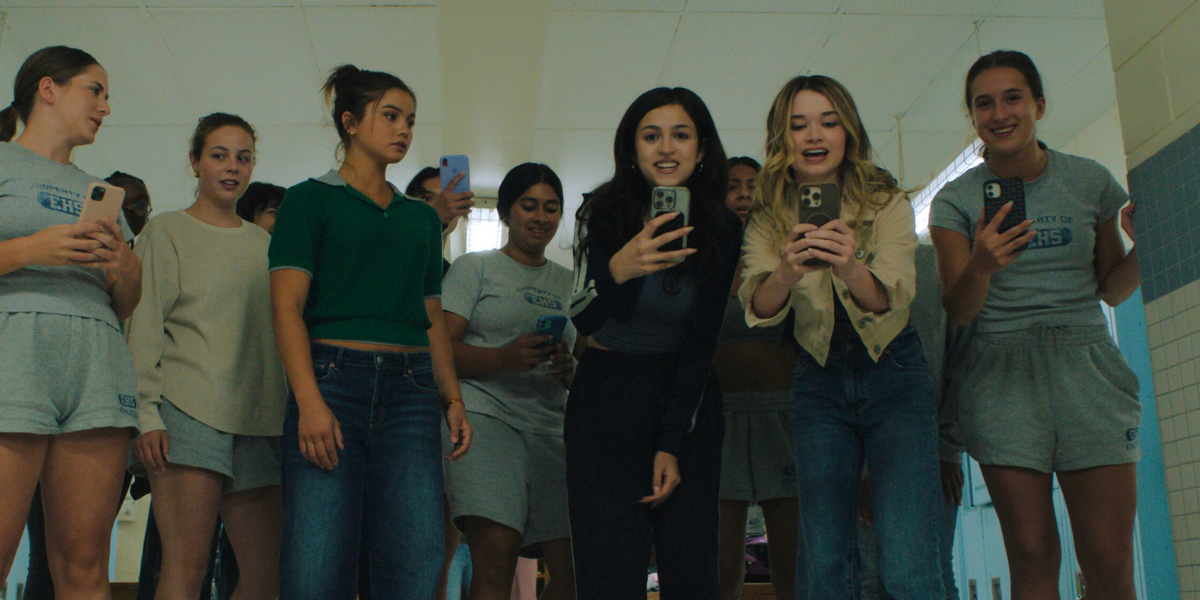
In this version, Carrie (Summer H. Howell) has spent most of her life hidden from the world by her mother, Margaret (Samantha Sloyan). After her father dies, Carrie enters public school with almost no understanding of how teenagers work, how quickly humiliation travels, or how impossible it is to disappear once someone points a phone at you.
The original Carrie understood that high school could be hell. This one understands that hell has Wi-Fi now.
In this Carrie, the technology feels inevitable – phones are just part of the machinery of humiliation. By the time the story reaches its most familiar moments, the digital audience has made Carrie’s isolation feel both intensely public and impossible to escape. Carrie doesn’t modernize teenage cruelty. It shows us how technology has made their cruelty more efficient.
Howell is essential to making that work. Her Carrie isn’t born suspicious – she arrives open, curious, and painfully earnest. Which means we aren’t simply waiting for the frightened girl to snap. We’re watching someone discover, in real time, how much pleasure people can take in another person’s pain.
It helps that 22-year-old Howell, actually looks young enough to be overwhelmed by high school. Thankfully, we’ve moved past the era when a 35-year-old with a mortgage and two kids plays a sophomore worried about prom. The young cast gives the series the fragility it needs. Their cruelty can be vicious, but it still feels recognizably adolescent – impulsive, performative, and driven by the desperate fear that if they aren’t laughing, they might become the next target. They make the horror sharper because these characters don’t feel like adults playing at cruelty. They feel like kids discovering how powerful cruelty can make them.
Sloyan’s Margaret is also more complicated than a tyrannical religious zealot of a matriarch. She still controls Carrie and causes real harm, but her behavior grows from a warped conviction that isolation is protection. This Margaret believes she can build a private paradise where her daughter remains untouched by everything outside their home.
Of course, a cage doesn’t stop being a cage just because someone calls it love, but that reframing adds dimension to the mother-daughter relationship without excusing the abuse. Margaret knows the world is dangerous. Her failure is believing that Carrie can survive it by never learning how to live in it.
The expanded runtime of the Prime Video series gives that relationship room to breathe, but it also occasionally reveals Flanagan’s most recognizable habit: the man loves to explain. At times, the series says aloud what its actors have already communicated perfectly well through fear, hesitation, or a devastating look.
This version makes room for the reality that Carrie isn’t an isolated supernatural accident. She is part of a larger world of women with extraordinary abilities – women whose stories have been misunderstood, contained, or dismissed. That expansion could have turned Carrie into a generic superhero origin story. Instead, it deepens the central question of who gets labeled dangerous and who gets to decide.
The show also doesn’t shy away from gore. When the violence comes, it is wet, ugly, and difficult to dismiss as metaphor. Flanagan takes Carrie right to the edge and then jumps off the cliff. The brutality works because the series has spent so much time showing us the smaller acts of violence that came first: the laugh, the recording, the share, the adult who looked away. Flanagan understands that the blood at prom is only the climax. The horror begins much earlier, every time someone decides Carrie’s pain is entertaining.
Not every familiar story needs another adaptation. Most don’t. But this Carrie creates enough distance from its predecessors to justify returning. It preserves the rage, tragedy, and horror while recognizing that public humiliation has evolved into something King could not have fully imagined in 1974.
Carrie White has always been frightening because of what she can do. This series reminds us that everyone around her is frightening because of what they choose to do first.

Carrie premieres October 7 on Prime Video. The eight-episode series stars Summer H. Howell, Samantha Sloyan, Siena Agudong, Alison Thornton, Joel Oulette, Josie Totah, Amber Midthunder, and Matthew Lillard.
