Mexican author Ángeles Mastretta is an indispensable figure in contemporary culture. Trained in journalism at UNAM and a well-established voice in Latin American literature, her work stands out for her strong feminist perspective and portrayal of vibrant, nonconformist women who defy social norms. Among all her titles, her iconic 1996 novel, Mal de Amores (Lovesick), has lost none of its power. Translated into multiple languages, the book established Mastretta as the first woman to win the Rómulo Gallegos International Prize.
Three decades after its publication, this cornerstone of Latin feminist literature has made its way to Netflix as a seven-episode miniseries. And the author’s own daughter Catalina Aguilar Mastretta, adapted and directed the series, alongside Humberto Hinojosa. The result captures the Mexican Revolution’s political complexity and rebellious spirit while reflecting on women’s emancipation, romantic love, and dissent and resistance in a country undergoing profound transformation.
What Is Mal de Amores About?
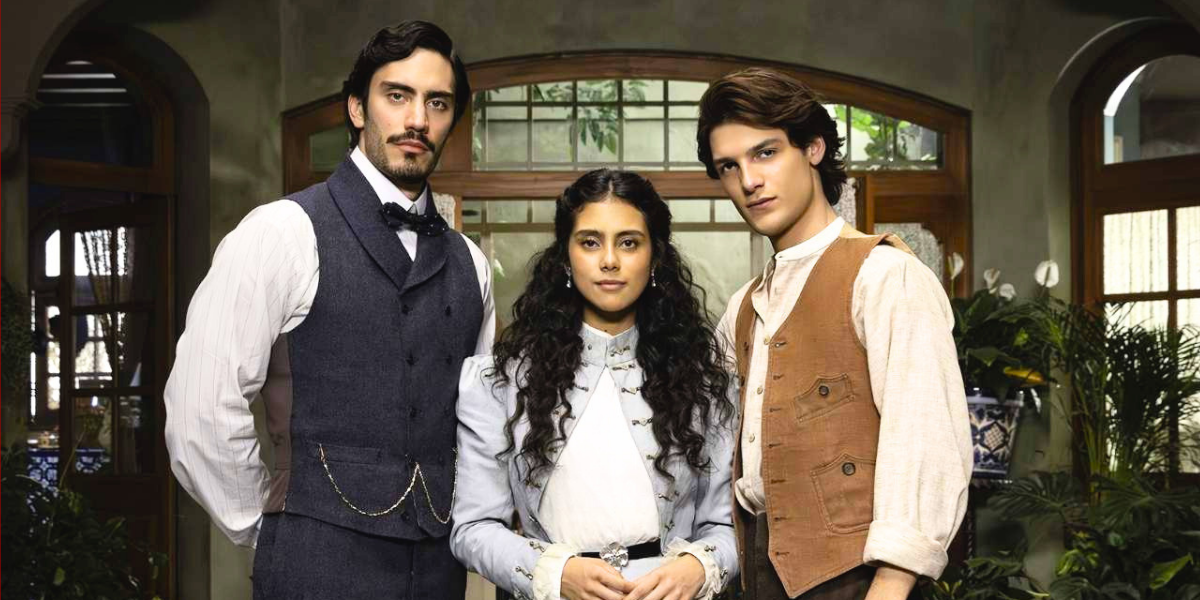
Set in Mexico’s peaceful yet vibrant city of Puebla in 1910, Mal de Amores follows the life of Emilia Sauri (Renata Vaca), a young woman who categorically refuses to be held back by the restrictions of her time and place. Growing up in a family with liberal beliefs, preparing natural remedies in her father’s apothecary, and attending progressive political debates there, Emilia develops a curious mind, a bold spirit, and a deep calling to medicine. However, the Mexican Revolution soon disrupts the calm of her family refuge.
Amid the upheaval, Emilia embarks on a quest for personal and professional autonomy. She hones her talents discreetly under the guidance of the local doctor, rejecting the domestic role expected of women. Her life becomes even more complicated when her heart is torn between two well-meaning yet irreconcilable men: her childhood sweetheart and active revolutionary Daniel Cuenca (Juan Pablo Fuentes) and Antonio Zavalza (Iván Amozurrutia), a pacifist doctor who offers her stability, professional support, and intellectual kinship.
As such, Mal de Amores is not the typical love triangle, but rather a portrait of a fearless young woman determined to build her own destiny despite her society’s restrictions.
Female Autonomy and Emancipation
As the title suggests, this is a story about “Mal de Amores.” However, the underlying theme runs deeper and examines women’s emancipation against a backdrop of structural machismo. Our protagonist rejects the traditional passive role, prioritizing her intellectual development, scientific education, and sexual freedom over convention. Both Ángeles Mastretta’s original novel and its adaptation argue that true female independence comes from building a life of one’s own. For Emilia, her calling as a doctor becomes the key tool for freedom.
In clear harmony with the source material, the Netflix production subverts the traditional concept of lovesickness and reminds us that romantic conflicts can serve as a catalyst for individual liberation and personal transformation. As the series progresses, it becomes clear that Emilia’s emotional anguish, however challenging, does not have a paralyzing or destructive effect. On the contrary, the love triangle – which forces her to choose between abandoning one of her lovers or remaining true to her identity and living an unconventional life – pushes her to claim her destiny and total sovereignty over her emotions and her body. Or as the novelist herself explained to La Jornada, “I believe that Emilia is, in fact, a subversive woman. She’s not a woman who’s against everything just for the sake of it. She’s a woman who wants to be in control of her own life and who is capable of being unfaithful in order to remain true to herself.”
By avoiding simplistic moral or romantic resolutions, this historical drama invites us to rethink relationships in a way that transcends social norms. Far from exclusivity, rivalry, and submission, Emilia, Daniel, and Antonio discover the way of loving that suits them best. In the end, Emilia triumphs by belonging entirely to herself.
Family Legacy and Acting Power
Fortunately, the close family ties behind this project have ensured an intimate and respectful adaptation of the book’s spirit. As a director, Aguilar Mastretta demonstrates remarkable precision, both in her selection of grand historical locations and in the small details. As a screenwriter, she and her team successfully evoke the qualities that made her mother’s novel so distinctive and timeless.
The main trio brings the necessary dramatic intensity with Vaca, who had already demonstrated immense talent in Familia de Medianoche and Saw X, representing Emilia’s complexity with competence, sincerity, and charm.
In turn, both co-stars build convincing bonds with her, marked by strong chemistry and emotional resonance. Fuentes, in the role of Daniel, delivers an energetic and assertive performance. Meanwhile, Amozurrutia uses just the right amount of restraint to bring the ever-serene Dr. Zavalza to life. Cassandra Ciangherotti, for her part, commands the screen as Milagros, Emilia’s single, progressive aunt, whose support proves decisive in helping our heroine on her path.
Should I Watch It?
If you’re looking for a historical drama that challenges norms or has a feminist take, this is the must-watch series of the season. Netflix’s adaptation of Mal de Amores stands out for its profound sensitivity, conceptual depth, and provocative spirit. The plot ingeniously balances the political turmoil of 1910s Mexico with the indomitable Emilia Sauri’s quest for personal and professional freedom.
Backed by a visual style that more than lives up to the genre’s expectations, a charismatic cast, and a fluid pace, this Mexican production deserves your immediate attention. You’ll thank me later.
