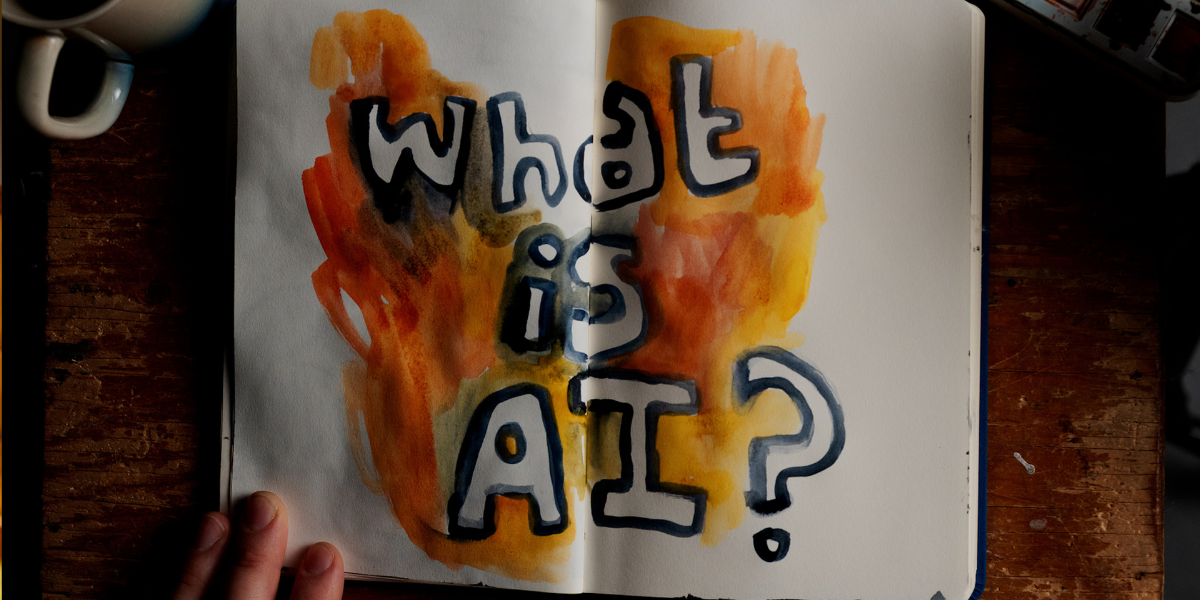
The AI Doc: Or How I Became an Apocaloptimist premiered at Sundance, but I waited to see it. I wanted to watch this one with my partner, who works in cybersecurity. I suspected it would spark a worthwhile conversation. Boy, did it ever.
Directed by Daniel Roher and Charlie Tyrell, The AI Doc approaches artificial intelligence through a deeply personal frame. Roher, preparing to become a father, sets out to understand the world his child will inherit. That framing gives the documentary emotional weight. This isn’t just a film about algorithms or machine learning. It’s about legacy, fear, and responsibility. What kind of future are we building and who exactly is it for?
The film leans heavily into the concept of “apocaloptimism,” a term that feels almost absurd until you sit with it. The idea is simple enough: hold space for catastrophe while remaining hopeful about possibility. In other words, yes, the sky may be falling, but perhaps we can still build something useful from the rubble.
Cute. Compelling, even.
But I kept finding myself bumping against something the documentary only lightly brushes past: optimism is much easier to sell without interrogating power.
And power is the real story here.
Of course, AI and AGI are at the forefront of public conversation right now. With a lineup of major CEOs, researchers, and industry insiders, the documentary does a solid job presenting both the dazzling promise and existential terror surrounding these technologies. You get the doom. You get the wonder. You get the familiar chorus of digital evangelists promising transformation at planetary scale.
What you also get, whether intentionally or not, is a glimpse into a kind of Silicon Valley theology that I call blinged-out digital optimism.
It’s the polished belief that intelligence at scale will somehow solve human suffering while conveniently forgetting that the world is already run by greed, extraction, and people who have repeatedly demonstrated that if given extraordinary power, many will use it terribly.
That’s not cynicism, it’s just historical literacy.
The documentary rightly argues for stronger government intervention and regulation. I agree. But it’s hesitant to fully confront the political reality in front of us. Regulation requires political will, enforcement, and institutions willing to challenge corporate power.
During our conversation after the doc, my partner drew a parallel I haven’t been able to shake. AI may be on a trajectory similar to the one that led to the creation of the United States Environmental Protection Agency (EPA). Industry did not voluntarily embrace regulation. Regulation arrived only after the consequences of unchecked growth became undeniable. Rivers burned, air turned toxic, and entire communities bore the cost of industrial negligence.
Even then, much of the damage could not be undone – AI feels eerily similar. By the time society collectively agrees guardrails are necessary, this technology may already be deeply embedded into every system that governs daily life: healthcare, education, law enforcement, warfare, media, and labor.
And no, deepfakes are not the only thing keeping me up at night. We should be equally terrified by AI-enhanced warfare, automated targeting systems, surveillance expansion, and biological weapon development. That last one deserves more attention than it gets.
You don’t get to take only the good from a technology this powerful. The bad comes with it too. Always. That is the part glossy futurism struggles to metabolize. Every tool capable of liberation is also capable of domination. A hammer builds homes and crushes skulls. A neural network can diagnose cancer and automate oppression. Same tool. Different hands.
Which brings me back to The AI Doc. What I appreciated most about the film is that it resists easy answers. It understands that fear alone is not useful and blind optimism is dangerous. It invites viewers to sit in tension. Still, I walked away with one lingering question the documentary never fully answered.
In the global race to become the biggest and baddest AI superpower, are we forgetting that safety matters or is that omission intentional?
Because if empire is the goal, safety can start to look inconvenient. And if automated dominance becomes the objective, ethics become optional. Artificial intelligence does not frighten me nearly as much as human ambition, greed, and the people racing to weaponize both. Perhaps that makes me an “apocaloptimist” too. Just not the fun kind.
