Taking its cues from Gondry and Reiniger, Donkey Princess embraces its weirdness.
The world of fairy tales is full of contradictions – dark and whimsical, bloody and brimming with all kinds of beauty. So goes the 1695 Charles Perrault story of Donkeyskin, the tale of a king who is tasked with an impossible challenge by his dying queen: to find a second wife who matches her beauty and attributes. The king decides that his daughter is the only match, and so the princess escapes using the skin of the king’s favorite donkey and the help of her fairy godmother. Donkey Princess (Princesa Burro) takes the basis of this enduring story and embraces the weirdness of it through stunning practical animation, adding elements that help the film transcend time and genre.
With this iteration of the tale, Chilean filmmakers Cristóbal León and Joaquín Cociña show off their experience in stop-motion animation, crafting a world that feels handcrafted and tangible. Here, in the kingdom of Chile, the princess Diana (Antonia Giesen) falls in love with Lalo (Andrew Bargsted), a huaso (Chilean cowboy), and a forbidden romance blossoms. When King Arthur (Francisco Melo) realizes what has happened, Diana uses a magic bracelet that grants the wearer’s deepest desires with one condition – the wishes only come true in other lifetimes.
Diana and Lalo travel through time, space, and genres (one segment of their journey takes place on a 50s-style, sci-fi TV show). We follow the pair as they travel further from their kingdom and closer and closer to the real world.
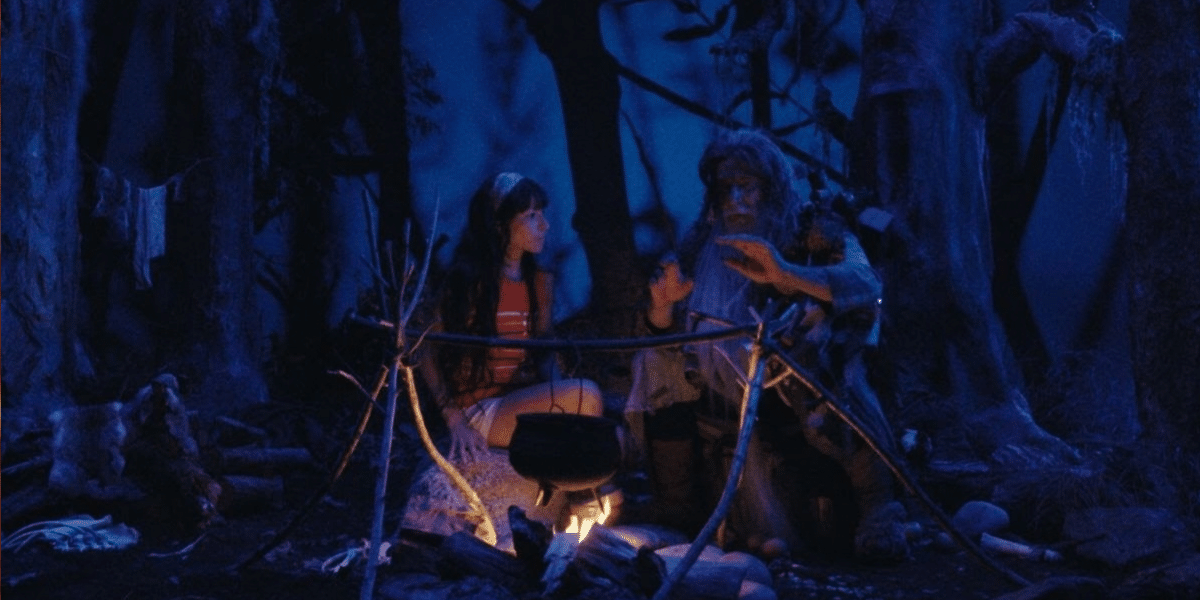
Donkey Princess is most interesting when it uses its shifting visuals f to underscore the differences between the initial kingdom of Chile and the more true-to-life world the film ends in. The film starts with bold color choices and stunning set design that evoke earlier forms of animation. For example, the filmmakers clearly reference German director and animator Lotte Reiniger in their depiction of Lalo’s banishment to the forest of thorns after the king discovers his relationship with Diana. Vines grow over the red frame in silhouette with the tortured huaso among them. The effect adds to the storybook mood of this initial setting.
As the film goes on, though, the set design becomes more stark and minimal as we get closer to the real world. The characters also change, morphing from a Princess and a huaso into regular people: co-workers at a pest-control company, goth kids at a club, actors working on a children’s show. The performances of both Giessen and Bargsted adjust accordingly, swapping romantic, dreamy gazes in their storybook beginning for the more real (and I would argue, more romantic) quotidian actions that come with love today. Figuring out a stupid TikTok dance together, giggling in the living room, sharing the walk from the office to the car – these minutiae form a life together, encapsulated with the same warmth and chemistry as the pair’s earlier adventures.
If there’s one issue I took with Donkey Princess, it’s that the story itself gets sacrificed for the visuals, resulting in a narrative that is less cohesive retelling and more avant-garde remix. Viewers unfamiliar with Perrault’s fairy tale might be confused by the Freudian turn the film makes towards the end. Suddenly, the film leans into all kinds of horror: body, mind, and soul. It’s a hard turn, but one that still rides the weird, Gondry-esque wavelength of the rest of the film.
Still, a movie where the plot is more incidental than the visuals isn’t the worst. Donkey Princess, like the dark fairy tales that inspired it, is comfortable with its complicated and sometimes contradictory approach. In a world that regularly eschews nuance for black and white logic, it feels good to enjoy this film that isn’t afraid to embrace its weirdness.

On the festival circuit, Donkey Princess premiered at Fantastic Fest 2026 and is screening at the Imagine Film Festival on November 1.
