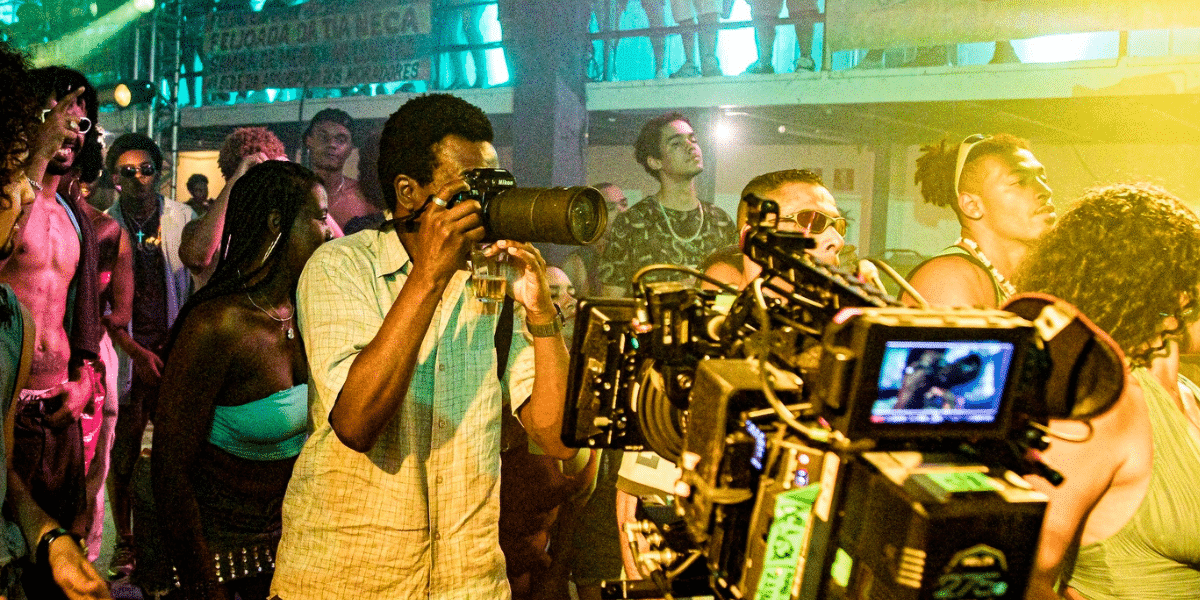
The favelas of Rio de Janeiro have returned to HBO Latino with season 2 of City of God: The Fight Rages On (Cidade de Deus: A Luta Não Para in Portuguese). A little over two years after its debut, this new batch of episodes presents a much more complex and ambitious scenario, in which community ties become the primary form of resistance against organized crime and institutional corruption.
Director Aly Muritiba explained to Omelet, “We no longer need to make so many nods to the film that came before us, and thanks to that, we were able to expand the universe… The struggle for territory is much greater, and the action scenes are much bigger.”
This time, the conflict escalates from disputes over local drug trafficking to the halls of government. Without neglecting the original’s street-level struggle or social critique, the series evolves into an intricate thriller that delves into the decay of the state apparatus and the consequences of forced territorial control. It’s no exaggeration to say that this is one of the most incisive sociopolitical portraits on Latin American television today.
What Is City of God Season 2 About?
In this new cycle, the memory of the fallen shapes the community’s fate. Without the main leaders, Curió and Barbantinho, the situation in the favela is even more unstable. The residents strive to restore order, but as we already know, nothing is easy in this territory. As Wilson, aka Rocket (Alexandre Rodrigues), aptly states early on, “A Black man born and raised in the favela knows that the fight never stops.”
As the series narrator, Rocket remains at the center and undergoes a personal and professional transformation following Lígia’s murder. Determined to seek justice, he embarks on a perilous crusade that, unexpectedly, leads him to return to community radio. Meanwhile, Geninho (Victor Andrade) takes the reins following the death of his father, the drug lord Curió, but the reality of life in the slums often proves too much for him.
Alongside these events, Berenice (a fierce Roberta Rodrigues) takes up the legacy of the beloved Barbantinho with a seat on the City Council. Cíntia, Leka, and Amanda turn to art and sports to bring back some joy and normalcy. Unfortunately, all this community progress soon faces its greatest obstacle in the calculating and vengeful Jerusa (Andréia Horta), a lawyer who has struck a deal with unscrupulous government elements, unleashing another cycle of violence and extortion.
Community Resistance: The Other Side of the Favela
Returning to City of God is not a journey of mere nostalgia. The new episodes cover contemporary issues and uncomfortable truths: in Brazil, common crime has evolved into a sophisticated real estate and political enterprise. Through institutional deceit and “front” security companies, the series reveals the influence of local politicians on armed groups and, in turn, the control these armies exert over various territories and their inhabitants.
This stark premise is supported by the country’s stats. According to the Historical Map of Armed Groups compiled by GENI/UFF and the Fogo Cruzado Institute, 34.9% of the population of Rio de Janeiro – some 4 million residents – lives under the control or influence of criminal factions. In fact, historical data confirms that, between 2007 and 2024, criminal control grew 120 percent, with the original HBO Latino series offering us a clear depiction of the consequences.
This project transcends the classic crime drama to give a voice to the honest citizens of the favela. City of God is a powerful commentary on community resistance, demonstrating how people on the periphery do not passively accept their fate. The residents fight tirelessly to assert their rights, safeguard their dignity, and preserve their land. Or, as screenwriter Rodrigo Felha explained to Terra, “The series provided the platform and the time to tell dramatic and moving stories that go far beyond violence.”
Fast-Paced Action and a Vibrant Sound Design
Season two gets better at not just social critique but also technical execution, particularly in the extended action sequences. The team crafts crossfire scenes with a tense rhythm and frenetic energy – deliberately powerful, unsettling, and disturbing. So, those with a weak heart, brace yourselves.
The soundtrack remains extraordinary and blends organically with the technical and narrative elements. Beto Villares, Érico Theobaldo, and Fil Pinheiro return as composers, painting in sharp relief. They give government offices tense silences with a subdued score that heightens the suspense. In contrast, the community bursts with identity through rap and Rio funk. Far from being a secondary element, their use of Brazilian popular music stands as a banner of resistance, working to restore vitality to the favela.
Should I Watch It?
Absolutely. Produced by O2 Filmes and airing every Sunday, this second season amply demonstrates that there are still powerful stories to be told in City of God. This is no longer a mere exercise in nostalgia or remembrance, but rather an urgent and compelling portrait of contemporary Brazil that dares to look squarely at the changing nature of violence and the ties between politics and lawlessness.
In a time as uncertain as ours, it’s worth remembering that community resistance is our best defense – something City of God: The Fight Rages On season 2 carries in its heart.
