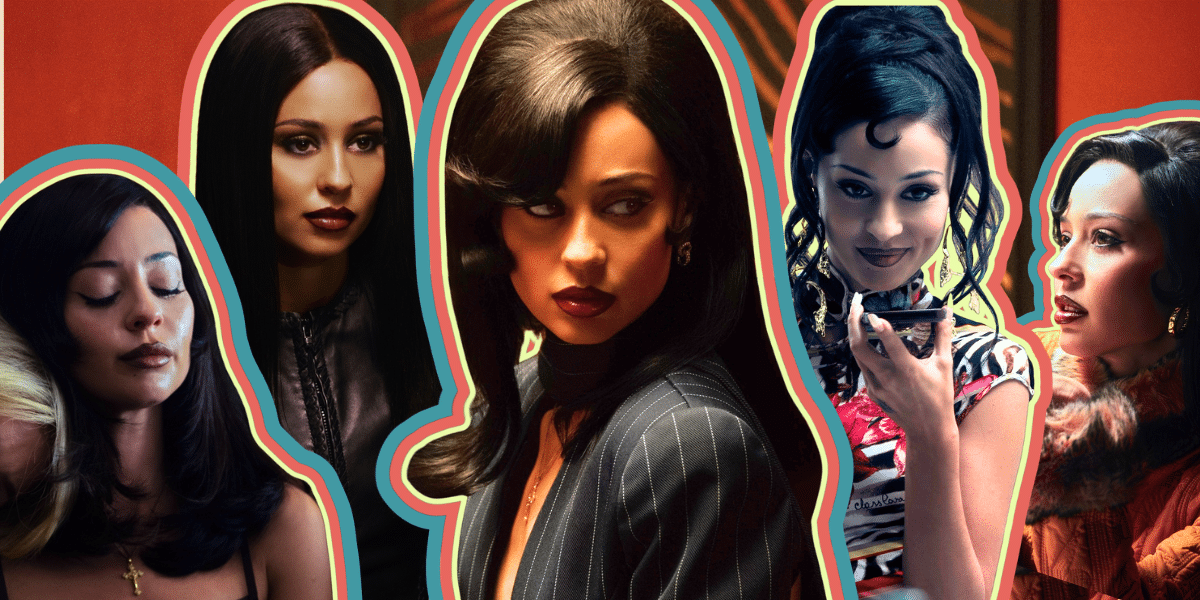
Maddy Perez was never supposed to be the one who saved Euphoria. She was always a main character, yes, but the show just couldn’t figure out what to do with her until it was almost too late. And yet when HBO’s hipster darling finally limped across the finish line after years of delays, cast drama, and a final season that had no idea what it wanted to be, it was Alexa Demie who strode onto the screen like she owned every second of it, refusing to let the whole thing fall apart.
For all its ups and downs, Euphoria fully realized Demie’s Maddy Perez: she’s complicated, sometimes cruel, deeply loyal, and always herself. In Season 1, she navigated Nate’s (Jacob Elordi) violence and manipulation with a precision that should have made Demie an immediate household name. She loved Nate the way people love things that are bad for them: completely and at great personal cost. But even at her lowest, there was something in her that wouldn’t break – making everything that followed worth watching.
The fact that she almost never got the chance is a story unto itself. Before a single Euphoria episode aired, network executives envisioned Maddy Perez as a blonde cheerleader. Sam Levinson, knowing what he had in Demie, pulled her aside before her final callback and told her not to wear anything red because he knew the corporate heads would dismiss her as “too Latin.” In response, she strode in, looked every person in that room in the eyes, and took the role.
Euphoria earned its reputation honestly, building something genuinely electric across its first two seasons. Zendaya’s portrayal of Rue Bennett secured two Emmy wins and a Golden Globe on the strength of one of television’s most visceral portrayals of addiction. Sydney Sweeney’s Cassie Howard burned every relationship she had to the ground, chasing the wrong version of love. Hunter Schafer’s Jules carried emotional weight in nearly every scene she was in. Barbie Ferreira’s Kat was too real in how her internal dysfunction had her self-sabotaging at every turn. The Labrinth soundscapes, the Donni Davy makeup, the dreamy sequences that made suburban dysfunction feel like mythology. It was a show that trusted its women with enormous, devastating things, and they delivered every time.
And then it all fell apart behind the scenes, and it showed.
Season 3 arrived carrying years of baggage: Barbie Ferreira’s departure, a pandemic-fractured production, public fallings-out, and real grief. Angus Cloud, who played Fezco with a warmth and specificity that made him one of the most beloved characters in the entire run, had died. Eric Dane, whose portrayal of the predatory Cal was one of the show’s most effectively disturbing early performances, completed the final season with an ALS diagnosis that would take his life in February 2026. Knowing he finished that work under those circumstances gives his final scenes a gravity the show itself didn’t earn.
What emerges on screen this season feels less like a deliberate finale and more like a creator chasing a Tarantino-esque aesthetic he had no real claim to. The slow burns, the stylized detachment, the hyper-cool dialogue that mistakes attitude for depth. Levinson borrowed the ultraviolence and strong imagery, but left the soul at the door. The result is a final season that is lazy in its ambitions and hollow at its center, a circle jerk of violence masquerading as profundity.
And the women pay the most for that.
Cassie is reduced to a pornographic fantasy. Jules is sidelined to the point of not even being present for the finale of the same show that skyrocketed trans experiences into mainstream media. Even the once-unshakeable chemistry between Rue and Jules couldn’t hold the weight of a season that had structurally collapsed around them, reducing their characters to a forced romance that reeked of nostalgia without depth. The lesson buried inside all of it, the one Levinson seems constitutionally unable to learn, is that strong female characters do more for a plotline than any action sequence, stylistic flourish, or borrowed aesthetic ever could.
And yet the Latinas carry it anyway.
Priscilla Delgado’s storyline, introduced in the opening episodes, cuts through the noise in a way little else in Season 3 managed. Delgado’s arc as stripper Angel is tragic and unflinching, a grounded depiction of what trafficking and the sex work industry actually do to women. Where Levinson is busy reaching for as much violence as possible, Delgado’s storyline is doing the quieter, harder work of showing the real cost borne by women with the least power in the room. And then, like everything else with actual depth in Season 3, it is undeserved.
Rosalía’s arc offered one of the few genuinely interesting threads this season. Though the Spanish artist is not Latina herself, her stripper character Magick is written and coded as one. She occupies that uncomfortable space Euphoria used to understand instinctively: the place where desire and exploitation look almost identical from the outside, where a woman can be simultaneously in on the joke and victimized by it. It is the kind of duality the early seasons built entire characters around. Here it’s window dressing, a tension Levinson recognizes and then abandons.
Which brings us back to Maddy.
By the finale, Maddy is carrying weight that isn’t hers. When Naz’s men show up threatening Cassie’s life over Nate’s debt, Maddy goes to Alamo, played with cold precision by Adewale Akinnuoye-Agbaje, and pays the kind of price that comes with asking that particular favor: a million dollars paid to solve the problem of a man she had already survived once. A full circle for a relationship that defined and nearly destroyed her, ending not in redemption but in loss. And yet Maddy walks out, reconciling with Cassie, not cleanly, not without the weight of everything between them, but genuinely.
Just moments before, Alamo used her as a human shield. The same man who had just been talking about wanting a white picket fence. Women are useful until they’re in the way, and then they’re leverage. That Maddy survived it felt like a genuine plot twist. Doomed by debt, used as a shield, left to grieve a man she had already lost a hundred times before, every sign pointed to her not making it out. In a season that seemed committed to destroying everyone, her walking out isn’t just the closest thing to a win. It is the win.
The fact that Demie, a Mexican American actress who has spoken openly about being underestimated in Hollywood, delivers all of this with a quiet authority that no amount of uneven writing could touch speaks to something larger. The moments that hit in Season 3 are almost exclusively driven by women rather than their ultraviolet male counterparts. The moments that didn’t were everything else.
Euphoria is, at its best, a show about surviving yourself. Its female characters made that theme worth watching. And in a television landscape where Latinas have historically been handed overly sexualized storylines, disposable roles, or just not represented at all, Maddy Perez surviving a season that killed nearly everyone around her feels like something bigger than a plot point. It feels like a correction. Alexa Demie and Priscilla Delgado – and even Barbie Ferreira, whose departure said everything about how Levinson valued women who didn’t fit his vision – are the reason any of it will be remembered at all. Hollywood has spent decades casting Latinas as the casualties. Maddy Perez refused the assignment Euphoria gave its other women. That’s not a small thing. That’s the whole point.
