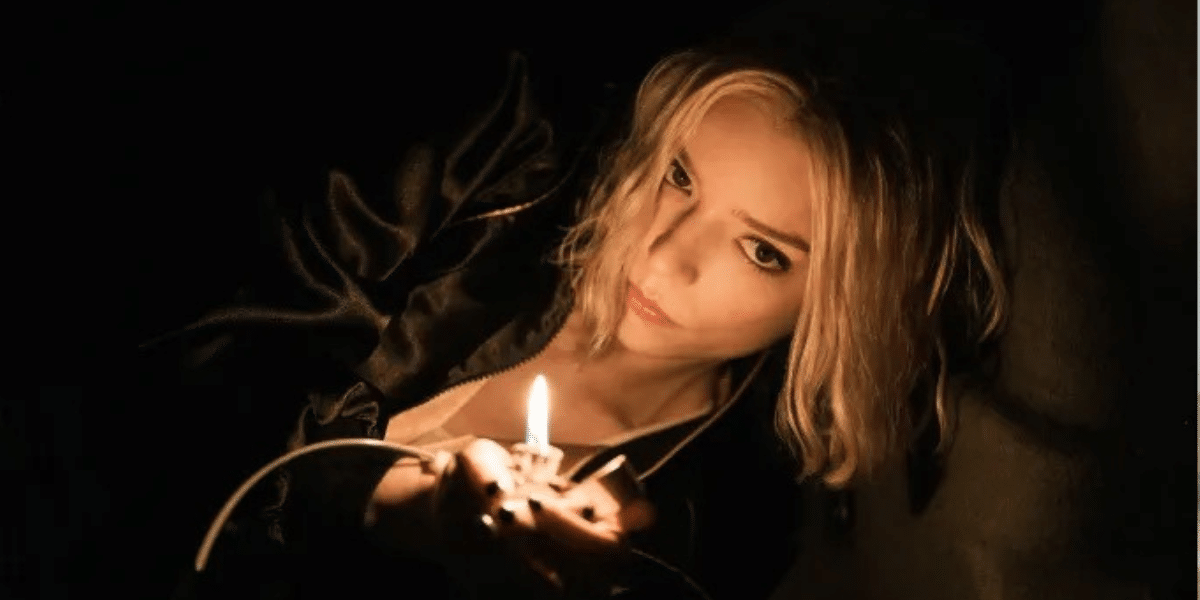
Created by Jonathan Tropper and adapted from Marissa Stapley’s 2021 novel, Lucky wastes no time putting its heroine in danger. A multimillion-dollar heist goes sideways, and Luciana “Lucky” Armstrong, played by Anya Taylor-Joy, finds herself running from both the FBI and the criminals she betrayed. From there, the seven-episode limited series delivers chases, close calls, shifting alliances, and enough action to keep Lucky fighting for her life.
Taylor-Joy leads a stacked cast that includes Annette Bening as dangerous crime boss Priscilla Masterson, Aunjanue Ellis-Taylor as determined FBI agent Billie Rand, Timothy Olyphant as Lucky’s incarcerated father John Armstrong, and Drew Starkey as Lucky’s husband Cary. The Apple TV series also comes with some serious power behind the camera: Reese Witherspoon is among its executive producers, while Taylor-Joy produces through her LadyKiller banner.
On paper, it has everything I want from a crime thriller. Taylor-Joy makes Lucky magnetic even when she is lying, stealing, or improvising her way out of another impossible situation. Bening makes the threats feel elegant. Ellis-Taylor gives the chase real weight, while Olyphant brings his signature mix of charm and danger.
The action works. The cast works. Lucky herself often works.
The problem is that the show’s entire premise rests on a decision that does not.
After robbing people who could easily chop her up and make her disappear, Lucky hides in Las Vegas. Las Vegas! A city built on surveillance, casinos, money, organized crime, and people constantly looking for an angle. It might be a fun setting for a television thriller, but it’s no place to disappear.
For a show about an expert con artist, Lucky asks us to overlook an obvious setup.
Her husband, Cary, convinces Lucky that it’ll be fine. It’s just one night in Vegas, he argues, and no one will know what they’ve done until the next day. But how could either of them possibly know that? More importantly, Lucky is smart enough to understand that the timing isn’t in their hands. Once you steal that much money, you don’t get to decide when your victims notice. You definitely don’t bet your life on the hope that everyone else will stick to your schedule.
That’s what makes the decision so infuriating. Lucky doesn’t choose Vegas because it’s part of a brilliant backup plan or because she has nowhere else to go. She stays because the man she loves assures her they can have one more night together.
Girl, I know you’re not that stupid.
The show repeatedly asks us to believe that Lucky is exceptionally intelligent, creative, and charismatic. She cheats death, outsmarts law enforcement, and turns whatever she can find into a means of survival. In some scenes, she practically becomes Lara Croft. But when the story needs to place her in danger, all her intelligence just disappears in the face of her husband’s desire.
Here we go again: another brilliant woman blinded by love, dick, and daddy issues.
The woman with an emotionally damaging father who grows up to love a man who is just as damaged, dangerous, or unreliable is an exhausted shortcut. The problem isn’t that Lucky loves Cary or that her feelings influence her decisions. Love makes people do foolish things every day. The problem is how selectively the series applies her intelligence. Lucky can anticipate what the FBI will do. She can read a crime boss, improvise her way out of danger, and stay calm when death is breathing down her neck. But she apparently can’t recognize that her husband’s “one more night” plan is built entirely on wishful thinking.
This plot hole points to a frustrating contradiction in the way women are often written in action stories. These characters are allowed to be brilliant – but only when it’s convenient. When the story needs to place them in danger, their instincts disappear. When a man enters the equation, their judgment often goes with them.
Male action heroes make foolish decisions, too, of course. Recklessness is practically a job requirement for the genre. But their bad decisions are often extensions of recognizable traits: ego, anger, grief, obsession, or a belief that they’re invincible. Their mistakes reinforce who they are.
When women make equally disastrous choices, too often it’s because of love. Lucky rushes its heroine into danger and expects “she loves him” to do all the work. But contradiction alone isn’t characterization.
If Lucky chose Vegas because of an emotional attachment, a strategic gamble, a false sense of control, or her inability to imagine a life outside the criminal world, the decision could reveal something meaningful about her. Instead, the series seems to begin with its preferred setting and work backward, trusting Taylor-Joy’s performance to sell the logic. She almost does.
Taylor-Joy gives Lucky a restless intelligence that keeps the series moving. Even when the writing strains credibility, she makes it easy to believe that Lucky is thinking several steps ahead. Her presence is one of the show’s greatest strengths – and one reason its central problem becomes so noticeable. The more convincing Taylor-Joy is as a brilliant survivor, the less convincing Lucky’s foundational mistake becomes.
I wanted the series to trust its heroine’s intelligence as much as it asks the audience to admire it. Let Lucky make mistakes, but make those mistakes hers. Give them emotional roots, psychological consequences, or a connection to the life she’s trying to escape. Don’t make her brilliant in one scene and inexplicably foolish in the next because the chase needs to continue. And please stop using love and daddy issues as a switch writers can flip whenever a smart woman needs to make a stupid decision.
Women in action stories don’t need to be perfect. Let them be reckless, selfish, impulsive, frightened, and spectacularly wrong. Let them make choices that blow up their lives. But those failures should grow from who they are – not from a script that temporarily drains their intelligence whenever a man whispers the right thing. A complicated woman makes mistakes we can understand. A convenient heroine only reminds us that the smartest person in the room is still at the mercy of the writers.
