There’s a particular kind of horror that doesn’t knock. It seeps. It lingers. It watches you before you ever realize you’re being watched, and Widow’s Bay revels in that type of horror. Then, just to keep you off balance, it cracks a perfectly timed joke while something unseen drags its fingers across the back of your mind. Widow’s Bay is a horror-comedy that laughs with you, then quietly locks the door.
The first two episodes, premiering on Apple TV on April 29, pull you in like a riptide, letting you know this isn’t going to be a casual watch. The weekly rollout feels almost cruel, because Widow’s Bay moves with such confidence that stopping feels unnatural. Each episode tightens, drawing you deeper into a town that feels less like a setting and more like a living thing with a long memory and little mercy.
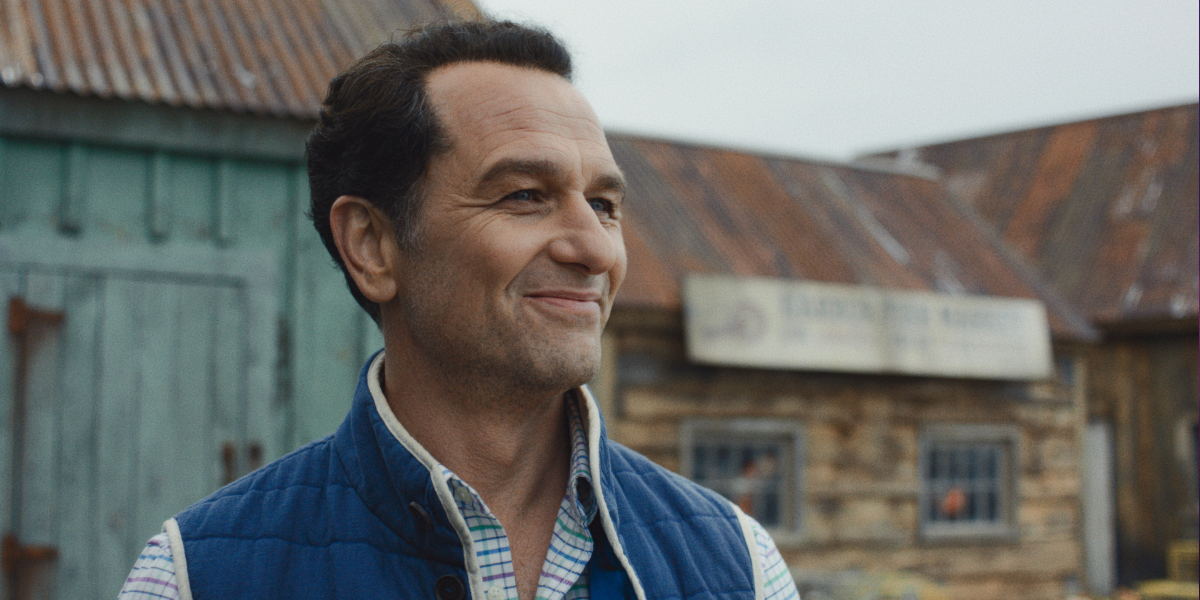
Created by Katie Dippold and anchored by Matthew Rhys as Mayor Tom Loftis, Widow’s Bay drops us into a charming and cursed New England island. Tom Loftis treats superstition like an administrative inconvenience, something to file away and correct, but Widow’s Bay is not interested in being managed. It doesn’t yield to logic. It doesn’t respond to reason. It waits, and then it devours.
At first, the show plays with familiarity: fog-drenched docks, watchful townspeople, something just slightly off beneath the surface. But Widow’s Bay is not here to comfort you. It’s more interested in getting deliciously unhinged.
The Apple series takes familiar textures and runs them through its own fever dream factory, reshaping them into something that feels both referential and entirely its own. There’s an Inn that hums with the claustrophobic dread of 1408 colliding headfirst with the psychological decay of The Shining. And somewhere in its more delightfully off-kilter edges, there’s even a flicker of coastal slasher absurdity that might make you smirk and think of I Know What You Did Last Summer, with a wink, not a crutch.
Comparisons to Lost are inevitable, but Widow’s Bay is taking a more intentional approach to evolving its fandom’s obsessive energy. It invites speculation, rewards attention, and builds a deliberate mythology. You’re not being strung along, but rather guided somewhere unsettling, with purpose. Widow’s Bay doesn’t just build mystery – it pulls you under and dares you to breathe.
What makes the series so effective is its balance. Horror-comedy is notoriously fragile, and here the humor doesn’t dilute the fear, it sharpens it. The absurdity makes the dread feel more real, not less. Characters laugh because they don’t understand what’s happening, and that lack of understanding becomes its own kind of terror. The show doesn’t ask you to choose between fear and amusement. It insists you experience both at once.
Yes, the cast, including Stephen Root, Dale Dickey, and Kate O’Flynn, deliver strong, grounded performances, but the true lead is the town itself. Filmed across Massachusetts locations like Gloucester and Rockport, the setting is complicit. The fog obscures, distorts, and lingers just long enough to make you question what you saw or whether you saw anything at all.
There’s a quiet rot beneath the charm, something patient and practiced, and the people who live there seem to understand and cope with it in ways they can’t fully articulate. There’s an unspoken agreement humming beneath every interaction, a kind of collective shrug that says: yes, something is wrong, and no, we will not be unpacking that today. It’s less denial and more strategic coexistence.
Which makes our skeptical leading man Loftis, the perfect anchor. He’s resisting understanding every step of the way, pretending logic is a shield and not just a comfort object. That resistance makes him compelling. He doesn’t want to believe because belief would require participation, and participation, here, feels dangerously close to consent.
And that’s where the show becomes dangerous. Because you don’t just watch it, you start working on it. Replaying moments like a conspiracy theorist with a corkboard, connecting threads that may or may not be threads at all, convincing yourself that if you just pay closer attention, you’ll get ahead of it. You won’t. The weekly format only amplifies that illusion – it’s participatory paranoia, elegantly packaged.By the time you realize how deep you’re in, it’s too late to step back.
Widow’s Bay doesn’t just entertain, it lingers. It hums. It settles into your thoughts, less like enjoyment and more like low-grade possession. It’s funny, eerie, and quietly unnerving, built on the creeping sense that the island itself is alive and won’t let anyone – including you – go.
