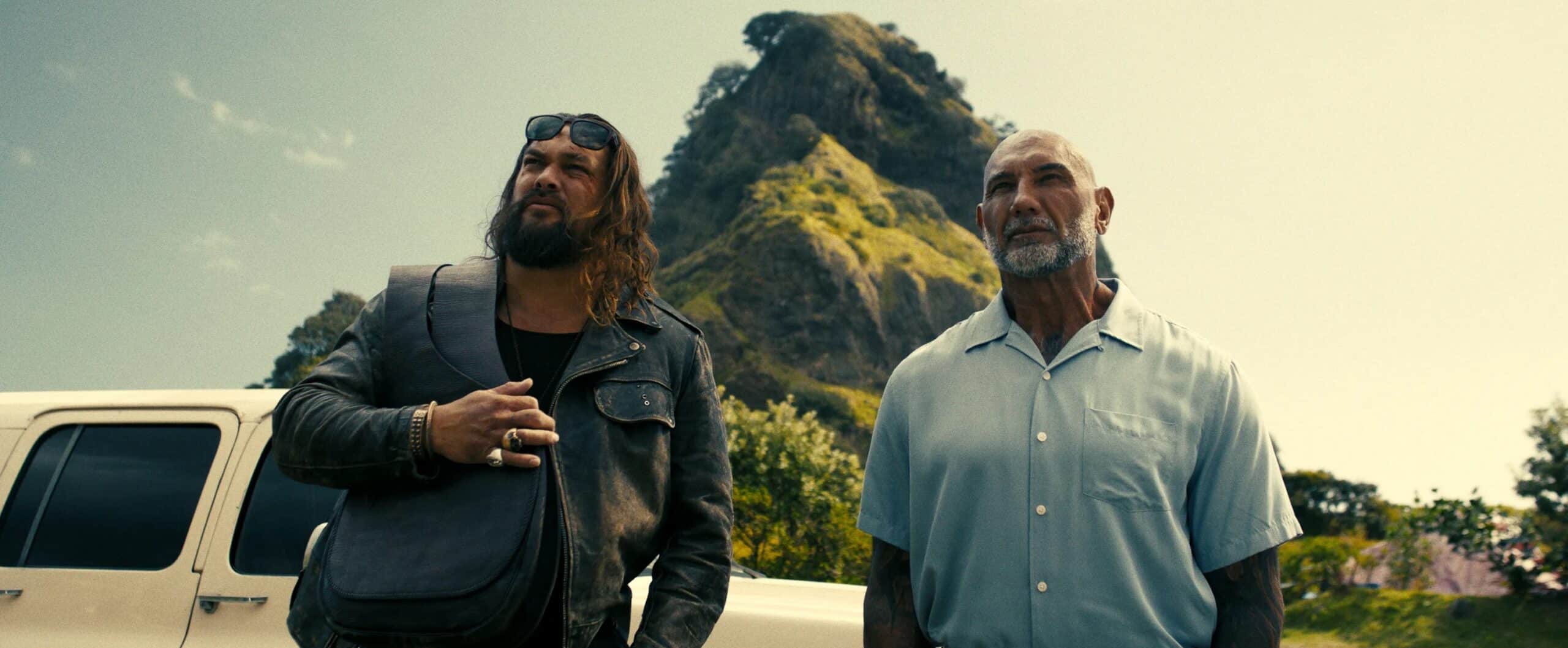
Buddy cop movies usually promise three things: violence, punchlines, and emotional growth (delivered through property damage). The Wrecking Crew shows up with all three, then casually adds a fourth ingredient most action comedies forget exists: affection. Not the soft-focus romance kind. The cultural, familial, messy affection that makes a movie feel lived in instead of assembled.
Directed by Ángel Manuel Soto and written by Jonathan Tropper, this Prime Video action comedy drops Jason Momoa and Dave Bautista into a story that could have easily been generic genre scaffolding: Estranged half-brothers. Dead father. Criminal conspiracy. Corrupt officials. The usual buffet of cinematic chaos. And yet, somehow, this thing has a pulse.
After Private Investigator Walter Hale dies in what looks like a hit-and-run in Hawai‘i, his sons Jonny and James are forced into reluctant reunion mode. Jonny, played by Momoa with the swagger of a man who knows exactly how funny he is, is a suspended detective with unfinished emotional business. James, Bautista’s Navy SEAL, carries himself like a refrigerator that learned to talk and occasionally punches through walls.
Their investigation unfolds like a tropical noir fever dream. Walter’s apartment is ransacked. A casino plot hides under a surfboard because, of course, it does. Developers want to build on Hawaiian homelands. The yakuza are involved. A governor is dirty. A flash drive holds enough corruption receipts to make several careers spontaneously combust.
On paper, this is high-octane nonsense. On screen, it becomes something warmer and sharper because the movie understands that action works best when it’s anchored in character and place.
But, let’s talk about place first.
Too often, a place becomes a postcard with dialogue dubbed over it. Culture gets flattened into aesthetic garnish. Tourism wins. Authenticity loses.
The Wrecking Crew does the opposite. The film treats Hawaiian space and community as lived environments, not exotic wallpaper. There’s texture here. Family dynamics, local politics, and social tensions are embedded rather than imported.
That difference matters. You feel it in the way scenes breathe. You feel it in the casting, which leans into performers who bring cultural specificity instead of generic archetypes. Frankie Adams as Nani, Jacob Batalon as Pika, and Temuera Morrison as Governor Mahoe help ground the film in a world that feels inhabited, not rented.
Now let’s talk about the engine: Momoa and Bautista.
Their chemistry is the movie’s secret weapon, and it builds reckless joy. Momoa plays Jonny like a man permanently two seconds away from doing something inadvisable but hilarious. Bautista counters with stoic intensity that keeps cracking at the edges. Watching them argue, brawl, and accidentally reconcile is half the fun.
There’s a mid-film fight between the brothers that functions less as spectacle and more as therapy with punches. It’s funny, messy, and weirdly tender. Their emotional conflict isn’t buried under explosions. It is the pyrotechnics. The movie never loses sight of the fact that it’s about estranged family learning how to stand in the same room without combusting.
And the humor lands. Not in a desperate, wink-at-the-camera way, but in the rhythm of two performers who understand comedic timing. Momoa in particular weaponizes his physical presence for laughs. He moves like a tank and delivers lines like a stand-up who wandered into an action movie and decided to stay.
Frankly, I would watch twenty sequels of this duo trying to solve crimes and emotional trauma. The Wrecking Crew lets its two leads be flawed, loud, and occasionally ridiculous without pretending that’s depth.
One of the film’s smartest moves is how it handles its women. This is not a parade of damsels orbiting male heroics. Morena Baccarin’s Valentina, Frankie Adams’ Nani, and Roimata Fox’s Leila are written as participants in the chaos, not decorative motivation. Yes, there’s a rescue sequence because this is still an action movie. But the women repeatedly assert agency, call out nonsense, and refuse to exist as ego polish for the male leads.
That dynamic adds texture to the story. The film is less interested in romance as plot and more invested in how relationships challenge the brothers’ sense of self. The film’s emotional spine stays focused on family, guilt, and reconciliation rather than detouring into obligatory love-story territory designed to tick demographic boxes.
The villain architecture is also satisfyingly pulpy. Claes Bang’s Marcus Robichaux is the corporate menace with expensive shoes. Miyavi’s Nakamura brings sleek threat energy that pairs well with the film’s escalating chaos. Corrupt power structures, offshore money trails, and criminal alliances are sketched just enough to keep the stakes legible without bogging the pace down.
And pace matters. The Wrecking Crew moves like it’s late for something fun. Fight scenes are energetic without turning into incoherent CGI soup. Set pieces escalate cleanly. The action choreography understands that clarity is more exciting than excess. You always know who is punching whom and why, which feels like a small miracle in modern U.S. cinema.
By the time the brothers decide to stay in Hawai‘i and figure out what to do with their inherited millions, the movie has already done its real work. It has convinced you that this chaotic, explosive adventure was always about connection.
The Wrecking Crew is loud, funny, and unapologetically sentimental in the way the best buddy comedies are. It understands that action and humor don’t have to cancel out sincerity.
Most importantly, it feels like a movie that actually likes the world it’s depicting. Not as spectacle or branding, but as a place where messy people collide, reconcile and occasionally blow up a mansion in the name of family.
That’s a formula worth repeating. And honestly, I hope they do.
