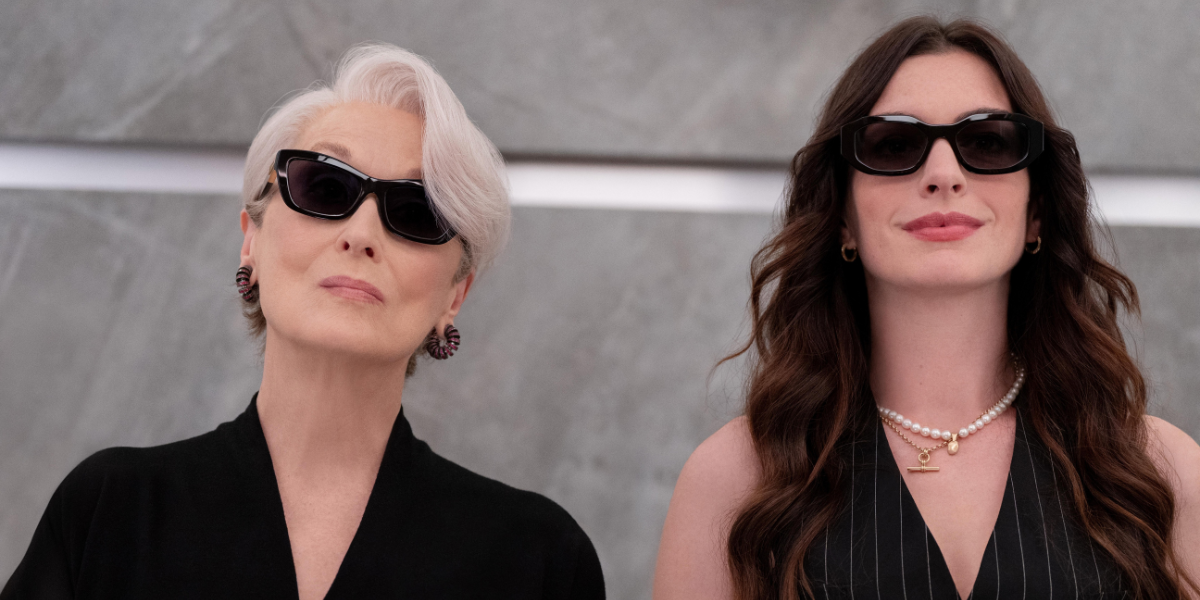
Twenty years for a sequel typically means studio executives are banking on one thing: nostalgia. But while The Devil Wears Prada 2 kept its fan-favorite characters – Andy Sachs (Anne Hathaway), Miranda Priestly (Meryl Streep), and a few others – this version went for contemporary social commentary. At its core, the film swaps the original fashion fairy tale for a critique of today’s crises facing legacy print news and the arts, but with a splash of “good billionaire” philanthrocapitalism.
It all begins when Andy, now a hot-shot investigative reporter, is laid off via text, along with her entire team, while attending a journalism awards ceremony. As a result, she eventually finds herself back in Miranda’s cruel claws as part of the now financially struggling Runway.
Here’s our first glimpse of the film’s criticism of something as American as apple pie: capitalism’s greed. Having seen my share of downsizing notices. I get what sentiment 20th Century Studios is chasing here. They’re confronting “enshittification,” a term coined in 2022 by Cory Doctorow, a Canadian-British journalist, technology critic, and sci-fi author. Doctorow breaks down the phrase as a three-step process of attraction, lock-in, and exploitation.
In The Devil Wears Prada 2, enshittification manifests in a few ways. With Runway under threat, the film’s scaffolding reminds us who’s really in charge. Whether we’re talking fashion magazines or journalism, millionaire execs and tech-bros concerned only with dollar signs and product/people (re)placement are trampling all over the visionaries and investigative reporters. Their fictional magazines are facing the same reduction in quality (if not downright extinction) as our real ones.
The sequel also tackles the hard truth that there’s no art in the word capitalism. At Runway, Andy sees how legacy print media is reduced to social media content, where shady marketing tactics and algorithms rule. Once again, the film reminds us how the almighty dollar threatens journalism, writers, and creatives, by judging the quality of their work through follows, likes, and viral stories. This feels true to me as an independent journalist – I’ve experienced the precarity of the indie sector where budgets are even tighter and resources slimmer. In the alternative media world, editors and founders rely heavily on grant funding and donors, which means our paychecks are tied to their whims. So, yeah, this part of the movie’s narrative struck a personal, painful nerve.
The other side of journalism’s existential threat in The Devil Wears Prada 2 relies on a sentimental, philanthrocapitalism storyline. Added to the magazine’s financial troubles, Miranda’s facing a public relations nightmare over the magazine’s support of a fashion brand linked to exploitative overseas labor. As social media blows up with backlash from advertisers threatening to abandon the iconic publication, a “white knight” billionaire tech bro comes to the rescue. Though with a twist, in the end, it works.
But, The Devil Wears Prada 2 – just like in real life – gets it wrong.
Instead of owning the magazine’s complicity in the controversial sweatshops debacle, senior leadership aims to squash the issue with greenbacks. It’s what these people and institutions do best. We’ve seen it before. It reminded me of the 2012 HSBC fiasco, where it was fined $1.9 billion for laundering drug cartel money. That same year, the British banking giant launched its Water Programme, partnering with NGOs WaterAid, WWF, and Earthwatch, investing millions in sanitation and protection projects in Nepal, India, and Nigeria. Skeptics like me wonder if their sinister shenanigans had remained hidden, would their faux philanthropy have even existed?
Then there are peeks at Miranda’s transformation from ruthless “girl-boss” to vulnerable human being. During one scene, when realizing she cannot be at two places at once, Andy convinces Miranda to have her long-time confidant and Runway’s Art Director, Nigel Kipling (Stanley Tucci), give a speech on her behalf. In another, we almost feel sorry for the formidable editor-in-chief when she opens up to Andy about sacrificing family bonds while she pursued a demanding career.
It made me wonder, do people like Miranda really change? What about their institutions? And is mainstream journalism, after so much enshitification, worth fighting for? Or do we need to build something? The Devil Wears Prada 2 doesn’t have any of the answers. But it does ask a few good questions.
