Studying journalism in the very early aughts, I learned that we’re supposed to be the fourth branch of government, helping to maintain our country’s delicate system of checks and balances. But somewhere along the way, that “ideal” gave way to a business model with other priorities. News stopped being about accuracy and became about attention. Crowned by social media and the dismantling of regulatory structures, the idiot’s voice is now just as loud as the expert’s. Just watch The Paper to see what I mean.
The second season premieres September 9, 2026, of this NBC/Peacock spinoff of The Office (with the only returning character being accountant Oscar Martinez, played by Cuban-born Oscar Nuñez). And the sitcom tackles many of the issues facing the newspaper industry and current overall state of journalism, or Churnalism, which is the title and theme of episode 6, season 1.
We’re in this age of churanlism because of media consolidation – a few billionaires and their private equity firm own or control nearly every aspect of our information intake. It’s a concentration of power, controlling the narratives and news we’re fed. Just look at TikTok. Earlier this year, a private equity firm owned by close Trump ally, Larry Ellison, took control. In short order, creators noticed certain topics being censored, flagged, or deleted altogether. Through his son David, Larry Ellison also controls Paramount, which includes CBS, MTV, BET, Paramount Pictures, and Paramount+. And they’re trying to get Warner Bros and their suite of media outlets – like CNN and HBO – too.
The Washington Post, once a respected, trusted outlet, is now owned by Jeff Bezos, and he uses its pages to run editorials lamenting the necessity of the billionaire class under the guise of unbiased reporting. Alden Global Capital owns more than 200-plus publications nationally, while Rupert Murdoch and his family have ownership in Fox News, The Wall Street Journal, and the New York Post.
Outliers exist, but few and far between: The Associated Press and nonprofit newsrooms like ProPublica for example. A family owns the New York Times but they’re supposed to have a structure specifically designed to insulate editorial decisions from the owners’ whims. Social media serves as a news source for many, but Instagram and Facebook are both owned by Mark Zuckerberg, and the once-trillionaire Elon Musk famously bought X, previously known as Twitter.
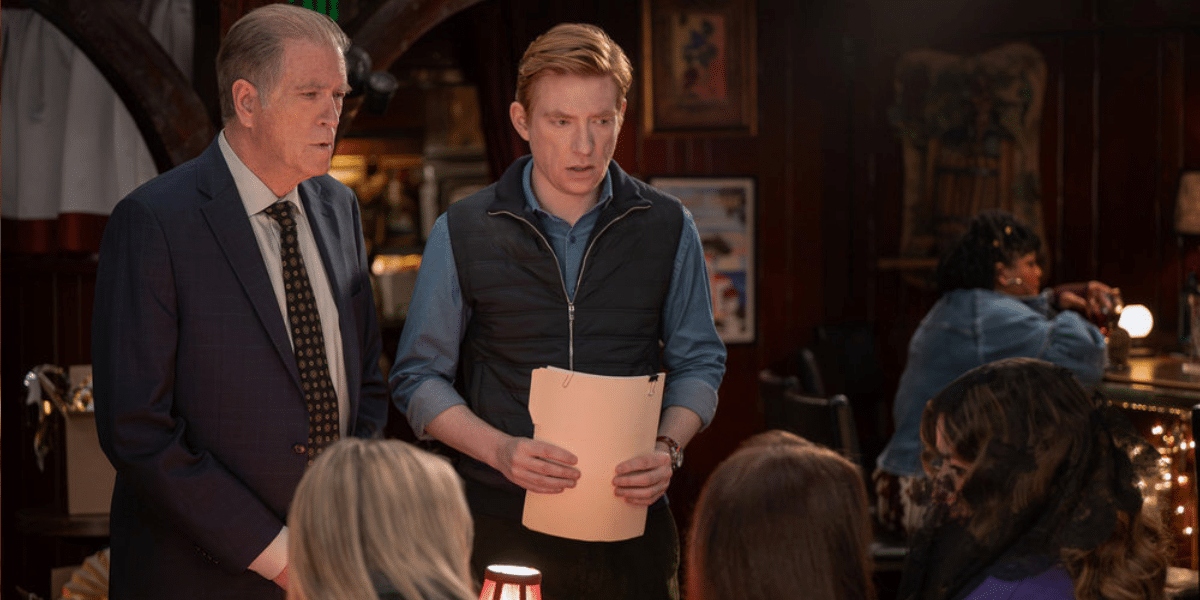
The Paper tackles the conflicts between journalistic integrity and an outlet’s business model in an ever-consolidating media system. Led by new editor-in-chief Ned Samson, The Toledo Truth Teller acts as the Dunder Mifflin of the series. Played by Domhnall Gleeson, the new Ohio editor references the alter-ego of Superman, Clark Kent, indirectly implying the nobility the title “journalist” once held.
But today, our corporate overloads have replaced fair and objective storytelling with the ethos to enrage to engage. Truth is no longer the goal, attention is, and as Max Fisher describes in The Chaos Machine: The Inside Story of How Social Media Rewires Our Mind and Our World, outrage outperforms careful reporting on every engagement metric.
The Paper, with its fictional Toledo Truth Teller, offers a solution. And it begins at the local level. When there are no journalists tracking the school board, state legislators, county contracts, and zoning issues, there’s a trickle-up effect. Ignoring the happenings in our community causes many to forget they’re a part of one. We’re witnessing the effects of ignoring those assumably mundane elections and what happens when we take the checks out of our checks-and-balances system.
Restoring a seemingly collapsed and unregulated industry will require rebuilding on the smallest scale. As the pilot of The Paper establishes, their newsroom has gone from 900 employees, with a foreign bureau division, to a handful of people copying and pasting Associated Press stories. A sad reality for many newspapers. But with the addition of Samson, they’re at least trying to change that, and that’s where we’ve got to start.
Trading fact-checking, research, and source development with the sensationalism of clickbait has replaced objectivity and truth with censorship and moral prostitution. And that’s given us the current state of our democracy. Can the pen and The Paper help restore it? I think so. It’s at least worth a try.
