Season 4 of The Morning Show does not disappoint. From the very beginning, the plot delves into a reality that is becoming increasingly prominent in the media: artificial intelligence. In a world where power is the main currency, AI appears both as a tool to multiply profits and a bargaining chip.
Set in 2024, the new season arrives without apologies. It lands in a technological transformation that will define the future of the industry. It is not the first time that the series has hit the mark. For journalists, it acts as a funhouse mirror that reflects the pulse of the media. Each season has struck a deeply personal chord for me, portraying as it does the struggles of being a journalist, the fast-paced chaos of daily television, the shift in perspective before, during, and after Covid-19 – and the heartbreak of losing a parent to the virus. This show has captured so many raw, real moments.
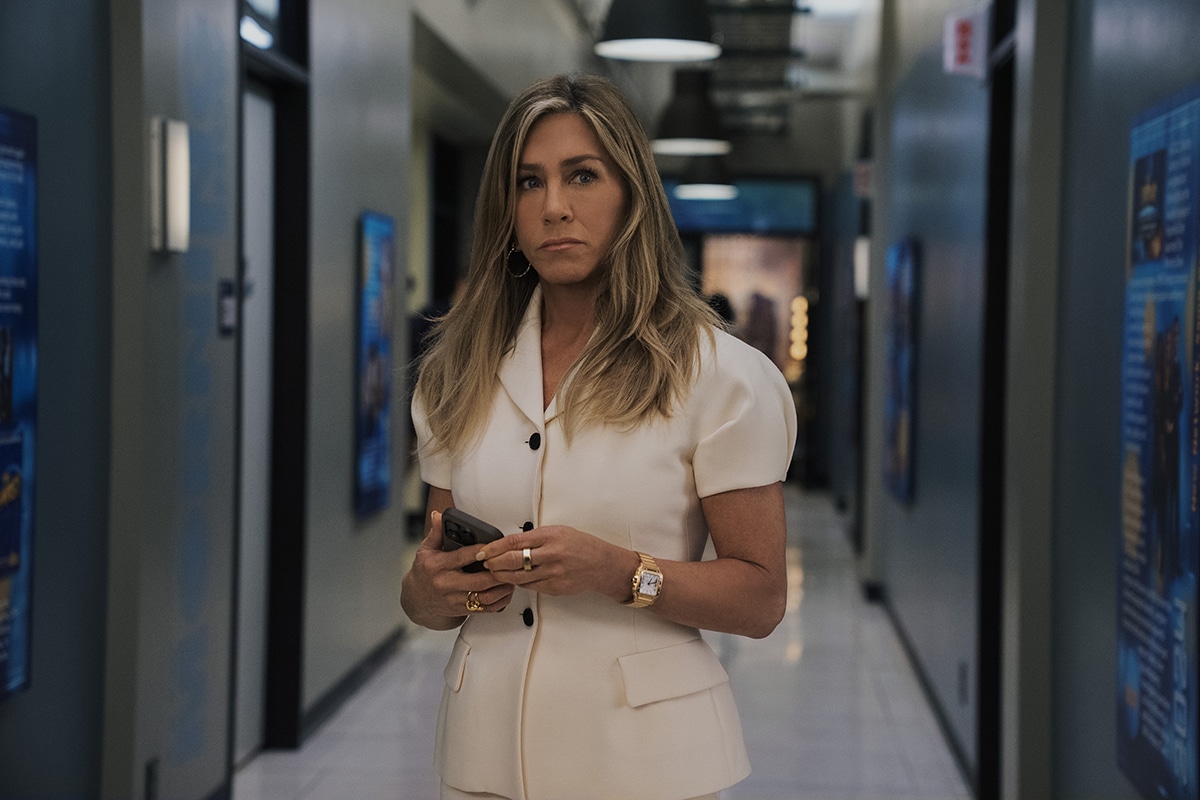
Although The Morning Show Season 4 takes place during an election year, the campaign is barely mentioned. Instead, the events take place before the Olympics, fertile ground for debating who holds power and who will capitalize on it. Today, the picture is clear: whoever masters AI and uses it to reach a wider audience will profit the most. For the network, that means having a global Alex Levy (Jennifer Aniston) who can speak any language thanks to technology.
This innovation raises a familiar dilemma: progress that makes life easier versus the cost of that ease. For the employees of the popular fictional television program, the fear is not abstract. If Alex’s voice can be cloned, what will come next, and how many will be left out in the process? In their executive positions, both Alex and Stella Bak (Greta Lee) try to calm the storm with: “No one will lose their job,” even though neither of them knows if that’s a promise they can actually keep.
Season 4 also delves into one of the most disturbing topics of the digital age: deepfakes. Will anyone believe you when your voice and face appear, declaring something you never said? The question is chilling, and for Alex, it becomes a real nightmare when someone tries to mess with her mind. At stake is not only the collapse of her career, but an international political threat.
Beyond AI, The Morning Show brings back recurring themes from each season: the position of women in the industry, the exclusion of minorities, and the way money often prevails over truth. In this arena, a new character appears: Brodie (Boyd Holbrook), a host-influencer who appears untouchable thanks to his millions of followers and views, despite spreading offensive, mediocre, sexist, and false messages. He’s certainly got a profile with enough potential to continue in future seasons.
The Morning Show asks: Is he really a radical host who believes in conspiracy theories, or just someone who hacked the system to give certain audiences what they want? Either way, the result is the same: feeding a harmful demand. In parallel, Bradley Jackson (Reese Witherspoon) continues to pursue investigative journalism, even at the expense of her own stability. In this way, the series shows the two extremes that characterize today’s media and social networks: on the one hand, there’s the mass consumption of viral lies. On the other, the many attempts to silence those who dare to reveal the truth.
At the head of this whole network, Stella begins to lose perspective. Her attention is on developing a new AI and preserving her place at the professional peak, but she neglects something essential: making room for underrepresented groups who, like her, can bring fresh perspectives to a constantly changing world. From her position of power, she ends up embodying – almost without realizing it – a mindset that she surely detested in the past: “diversity is just a quota to fill.”
