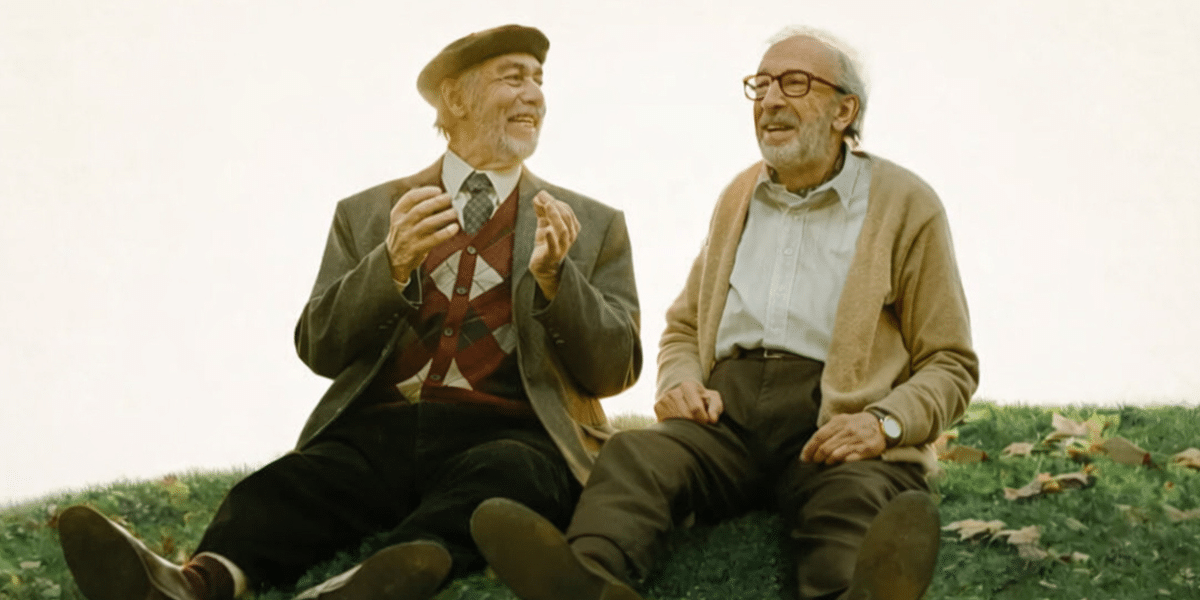
There are stories that haunt us throughout our lives. And that’s what happened to Juan José Campanella, when he saw the play I’m Not Rappaport when he was just 24. The Oscar–winning filmmaker of El Secreto de Sus Ojos would go on to adapt the play into Spanish, moving the setting from Central Park to Buenos Aires, under the name Parque Lezama. His production became a cultural phenomenon: running for over 1,000 performances across ten years and enjoying a triumphant run in Spain.
Now, the director presents his cinematic reimagining on Netflix: Parque Lezama (Strangers in the Park) is, a 115-minute comedy-drama that intelligently embraces its theatrical origins, both American and Argentine, and celebrates them in style. The film offers an extremely intimate experience, backed by the strength of the script and the acting mastery of Luis Brandoni and Eduardo Blanco, who reprise their iconic roles to demonstrate that their chemistry shines with equal intensity on the big screen.
What Is Parque Lezama About?
The story of Parque Lezama is that of two elderly men who, despite their miseries, refuse to lose their dignity. Campanella’s heroes are a pair of unusual curmudgeons, seemingly incompatible and irreconcilable, who by chance meet near the gazebo in Lezama Park, in the emblematic neighborhood of San Telmo, and gradually forge a connection that defies their opposing natures.
Although their bond is born of coincidence, it is strengthened by a shared urgency: they are older adults facing a society that tries to silence and render them invisible.
At the heart of Parque Lezama lies an uncomfortable truth that León lucidly points out: “The problem isn’t that we’re old, Antonio. The problem is that the world no longer sees us. And if the world doesn’t see you, you have to force it to listen to you.” This sentence defines the backbone of the film and pushes these strangers toward an unexpected awakening, in which they become a kind of lifeline for each other.
The film works because Campanella relies on Brandoni and Blanco to be its soul. They manage to make every joy and small victory from their park bench feel real and authentic. And they steer clear of condescension, portraying old age with a defiant dignity, charged with passion and a luminous melancholy.
Parque Lezama is also brimming with endearing mischief. Like when León, in one of his ingenious “alterations” of reality, takes on the role of a relentless lawyer to defend his friend with an arsenal of brilliant lies. Likewise, there are plenty of humorous scenes, such as when these octogenarians try to intimidate a drug dealer and the situation gets out of hand.
Yes, the film will make you laugh, but it also offers scenes of absolute fragility that serve as a painful testimony to the weight of time and the loss of autonomy.
True to the original play’s spirit, but with a delightfully Argentine identity, Parque Lezama stands as a lucid and heartfelt defense of old age, celebrating the elderly as people of integrity who, far from being a burden, continue to offer a unique light to society.
It boldly dissects the social invisibility experienced by older adults, the dangers of suffocating family protectionism, and the unwavering struggle for personal autonomy. Ultimately, our “superheroes with canes” reflect our own tomorrow, warning us about the risk of being discarded by a society incapable of embracing old age. In light of this, they suggest that when we reach the age at which the world stops looking at us, friendship is not just a pastime, but a survival strategy. Their bond is an act of resistance and a healing refuge where it is still possible to hold the reins of one’s own life.
The film also has something important to say about the power of imagination and the use of invented stories as an emotional defense tactic. This creative evasion transcends the merely humorous and becomes a necessary shield to cope with the harsh reality of physical and social deterioration. In a poignant and luminous closing, the protagonists choose to allow themselves a bit of fantasy over a reality that feels too uncomfortable and cruel; it is their way of preserving dignity and a sense of adventure when their surroundings fail them. Thus, they find in friendship and imagination something sacred to hold on to.
Should I Watch it?
Parque Lezama may seem like a small film, contained as it is, within a park’s wooden bench. However, by renouncing the artifices of modern cinema, it chooses stillness and a leisurely pace to focus on what is truly important.
Campanella’s camera does not need to open up to other locations as it knows that the entire universe fits into a true connection. So yes, you should watch it. Parque Lezama stages its comedy-drama in a small space but with giant humanity.
