Created in partnership with NFMLA
The lights had just come up, and my body felt heavy in the seat. I was only halfway through the second block of films at NFMLA’s InFocus: Latin & Hispanic Cinema, and already I could feel the weight of so many stories pressing down at once. Around me, people shifted quietly, some wiping their eyes, others scribbling notes. Onstage, Latina filmmakers spoke about memory, survival, and the kinds of histories you don’t find in textbooks. Their words lingered even as the moderator signaled the next question.
I wasn’t just watching movies. I was being asked to carry them.
The festival had opened earlier that afternoon with NFMLA board members laying out its purpose: to connect filmmakers in Los Angeles with those abroad, from Colombia to the Dominican Republic. They spoke as women who had spent their careers trying to create space for artists often shut out of the industry. Their introductions made clear this wasn’t simply about screening, but community, visibility, and survival.
California State Assemblymember Rick Chavez Zbur, Chair of the Assembly Democratic Caucus, reinforced that urgency, speaking about bill AB 1138 that expands tax credits for independent filmmakers. He explained how the bill supports the full, film-production workforce: grips, costume designers, production assistants. Then Hugo Soto-Martínez, Los Angeles City Councilmember for the 13th District, took the microphone and called the festival itself “an act of rebellion,” noting that Latinos make up a quarter of moviegoers but are almost absent behind the camera.
The sharpest reminder of NFMLA’s InFocus: Latin & Hispanic Cinema intro came from Miguel Santana, President and CEO of the California Community Foundation, who told the crowd: “You may not have realized it when you became filmmakers, but you are warriors for democracy.” He described how dictatorships in Latin America had once tried to erase voices, and how artists refused to let them disappear. Hearing that, I realized the filmmakers sitting around me weren’t just sharing their work – they were stepping into that lineage of resistance.
Each short was its own world, demanding full attention. “Every scene is a memory,” confessed Octavio Daniel Carreño, director of Lights in the Night Sky, during a Q&A. He went on to explain how much of his film was inspired by his own lived experiences and reflections of growing up in Mexico. Rafaella Buzzi, director of Almost Adults, admitted she had cried in the editing room when her film didn’t match her vision: “I put in so much time, so much effort… You have to believe in what you’re doing to do it, and then when you finish, you have to make it smaller so you can actually finish.”
That candor startled me. These weren’t just polished shorts. They were artifacts of years of struggle, of filmmakers scraping together funds, leaning on friends, improvising with trampolines instead of harnesses. The shorts carried tenderness – sisters navigating danger, romances haunted by memory, adolescence under impossible pressure – and the honesty of their creators stayed with me.
Marcela Ochoa, who premiered Hour of Blood, summed it up: “I was so excited to premiere it here at NewFilmmakers LA. They’ve been so wonderful and collaborative and supportive of all of our voices. And it’s just wonderful to show this western horror short about a story that’s not well known from Texas, my home state, to be able to show it here and have an audience and have this incredible reaction.”
Sofia Rovaletti, director of The Interpreter, stressed the value of the platform itself: “This was one of the most wonderful festival experiences because of the network and the community that the festival creates, the executives that we met as filmmakers. It was really, really enriching.”
NFMLA’s InFocus: Latin & Hispanic Cinema moderators guided these conversations with intention too. Yolanda Machado, a Latina film critic and journalist, asked one of the panels to define what makes a story “Latino.” The answers split. “If you’re Latino and you’re the creator, then that’s a Latino story,” Mendoza said. Another pushed back against neat definitions: “I’m not an ambassador. I just make my movies, they happen to be Latino because I am,” said Yashira Ponce, director of Mija. Hearing that through Machado’s framing made the point land even harder. It was less about representing a culture and more about claiming the freedom to tell stories without explanation.
The filmmakers spoke about massacres in Texas that never appear in schoolbooks, ICE raids that echo across generations, and the danger of forgetting that progress always comes from fights fought and won. Latina directors described carving space in an industry that erases them twice over, once for being Latino, and again for being women. By then, my chest felt tight. After hours of watching, I struggled to absorb each frame, but maybe that was the point. The density of stories mirrored the weight of all that has been silenced.
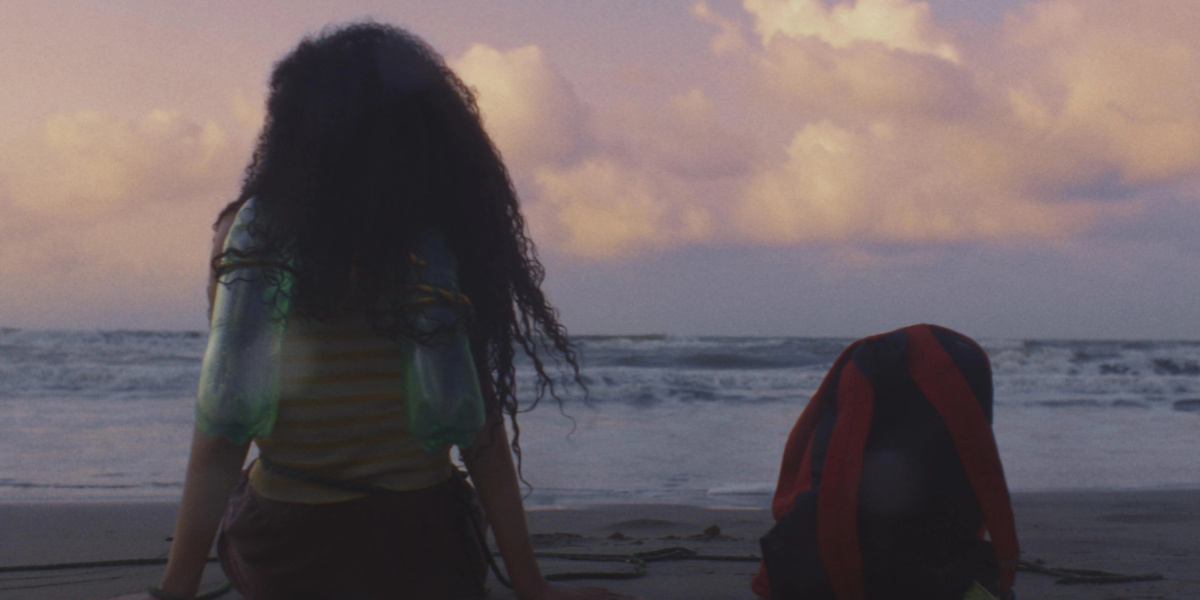
But then there was Bettina Lopez Mendoza, whose short Más Allá reframed migration through the eyes of a child: “The film is about a young migrant girl stuck in the Darién Gap, a stretch of jungle between Colombia and Panama, experiencing a migration crisis. She discovers a portal to a Neverland-like place where she can reconnect with her imagination and essentially learn to be a kid again. So I call it a coming of innocence tale, rather than a coming of age… portraying migration as a brave act of imagination.”
Her words cut through the heaviness. After so many films about grief, violence, and injustice, this idea – that imagination itself could be a form of resistance – opened a small window of light.
I found myself clinging to contradictions. On one side, the desire to be seen in our full universality – to make sci-fi, horror, comedy, romance without being asked how it “represents” us. On the other, the refusal to let Hollywood smooth our identities into something palatable. Both were true. Both stayed with me as I shifted in my seat, exhausted yet alert to the fact that there is no single way to define us.
By the time I stepped out of the theater, I was drained but buzzing. The night hadn’t been about following every plot. It had been about absorbing the collective impact of voices colliding. The heaviness, the intimacy, the resistance, the memory, they layered themselves on me, film after film, until I walked into the Los Angeles night carrying them all.
What lingered most wasn’t one image or storyline but the chorus of voices: the women who opened the festival by calling for bridges across borders, the elected officials who named storytelling as resistance, the filmmakers who admitted to their doubts, the Latina critic who pushed them to define themselves, and the storytellers who reminded us that imagination can be just as radical as protest.
NFMLA’S InFocus: Latin & Hispanic Cinema had promised a showcase of Latinx cinema. What it delivered was something messier, truer, and heavier: the reminder that to tell our stories, especially as Latinos, is to keep fighting for the space to tell them at all.
