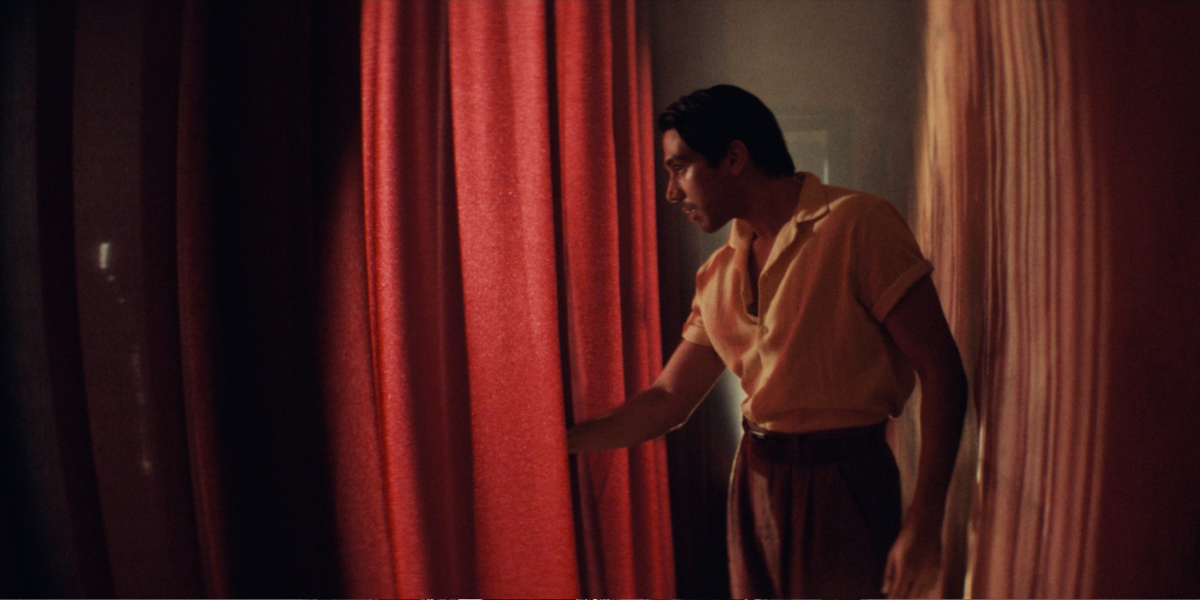
Paraguay, 1958. Four years into Latin America’s longest-running military dictatorship. Marcelo Martinessi’s stunning Berlinale Film Festival Narciso paints Capital Asunción like a living necropolis. The streets are deadly quiet, people hushing like scared ghosts through the empty night. The only steady, comforting sound? “¡ZP10 Radio Capital, la voz del pueblo para el pueblo!”
A small, passionate radio team brings some warmth, space for reflection, and an outlet for the repressed people of Asunción. They do it though beloved folk music and spirited radio plays – in between state propaganda messages, por supuesto. That is the city’s iron rhythm until young radio announcer and Rock n’ Roll lover Narciso Arévalos disrupts it. He’s like an electric guitar in a country that’s so unused to modern sounds that they don’t have running water.
Winner of the FIPRESCI-Jury award, Narciso is based on popular radio personality Bernardo Aranda, a queer pioneer, who in 1958, was mysteriously murdered – burned in his own bed. The movie opens juxtaposing two images: Narciso joyfully introducing his adoring audience to Buddy Holly and his body sparking into flames before being taken by the fire.
It’s an illustration of the timeless battle between free expression and oppression. And it had its world premiere at the Berlinale in Berlin’s iconic Zoo Palast in its grand hall, decked in gold and red velvet. The excited, packed house immediately became part of this shadowed past, seeping gloriously into our present.
Narciso, played magnetically by newcomer Diro Romero, brings light and spirit into this darkness. He arrives at Radio Capital freshly from Buenos Aires, trying to convince radio jefe Don Luis ‘Lulù’ Bermudez (Manuel Cuenca) that Paraguay’s youth will be moved by the exciting new music coming from the States. Lulù puffs: “Who needs Elvis when we have the best folk groups of all the Americas?”
So at first, Narciso has to content himself with doing sound effects in the background of the station’s radio adaptation of Bram Stoker’s Dracula.
Shot masterfully by DOP Luis Armando Arteaga with wide, slightly distorted lenses, the film centers around Radio Central’s shadowy caverns. This setting works as a peephole into the country and its people. They may be worried about El Rubio Alfredo Stroessner’s violent regime – but we never see him in this film. Instead, we only witness the effects of his vicious military through the shadows of the streets. And the stark state radio announcements warning that new, foreign music is “perverting” the country’s youth.
Narciso moves like a benevolent spirit through all these shadows, embodying a modern, positive attitude. He pesters Lulù, very aware of the repressed, older man’s desire for him, and ultimately using it to get the green light for his Rock n’ Roll radio show. It helps that a newly arrived American politician Mr. Wesson (Nahuel Pérez Biscayart) shares Narciso’s love of rock and Lulù attraction to its aspiring champion.
When Narciso’s musical revolution, the regime soon knocks on the door. Their threats, apart from break-ins and homophobic graffiti in the station, manifest through Goya-winning composer Zeltia Montes Muñoz’s fierce score. The ominous strings pierce the people’s joy in folk and in Rock n’ Roll. This soundtrack culminates by reasserting the strings’ dominance in the film’s finale, at the conclusion of the station’s Dracula, right after Narciso’s death.
And here it finally becomes evident why this production-within-the-production is so central to this story: Dracula is queer cannon – and Narciso underscores that point with a twist in the last few minutes that I won’t spoil here. So Lulù’s instance on performing this particular story is an act of resistance, a coded way for el Radio Central to celebrate gay identity and proof that the fight continues with or without the station’s star DJ.
The pueblo of Paraguay needs these covert types of resistance because El Rubio is so skilled at manipulating the public narrative, much like a certain contemporary president. After the beloved and out radio host is murdered, the dictator evades public outrage by purporting he was killed by his own people, society’s “vampires.” El Rubio arrests 108 gay men, publicly parading them and then torturing them behind closed doors. Many disappeared forever, but conveniently, the regime never named an actual perpetrator.
Fearing becoming one of the “caso 108,” now eponymous with homophobic violence in Paraguay, Lulù swiftly reconverts the station to its exclusively folk music playlist. But before that, Radio Capital bravely finishes their Dracula to the knocks of military police at the door.
Between the loudly warring forces of military trumpets, comforting folk, and rebelling rock, Narciso’s soundtrack brings to life this ancient human tension between desire and our paradoxical fear of expressing it.
As a whole, Narciso is a timeless, quietly powerful film that meets the moment in tying the past with the present through the power of sound. In Berlin, Paraguay, the U.S., and Germany came together to marvel at this film that shows how important art is as a practice of resistance.
