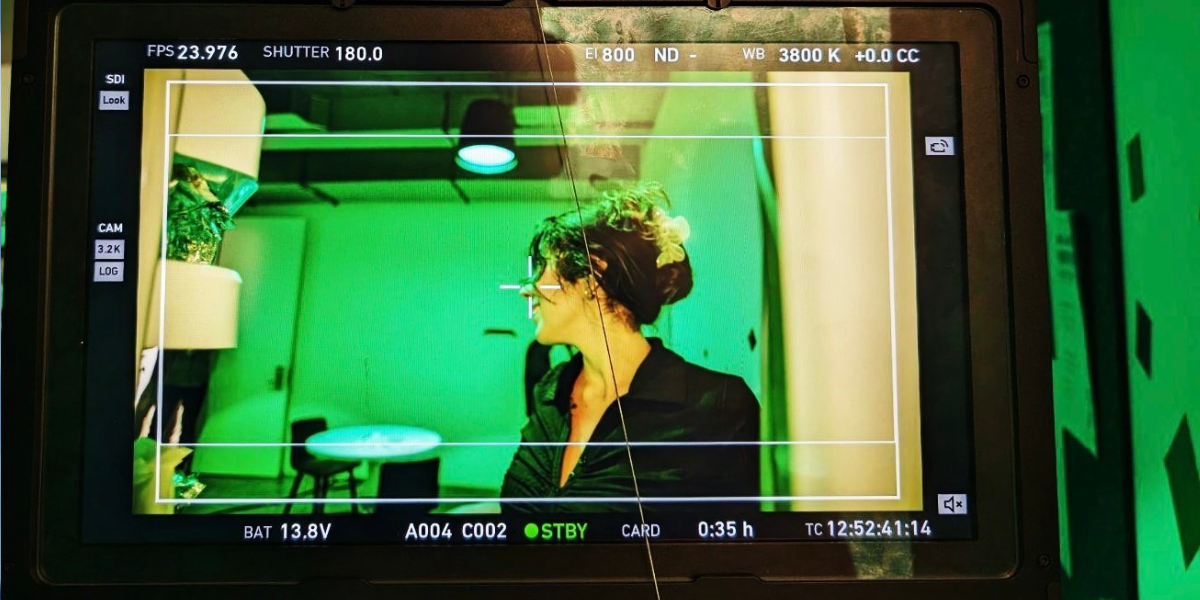
A few days ago, I was having a conversation on set with someone I had just met. We were talking about work, projects, how long we had been in Los Angeles – the usual film industry small talk. At some point, I mentioned one of the projects I’m currently developing alongside a Laker, and the person immediately responded, “Wow, you’re so lucky.”
I smiled politely, but I kept thinking about that word – “lucky.”
Not because I’m ungrateful. Gratitude is how I’ve survived this industry – I’m grateful every day that I’ve been able to work alongside internationally recognized artists. I’m grateful that shortly after graduating from film school, I was stepping onto high-level productions and creative environments that many young filmmakers spend years trying to access.
But it wasn’t luck that brought me into those rooms in the entertainment industry.
It was my willingness to do the work others wouldn’t.
As an immigrant, I understood very early on that access wouldn’t work for me the way it does for people who belong. I never allowed myself to become precious about the work. I said yes to everything. I don’t think certain responsibilities are beneath me or that I’m “too qualified” to help. I worked for free more times than I got paid. The truth is that many of the opportunities that eventually shaped my career began with positions most people overlook.
What people see now – the names, the credits, the meetings, the projects in development – is the polished outcome of years spent quietly overextending myself just to remain present in the room.
And I think that’s the difference people sometimes mistake for luck.
I remember once monitoring the parking lot for nearly seven hours straight without access to food, water, or even a bathroom break. When someone finally came to replace me, the first thing asked was whether there was a bathroom nearby. If there wasn’t, he could only stay for around forty minutes since he “really needed to pee a lot.”
And I just remember standing there thinking….. I’m literally on my period.
A lot of people around me had boundaries I didn’t feel like I could afford to have.
I’ve seen so many women (especially Hispanic/Latina women) in this industry overextend themselves because they understand how difficult it is to get here. Sometimes that means accepting being overworked, underestimated, ignored, or uncomfortable because we don’t want to risk the opportunity.
There have been countless moments where I witnessed the difference in how people responded to me compared to male colleagues in the exact same position. I’ve had situations where I asked crew members for something multiple times and was completely ignored, only for a male coworker with the exact same authority to repeat my same sentence and suddenly be heard immediately.
People too often assume I’m “just helping” rather than actually leading, no matter how far I rise.
And then there are the moments that are impossible to interpret generously. I once asked a producer for the company credit card to get my task done, and his response was: “Why don’t you fuck me first?”
I often wonder whether that interaction would have happened if I were a man.
I also wonder whether this is the type of “luck” people imagine when they talk about me (or other women) succeeding in entertainment.
The craziest part is not even hearing something like that. The craziest part is how quickly your brain learns to continue functioning after. You start calculating everything internally. Is speaking up worth risking the relationship? Will people think I’m difficult? Emotional? Dramatic? Will I stop getting called for work?
So you laugh things off. You continue doing your job professionally even when you can feel that something is wrong because somewhere along the way, you’ve internalized the idea that surviving all the hardships is part of earning your place.
And I think Latina women especially are taught this constantly: be adaptable, be easy to work with, be grateful, don’t ask for too much, don’t complain, don’t make people uncomfortable, work for free and for the opportunity.
At some point, you realize how exhausting it becomes to constantly balance ambition with likability.
What frustrates me most is how invisible these dynamics become once people see external success. Once people hear recognizable names attached to your work, watch your career progress, or see you entering larger productions and development spaces, they assume the struggle must have disappeared, too.
But in reality, a lot of the emotional negotiation simply becomes quieter and more internal.
That’s why I react strangely when people describe my career in entertainment as “luck.”
Because yes, I feel grateful. Deeply grateful.
But I also know how much persistence it took.
People love talking about immigrant ambition, the idea of resilience, the successful version of the narrative.
But very few people talk honestly about the emotional labor behind it. About how many immigrant women spend years overcompensating, overpreparing, overworking, and overexplaining themselves simply to be perceived as equally competent. About how many of us tolerate all sorts of things.
So no, my career in the entertainment industry is not built on luck. More like persistence, adaptability, and sacrifice.
