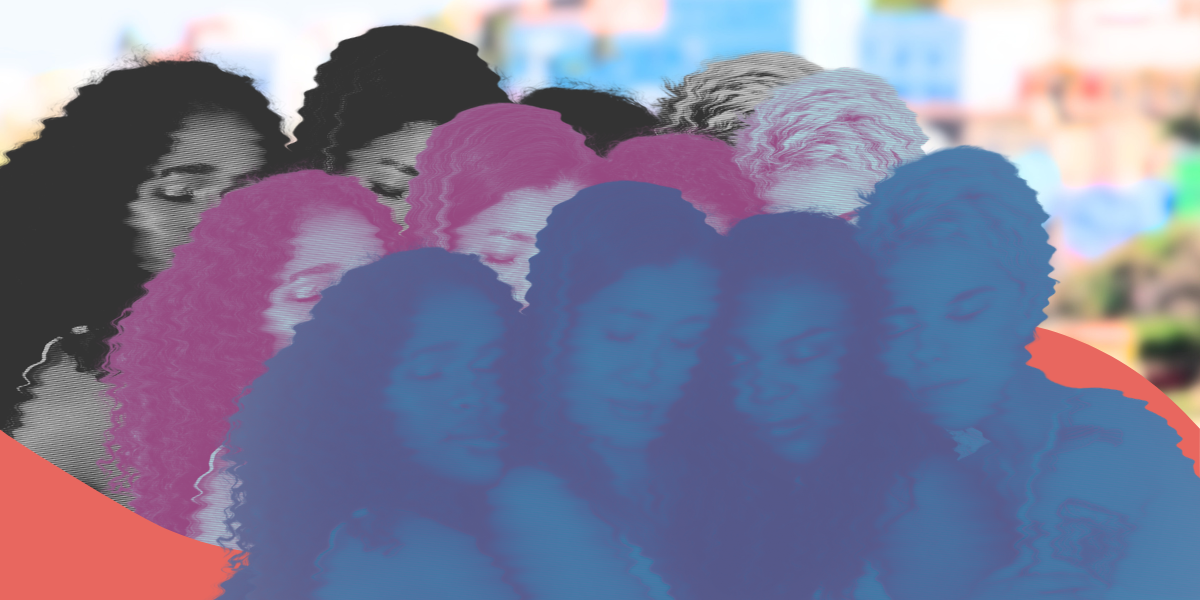
The ancestors returned me to Borinquen to bear witness. Because they knew how deeply intimate partner violence impacted my life in childhood – and again in adulthood in Puerto Rico and off. And because they knew what I didn’t yet as I stood that sunny afternoon in July 2021 near a San Juan mural honoring womxn lost to femicides. This terrible homecoming was also my responsibility, to be here, to bear witness, to fight for those we’ve lost and those who remain.
The deafening silence of their names etched on a makeshift community memorial overwhelmed me. Keishla Marlen Rodríguez Ortiz, Neulisa ‘Alexa’ Luciano Ruiz, Jeanette Rodríguez Ramos, Ashley Ann Adorno, Andrea Cristina Ruiz Costas, and on and on. They are victims of a colonial patriarchy where machismo masquerades as protection, and violent jealousy is disguised as deep love. Much as I am a fiercely proud Boricua, I refuse to sugarcoat that my cultura has long normalized violence against our cuerpas.

I moved to my ancestral motherland in late November 2021, ten months after then-governor Pedro Pierluisi declared a State of Emergency. But while the political rhetoric surrounding the issue seemed a step in the right direction, little has improved. Each year, dozens of mujeres fall to feminicidio.
The numbers are staggering for a tiny Caribbean island archipelago of 3.2 million. This past March, CENTRO for Puerto Rican Studies posted “every seven days, a woman in Puerto Rico falls victim to femicide.” This year, we’re already at the double-digit count, with May being an especially deadly month at 10 femicides.
Over the past four and a half years, I’ve asked myself many questions on the subject. One is the media’s role in normalizing intimate partner violence here in Puerto Rico.
Their toxic mentality is visible in how they sensationalize the murder(s). Just look at the high-profile case of 27-year-young, pregnant Keishla Marlen Rodríguez Ortiz. The media frenzy focused on the gruesome details, rather than dedicating more time to the murderer’s history of abusive behavior toward women. Former Olympic boxer Félix Verdejo-Sánchez had a reported pattern of infidelity, aggression, and controlling behavior with exes. But instead, we kept getting the vile details on replay.
Another thing I’ve noticed is that when femme journalists report on femicides, the “authorities” are largely men. Experts, too, are often hombres. This once again plays on both our individual and collective perception of whose voices matter most. In Puerto Rico, public opinion – I’m gauging via the comments section of social media platforms – is heavily swayed toward outrage and victim blaming.
Then there’s how we are objectified. One afternoon, as I prepared my cafecito, I tuned into one of my favorite Salsa stations, the male/female dj-duo were talking about relationships and at one point the guy commented, “Cuz if she looks good, has long blond hair and a banging body, her man better keep her happy.” His radio partner just laughed. My mouth dropped, and then I remembered, ok, this is the machismo nonsense many here on Borinquen Bella believe and are comfortable perpetuating.
Earlier this year, I spent nearly four months dealing with my own intimate partner violence court case in Puerto Rico. Ley 54, the 1989 Domestic Abuse Prevention and Intervention Act, is intended to protect those of us impacted by this often silent crime. And though I was initially granted a temporary order of protection, I have experienced firsthand how the system punishes those of us who ask for help.
Our motives become suspect. Our integrity is questioned. Our past decisions are judged. Our words are weaponized against us. Legal professionals gaslight us, invalidating our concerns. Fortunately, in my situation, I had a very supportive legal and social-worker team.
One of the biggest learning experiences for me was the question, “Did he ever hit you?” This became the credibility calculator, the same one sometimes used in the media to highlight the brutality of the abuse, minimizing the psychological harm of abuse. It is the marker some here use to gauge the levels of solidarity we deserve, not realizing that doing so invalidates our traumatic experiences. Folks need to know that physical violence is aggression, whether it’s to one’s person or to one’s property. Violently grabbing your cell phone from your hands and throwing it is a form of abuse, and it can put you in a state of constant alert. This type of manipulation shouldn’t be downplayed. Some scars are invisible, yet they are still detrimental to one’s health – and the effects last years, a lifetime even.
I know this because my family has coddled its share of male abusers. I grew up hearing things like “estas cosas pasan” as a way of excusing their violent behavior. I also had a close friend who was the victim of her ex-husband’s femicide-suicide. From childhood into adulthood, I’ve been haunted by these memories. And today, rather than falter from fear, I remain steadfast in shouting my truth because silence is not an option.
A glimmer of hope lies with feminist organizations focused on addressing gender-based violence like El Observatorio de Equidad de Género and La Colectiva Feminista en Construcción (La Cole). El Observatorio monitors and tracks the statistics on the archipelago to transform our collective dialogue about these crimes and impact public policy. Rooted in Black, decolonial feminism, La Cole mobilizes to agitate and dismantle the State’s complicity in the oppression of our marginalized communities.
Puerto Rico’s colonial patriarchy has been alive and thriving for over 500 years. No estado de emergencia, no amount of legislation is going to save us. Ending this crisis starts with correcting judicial failures in denied protection orders. It begins to end by swapping sensationalized media headlines with action that recognizes institutional neglect. It advances with refusing the silence in our cultura – until here and everywhere in the world there is #niunamas.
