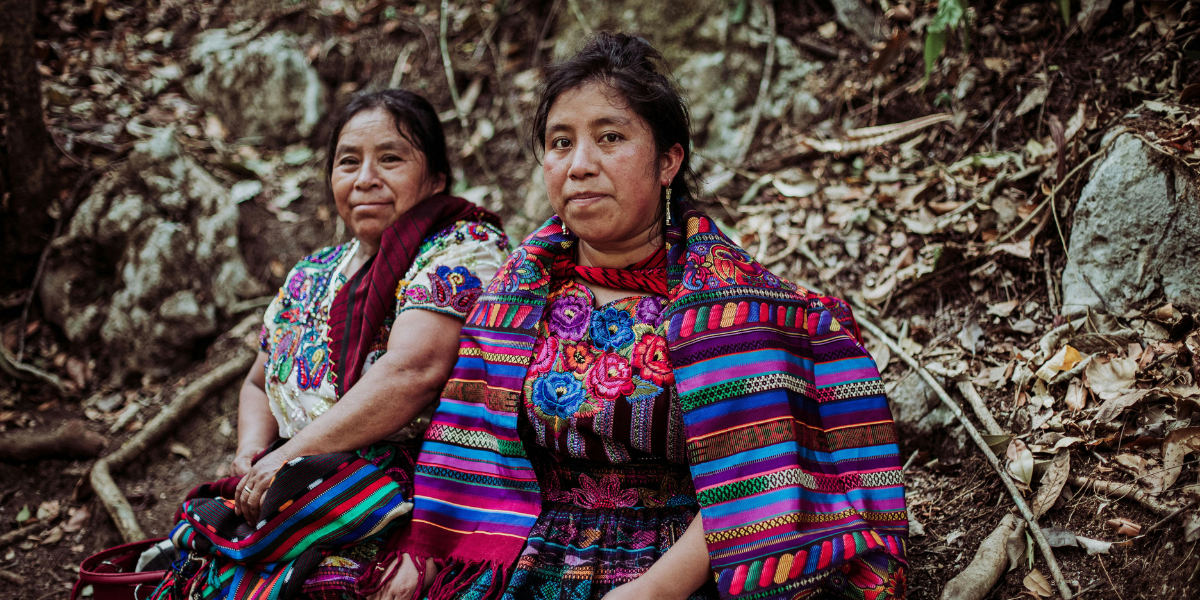
How do you celebrate Latin American Heritage Month? Maybe you watch Latin films, find new artists, or learn new recipes. Maybe you don’t do anything for the month, and that’s valid, too. But regardless, we should pay more attention to how our community engages with its history and ongoing colonial legacies. Specifically, the ongoing colonial violence Indigenous peoples face across Latin America. Yes, it’s time to decolonize Latin American Heritage Month.
As Yásnaya Elena A. Gil writes in her book, This Mouth is Mine, “We have sacrificed Mexico in favour of creating the idea of Mexico.” While the book primarily focuses on language, this line stayed with me as I reflected on how various Latin American countries continue to betray their Indigenous communities. Specifically, I’m talking about “territorial invasions and forced displacements, deforestation,” illegal mining, linguistic discrimination, and lack of access to healthcare and education.
Many of us – especially those from the diaspora – are not directly involved in the policies and government of our home countries. Though there are ways to get involved directly, decolonization is also a process that starts from within.
When we think about our heritage, what do we think about? Perhaps language, food, music, and cultural traditions. Language tends to be a big one. Sometimes, our community is focused on Spanish or Portuguese as an inherent part of Latin American identity. The fact that the U.S. has named Latin American Heritage Month as “Hispanic” Heritage Month is more evidence of the problem around language and the need to decolonize our thinking.
Of course, being able to speak with family, learning the unique slang of your home country, and getting a sense of a region’s various Spanish accents can be joyful. However, it’s important to consider that the widespread use of Spanish in Latin America ultimately came at the cost of erasure. Yásnaya emphasizes that “the loss of a language is not a peaceful process in which speakers abandon one language for another; it’s a process in which speakers are subjected to punishment, contempt, and usually colonialism.” This doesn’t mean we necessarily need to be ashamed of speaking colonial languages (especially as linguistic discrimination rises in the U.S.). However, we can acknowledge that despite colonial efforts to homogenize language, there are hundreds of Indigenous languages still spoken in LATAM.
Latin American identity is diverse and complex. We are not a single race or culture, and some reject the idea of Latinidad entirely, because people experience it so differently. Some see the very idea of a cross-continent shared culture as erasing Indigenous identity. The reality is that Latin America’s history is seeped in colonial violence and celebrating our heritage should also come with an interrogation of that past. When Latin Americans trace back their roots and begin to reclaim Indigeneity, they bump into Eurocentric standards that harshly judge their heritages.
Latin American Heritage Month is an opportunity. Though we celebrate and engage with our cultures year-round, heritage months give space for those inside and outside the community to participate. As we continue to learn about Latin American events, arts, and histories, it is essential to pay particular attention to our various Indigenous cultures. It’s an opportunity to foster dialogue and resist erasure. Tamales might be thought of as Mexican cuisine, for example, but their history can be traced back to the Aztecs and Mayans.
Though there are hundreds of Indigenous ethnic groups across Central and South America, perhaps begin with the ones from your own country. For example, in Venezuela, the largest Indigenous group is the Wayúu, who are “known for producing colorful, high-quality textiles that are part of an ancestral women-led practice.” Start by reading up on your local Indigenous cultures, whether you’re a part of them or not, and don’t stop there.
After all, we can always learn more. You can read Yásnaya Elena A. Gil’s essay, “We Were Not Always Indigenous” or her book The Mouth is Mine. You can explore “The Indigenous World 2025,” a report that covers Indigenous communities all across the globe (and nearly 200 pages that cover Central American, South America, and the Caribbean). You can also review the Indigenous Film Index, which maps films from different Indigenous culture groups and provides information about them. Though Latin American film often features poor representation of Indigenous communities, taking the time to research and watch Indigenous-led films and documentaries is another way to engage in Latin American Heritage Month.
However you choose to participate, don’t forget to be critical and decolonize Latin American Heritage Month.
