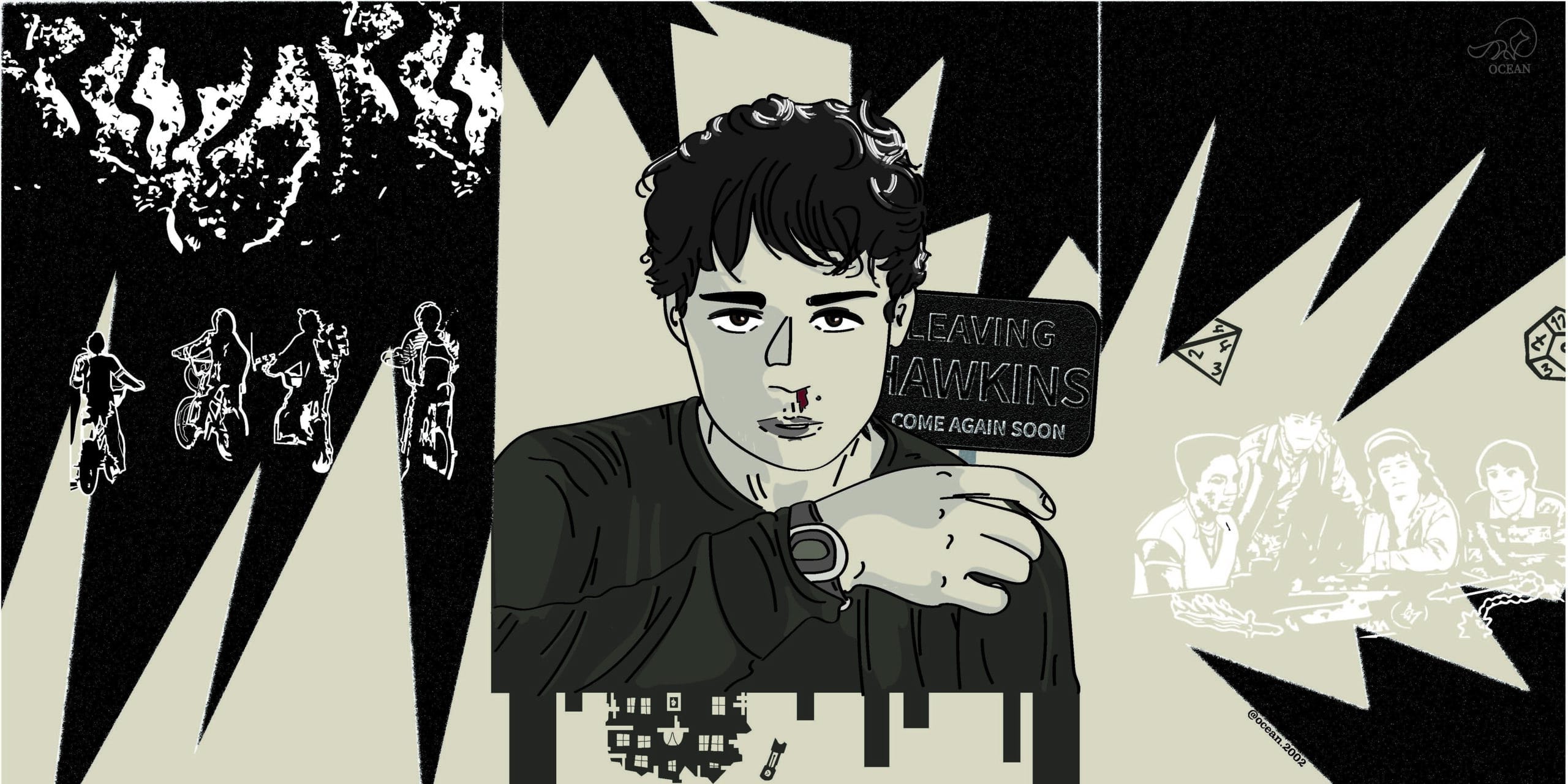
After nearly a decade on air, Stranger Things concluded not as most television series do (with debate or disappointment) but with something stranger: disbelief. What had been Netflix’s most valuable cultural export, a show that transformed synth music, Dungeons & Dragons, and suburban Americana into a shared global language, arrived at its finale only to be met by refusal in the form of “ConformityGate.”
Instead of moving on, fans began investigating. Set dressing, continuity errors, mirrored dialogue, camera placement – were these details intentional clues or evidence of something missing? Online, a theory took hold: the ending we saw was not the real one. Somewhere, a different cut existed. A secret episode. Footage Netflix was choosing not to release.
At face value, ConformityGate looks like just another fandom conspiracy spiral. The internet has seen plenty. But dismissing it misses what’s actually happening here. As one viral tweet put it, “ConformityGate isn’t about hating endings… it’s here to remind us that we don’t need to be a robotic society and we can always write the ending we want for any story, especially our favorites.” That framing matters. This isn’t just about whether the Duffers stuck the landing. It’s about authorship, participation, and what audiences feel they are owed after giving a show ten years of loyalty, attention, and love.
Fan account @67gate popularized the theory on X (formerly Twitter), stitching together alleged “coincidences” in the final episodes – production inconsistencies, mirrored dialogue, set details that “don’t add up” – to claim that the ending we saw wasn’t the real one. The hashtag #conformitygate spread fast, not because everyone believed it literally, but because it gave language to a shared feeling: something about this ending doesn’t sit right.
Stranger Things trained its audience not to believe in coincidences. The show prides itself on detail, on Chekhov’s bikes and carefully planted motifs. When a series like that suddenly asks viewers to accept a pile of unexplained details as meaningless, the cognitive dissonance is real. As one post bluntly said, teaching a fandom “I don’t believe in coincidences” and then turning around to claim everything is coincidence feels like gaslighting. You built the system. Don’t be shocked when people use it.
ConformityGate did not metastasize because a doorknob appeared on the wrong side of a door or a background prop failed continuity. Those details were just the kindling. What made it combustible was communion. This was not a fandom hunting for answers so much as one rediscovering itself.
The timelines filled with something rarer than certainty: delight. People compared notes like classmates circling a chalkboard, treating theory-building less as proof-seeking than play. One fan described it as the first time in years fandom spaces had felt joyful rather than adversarial. Another said it pushed them to rewrite the series outright.
In that sense, the truth of the theory was irrelevant. What mattered was that it gave people permission to care together again.
Culturally, Stranger Things has never functioned as just another television series. It is Netflix’s most successful global property, one of the last true monoculture events in an attention economy built to fracture. It crossed borders easily and generations unexpectedly, children watched it with parents, friends synchronized viewing across time zones.
This year, I rewatched the entire series with my mom, who had never seen it before. What it gave us was not novelty but something far rarer: sustained attention, shared feeling, a sense that the outcome mattered. That is the show’s quiet thesis. Beneath the monsters and mythology, Stranger Things has always argued that connection is a survival strategy, that friendship can outlast terror, that love justifies endurance.
When a story built on that premise ends, its conclusion is not merely narrative. Its emotional infrastructure also gets dismantled for millions of viewers at once.
That’s why a finale being “just okay” is, frankly, disastrous. Not offensively bad. Not unwatchable. Just mid. As one widely shared comment noted, the problem wasn’t that the ending failed spectacularly. It’s that it failed quietly, combined with a plethora of strange, unexplained choices in a series famous for intentionality. If your finale inspires denial instead of debate, you didn’t just miss – you misread your audience.
From an academic standpoint, this fits squarely within fan studies scholarship. Henry Jenkins has long argued that fandoms are participatory cultures, not passive consumers. Fans don’t just watch: they remix, edit, theorize, and recontextualize. More recently, experts studying TikTok and platform culture have shown that fan edits are now a primary discovery mechanism for shows, often more influential than official marketing. Netflix benefits enormously from this unpaid labor. Fans make the show legible, desirable, and emotionally sticky in algorithmic spaces. So ConformityGate is not a betrayal of the show. It’s a continuation of how Stranger Things has always lived online.
The entertainment industry celebrates fan engagement right up to the moment it becomes inconvenient. When Volume II dropped, fans began circulating petitions calling on Netflix to release complete footage or extended director cuts. It wasn’t a niche outburst or a temporary flare of online discontent. It was a coordinated, international response to the sense that Netflix had closed their biggest story with insufficient care.
What complicates the reaction is that even many skeptics admit to enjoying the theory. “I kind of love the idea,” one widely shared post read, “but it’s too conceptual for the Duffers, and commercially it makes no sense, so Netflix would never allow it.” The remark lands because it is clear-eyed. These fans are not confused about how the industry works, but they are resisting how corporate storytelling smooths away the strangeness that makes this series feel alive.
The irony is that, secret episode or not, ConformityGate may stand as Stranger Things’ most compelling postscript. For a brief stretch (December 2025 into January 2026), the internet moved in near unison, gripped by a level of collective fixation that has grown increasingly rare. Timelines buzzed with speculation, contradiction, and momentum, making a feedback loop of attention that felt less like outrage than exhilaration.
Call it mass delusion if you like, but it was also a reminder of what storytelling still does at scale: it creates shared myth, sustained focus, and the refusal to accept closure on purely institutional terms. In that sense, ConformityGate didn’t undermine the ending so much as expose a deeper truth – that stories do not end when platforms say they do, but when audiences finally agree to let them go.
There may be no secret episode. They may have spent the budget on Godzilla. But if the goal of art is to make people feel, connect, argue, rewrite, and care, then ConformityGate proves that Stranger Things, for all its flaws at the finish line, still succeeded in the way that matters most. And honestly? I feel sorry for anyone who didn’t get to experience it.
