Netflix is premiering one of the most anticipated and ambitious projects in Latin American fiction: Mis Muertos Tristes (My Sad Dead). Directed by acclaimed Chilean filmmaker Pablo Larraín – internationally recognized for feature films such as Spencer, Jackie, and María – this psychological horror-drama series brings to the screen the hypnotic universe of Argentine author Mariana Enriquez, the leading exponent of “South American Gothic” and one of the most disruptive minds in contemporary Spanish-language literature.
This four-episode miniseries is a bold adaptation. Far from settling for a literal translation, the production expands on the author’s story by incorporating subplots and characters from her other, notable work – Julie, A Sunny Place for Shady People, and, to a lesser extent, When We Talked to the Dead. The result is a rich, complex piece of art that offers viewers a completely renewed perspective. Or, as Enriquez detailed to Página12, “Pablo’s point of view and his gaze are decisive, because what is happening there is a new text.”
In Mis Muertos Tristes, Larraín and Enriquez brilliantly bring together their respective visions. Building from this convergence, the miniseries uses the supernatural to examine the social wounds of our region, as well as the moral and justice-related debts we owe to our dead.
What Is Mis Muertos Tristes About?
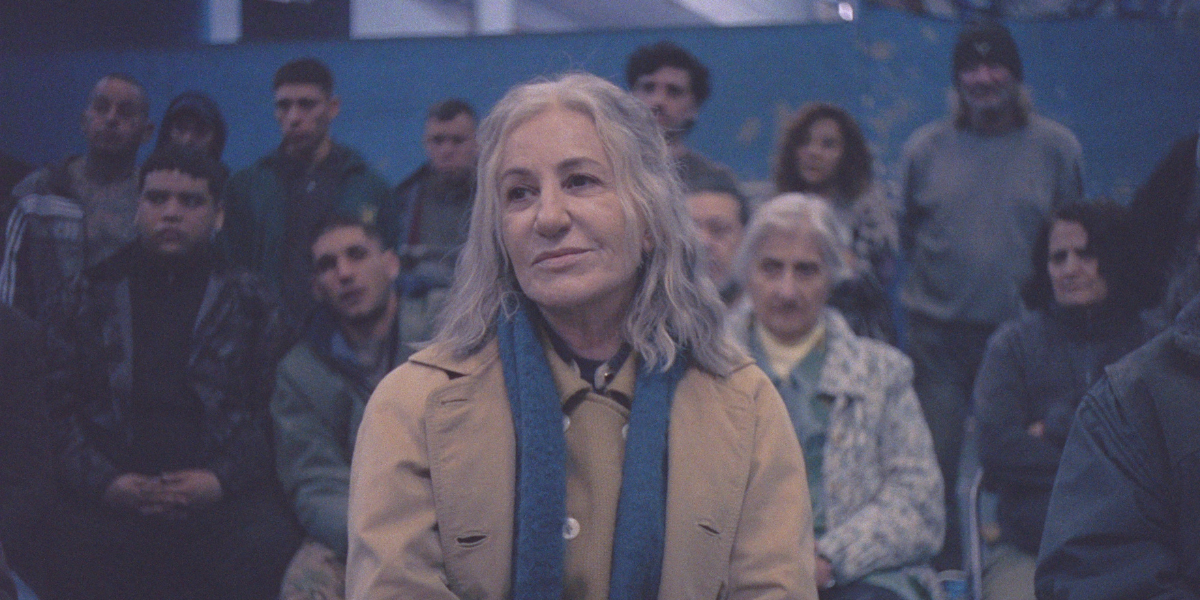
Set in Piedrabuena, a Buenos Aires neighborhood deeply plagued by violence and institutional neglect, the story takes us into the life of Ema (Mercedes Morán), a recently retired gastroenterologist who lives with a condition as extraordinary as it is exhausting: she has always been able to see, hear, and interact with the spirits of people whose lives ended violently or in extreme pain. Although she has spent decades bearing this gift in silence, her resilience begins to crumble when she takes in her unstable niece Julie (Carolina Sánchez Álvarez), who possesses the same ability but experiences it through a much more visceral and sexual impulse.
While Ema grapples with this turbulent family reunion, the brutal murder of a group of teenage artists coincides with the neighbors beginning to perceive the echoes of the deceased. Trapped in a loop, the spirits repeat, exactly and mechanically, the screams and sounds from their final seconds of life, forcing Ema to intervene. She may not be able to send the ghosts anywhere or give them proper closure, but at least she manages to calm them temporarily.
It is in the midst of this tense coexistence, our protagonist brilliantly sums up the series’ central concept: “People who die tragically need to come back so we can see them.” Following this supernatural intrusion, Ema and her neighbors must confront their own guilt, omissions, and complicity in the violence around them.
The Ghost as a Reflection of Moral Debt and Impunity
Anyone familiar with Enriquez’s literary work knows that her use of the supernatural is never gratuitous or mere entertainment, but rather serves as a provocative vehicle for political and social critique. True to this tradition, the real horror in Netflix’s adaptation of Mis Muertos Tristes does not come exclusively from the afterlife, but from real and immediate factors: urban violence, the chronic fear of crime, collective apathy, and governmental neglect. This is not a story that seeks to scare the viewer with gimmicks, but rather an uncomfortable examination of the moral debts that society and the state owe to their victims.
In both the original short stories and the adaptation, the ghosts do not behave like traditional haunts, but rather as direct embodiments of injustice. Each “presencia” is a case that refuses to be forgotten. We see this pattern clearly in the group of teenagers shot for no reason, in the thief left to bleed to death, and, above all, in the young student executed in broad daylight. The latter returns, pounding on doors to beg for help, but the community, consumed by fear, chooses not to intervene. In the author’s own words to Rolling Stone, “I use ghosts as a scar, as a recurring trauma, as an injustice that was never redressed… What remains is an echo. What remains is memory.”
Mis Muertos Tristes also examines how state neglect, the feeling of vulnerability, and chronic fear of one’s surroundings destroy community empathy. In this case, exposure to environmental danger and its magnified perception have led the residents of Piedrabuena to isolation, hypervigilance, and desensitization. Beyond the fantastical elements of the story, this situation mirrors the reality of the country: as early as 2015, data from the UCA’s Argentine Social Debt Observatory indicated that subjective insecurity affected more than 80% of the urban population. Mis Muertos Tristes warns us of an uncomfortable truth: a society trapped in a state of constant alert sacrifices its own humanity.
Strong Performances and an Immersive Sound
Episode after episode, a strong, mostly female cast makes daily life alongside the supernatural feel entirely believable, creating both tension and a sense of intimacy. Morán portrays the medium as a steadfast, reserved, and gruff woman with a delightful penchant for sharp insults. For her part, Álvarez delivers a moving and visceral performance, portraying her character’s sexuality with the kind of freedom that only comes with the total absence of judgment.
Mis Muertos Tristes also boasts a dynamic soundscape, which drives the suspense and dramatic tension. Rather than relying on flashy visual effects to portray the ghosts of Piedrabuena, the production chooses the acoustic dimension to signal their chilling presence and demands. Just as the short story transforms the echoes of the deceased into an inescapable presence, the immersive audio design by Mauricio López and Filmo Estudios excels at trapping the viewer in the neighborhood’s atmosphere of suffocation and unease.
Should I Watch It?
Mis Muertos Tristes is the third audiovisual adaptation of Enriquez’s work, following the films Bajar es lo Peor and the more recent La Virgen de la Tosquera, and it is, without a doubt, the most stimulating reinterpretation of her work to date.
It’s thrilling to witness the result of the extraordinary narrative and aesthetic dialogue between its two creators. Larraín and Enríquez bring to life a series that is as disturbing as it is essential, one that uses the supernatural to unravel the harsh realities of Latin America. Viewers seeking psychological horror that doesn’t shy away from social comment will find an outstanding offering here. Hit play – pronto!
