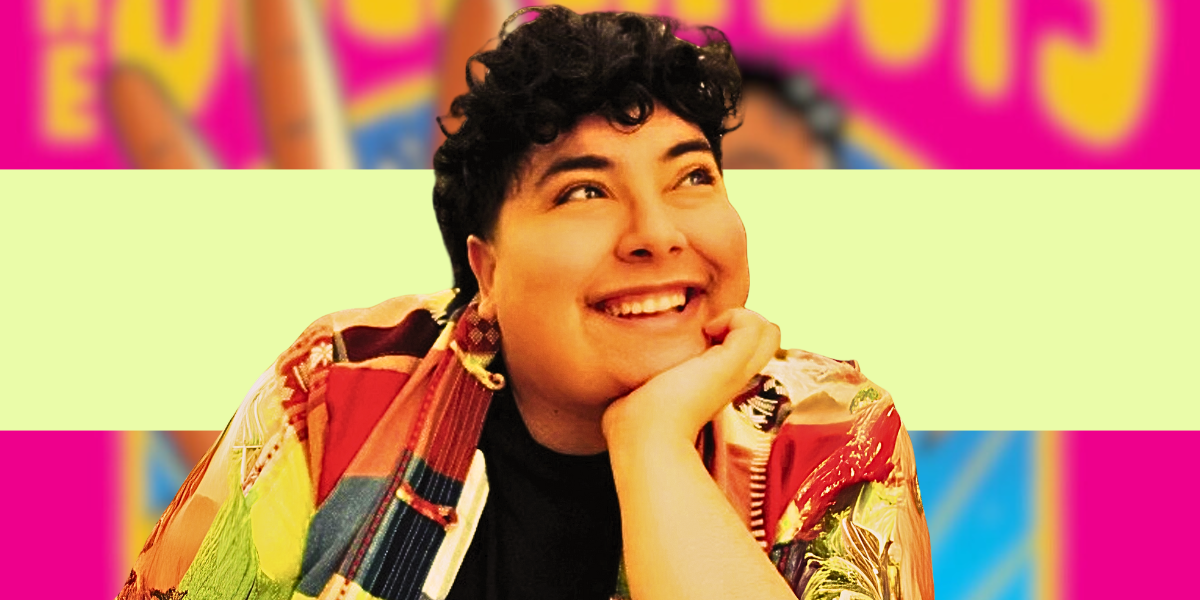
Just in time for Hispanic Heritage Month, Sonora Reyes is out with a new novel, The Golden Boy’s Guide to Bipolar. The success of Sonora Reyes’s debut young adult novel The Lesbiana’s Guide to Catholic School in 2022 – which included multiple coveted literary prizes such as the Lambda Literary Award – is a testament to the importance of writing for teens. Especially those from historically marginalized communities who are so used to seeing themselves as side characters or comedic fodder, and rarely the protagonist.
“It’s such a special age because that’s when I had a lot of my first times dealing with big feelings. That’s the age when I needed to feel seen,” Sonora Reyes told Latina Media Co. “When I write, it feels like I’m going back in time and giving to my past self, because that’s where I have the most healing to do. So most of my books are love letters to my inner child.”
One surprise success from that book, which follows young teen Yamilet as she navigates Catholic school as a once-again closeted lesbian, was readers’ overwhelmingly positive reception to Yamilet’s brother Cesar Flores. Combined with Reyes’s own soft spot for the character, the author decided to give Cesar his own book, culminating in the publication of their newest YA novel, The Golden Boy’s Guide to Bipolar.
Told through Cesar’s eyes for the first time, the story follows his attempts to handle his bipolar disorder, keep up his perfect “golden boy” persona, repair the hurt from his break-up with ex-boyfriend Jamal, and bury “The Thoughts” that exemplify all of his internal Catholic guilt and shame surrounding his sexuality and disability. Throughout much of the novel, we find him believing that he’s too “broken” and mentally ill to be loved by anyone.
What this means is that Cesar makes most, if not all, of his decisions based on his own toxic understanding of what makes a person “good.” Often, his choices try to “make up” for who he is at heart, as Reyes explained to us, or made out of the classic Catholic fear of going to hell.
He doesn’t have a healthy view of religion or himself, which is unsurprising given the centuries-long institution’s opposing views on queerness and mental health as mere, insignificant parts of a person to be “fixed.”
It’s a shame that Sonora Reyes relates to and, in some ways, is still healing from, part of what makes this story so powerful and poignant.
As a teenager, Reyes knew they had a learning disability, which made it hard for them to read and write to the expected level. Though later diagnosed with autism and schizoaffective disorder as an adult, they spent most of their life going out of their way to hide their symptoms, aka masking, much like Cesar does in the book, in order not to “stand out.”
For Cesar, his series of unchecked thoughts and desperation to fit in manifests into questionable choices, causing repercussions that are felt largely by the people he most cares about. Like kissing a girl in front of Jamal at a party and insulting him a day later, despite how very obvious it is to everyone else that he still has feelings for him.
And instead of asking for help when he needs it, time and time again, he deflects questions, avoids his biggest supporters and cheerleaders, engages in reckless behavior, and hides behind emotional blocks to avoid dealing with the consequences of his actions.
As a reader, reading The Golden Boy’s Guide to Bipolar feels like you’re helplessly watching a little brother blow up his life and wanting to offer advice. But, as Reyes points out, he’s a teenager and a person, and a relatable one.
“We’re supposed to think of likeable characters as ‘They don’t hurt people. They don’t make bad decisions. They may be flawed, but not that much,'” Sonora Reyez explains. “But I wanted this book to show that Cesar is very flawed and messy and struggling, but at the end of the day, he has not gone so far off the deep end that he can’t come back from what he’s done. He can still repair his relationships. He can still make amends and take accountability.”
At the same time, he’s so concerned with protecting his image as someone who’s supposedly effortlessly smart and has his life together. Ultimately, he has to learn to separate the importance of how others may see him versus how he sees himself and who he really is.
Cesar’s story is a rare sympathetic portrayal of an otherwise stigmatized mental illness and disability – and it’s even more significant because it centers a queer Latino boy. As a follow-up to Lesbiana, it also succeeds in bringing back fan-favorite characters and showing the importance of giving our most vulnerable permission to be who they really are. “When I write characters that are flawed or that are making mistakes and bad decisions, I try really hard to show the reader that they’re not necessarily in the right while wanting them to understand why they’re doing it,” Sonora Reyes said. “And I hope it can be healing for some people who haven’t seen themselves in this way before.”
