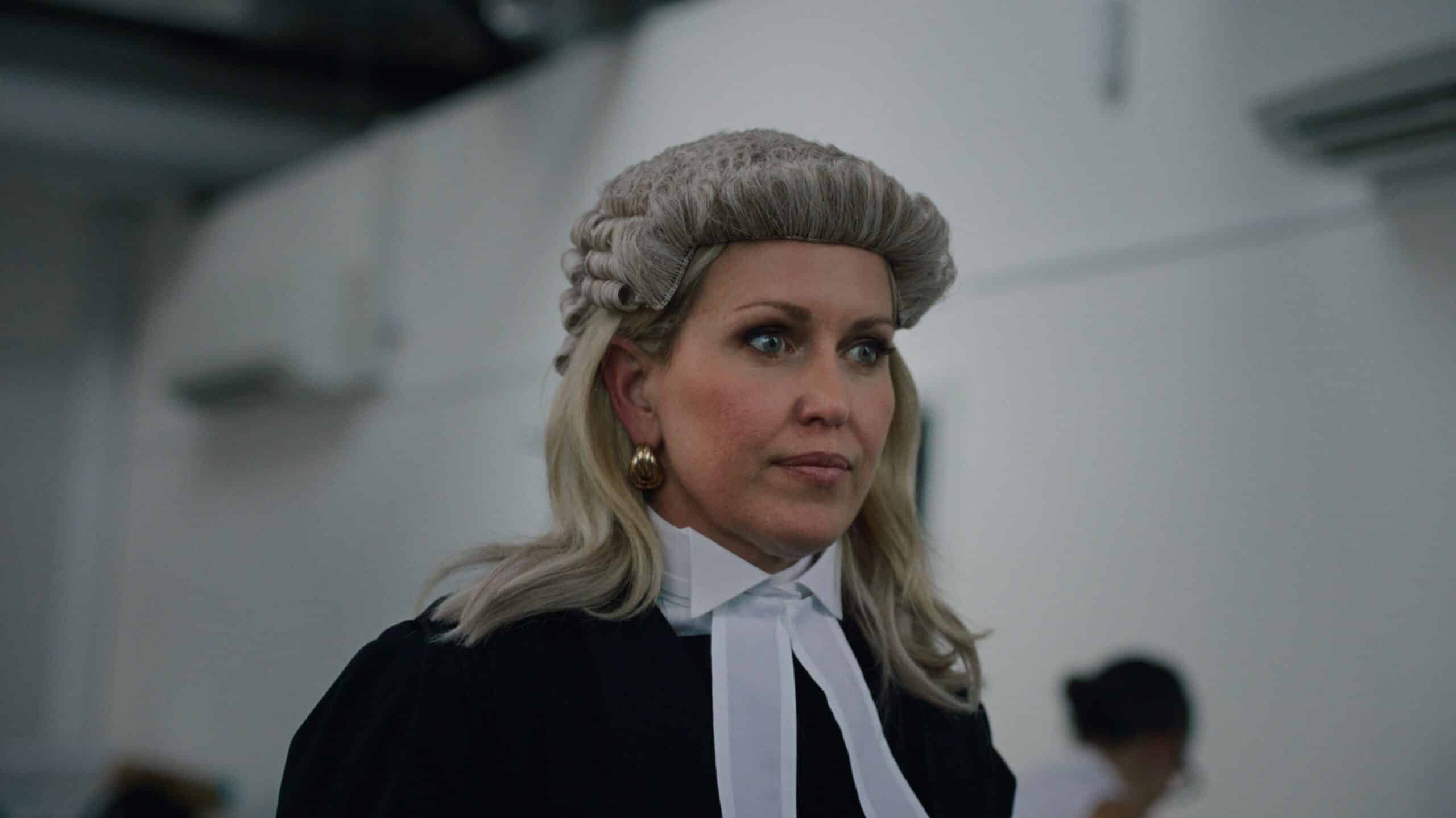
After the cultural dam broke in 2017 and survivors began speaking out in numbers too large to ignore, a familiar countercurrent followed. The language changed. The tactics modernized. But the intent remained ancient: make the cost of speaking so high that allowing yourself to be silenced feels safer.
That is the battlefield of Silenced, a 2026 Sundance documentary that does more than revisit the aftershocks of #MeToo. It argues that the backlash matured into something more coordinated, more legalistic, and more profitable. At the center is international human rights lawyer Jennifer Robinson, whose work frames the film’s core thesis: abusive men are increasingly using defamation law to intimidate survivors and chill public discourse.
This is not a polite film. It is a surgical one.
The director and producers assemble a global portrait of what happens when survivors collide with legal systems, media ecosystems, and celebrity machinery that were never designed to protect them. The result is less a courtroom chronicle than a study in power: who holds it, how it moves, and what it costs to challenge it.
The film’s most recognizable subject, for U.S. viewers, is Amber Heard, whose legal battle with Johnny Depp became a spectacle so omnipresent it bordered on civic theater. In Silenced, the American trial is reframed not as gossip or celebrity drama, but as a case study in narrative warfare.
Silenced returns viewers to the earlier British judgment, where a judge found Depp had assaulted Heard on multiple occasions, a ruling that was later overshadowed by the U.S.’s viral frenzy. Silenced insists on a basic, uncomfortable truth: legal outcomes do not exist in a vacuum. They are mediated through algorithms, fandom culture, and a media economy that monetizes outrage.
What emerges is a portrait of how a woman’s testimony can be atomized into memes, reaction videos, and courtroom cosplay. Heard’s trauma became content. Her credibility litigated not only in court, but in comment sections and livestream chats that rewarded cruelty with clicks.
The film does not ask audiences to canonize Heard. It asks them to examine the machinery that transformed her into a global punchline. The distinction matters – and not just for audiences in the U.S. Silenced expands its scope through the story of Brittany Higgins, the Australian former political staffer whose allegations of rape inside Parliament House detonated a national reckoning. Higgins appears in the film as both survivor and analyst, articulating a pattern that echoes across borders.
In a 2025 speech, Higgins warned that movements do not only provoke reform. They provoke resistance. She described a “well-funded” and “sophisticated” pushback embedded within institutions ostensibly tasked with serving justice. Silenced treats her warning not as rhetoric, but as diagnosis. The film’s editing underscores how legal maneuvering, media framing, and political interests intersect to reassert old hierarchies under the language of fairness and due process.
The inclusion of Colombian journalist Catalina Ruiz-Navarro extends the film’s thesis into the realm of press freedom. As co-founder of the feminist magazine Volcánicas, Ruiz-Navarro has navigated defamation threats that mirror the pressures faced by survivors. Her presence clarifies that this is not solely about individual women. It is about the ecosystem of speech around gender-based violence. When journalists are chilled into caution and survivors are litigated into silence, the public record itself becomes distorted.
The documentary’s most unsettling insight is how seamlessly cultural narratives absorb and neutralize dissent. Silenced presents Depp’s post-trial return to advertising campaigns and film projects not as a moral failing, but evidence of institutional resilience. Celebrity culture is structured to recover its investments. Meanwhile, women who speak about abuse often encounter an informal blacklist that is difficult to document but easy to recognize.
Hollywood history is littered with examples. Actresses who challenged powerful men or industry norms have long reported career slowdowns, vanished opportunities, or reputational smears that lingered longer than any headline. The mechanisms are rarely explicit. They do not need to be. Reputation functions as currency, and women who disrupt profitable narratives are frequently marked as liabilities.
Silenced positions this pattern within a broader political climate. The film suggests that the American trial’s reception cannot be separated from a rising anti-feminist rhetoric that casts gender justice as excess. In that context, Heard’s courtroom defeat became symbolic. For some viewers, it was proof that #MeToo had gone too far. For others, it was a warning that the pendulum was swinging back with force.
The documentary refuses easy heroes or villains. Instead, it maps incentives. News organizations chase engagement. Social platforms amplify polarizing content. Legal teams operate within adversarial frameworks that reward aggression. None of these systems were built to hold nuance. When they converge on a survivor’s story, complexity is often the first casualty.
Formally, the film is restrained. Interviews are allowed to breathe. Legal analysis is clear without being didactic. The tone is investigative rather than sensational, a deliberate counterweight to the media circus it critiques. This restraint gives the testimonies weight. Survivors are not framed as spectacles, but as witnesses to a system that repeatedly asks them to justify their pain.
The title Silenced is less about the absence of speech than the conditions that shape it. Survivors are speaking. Journalists are reporting. Lawyers are litigating. Yet the film argues that structural pressures are making speech more risky. Defamation law, in this framing, becomes a pressure point where truth, reputation, and power collide.
The documentary’s most provocative claim is that the backlash to #MeToo is not a spontaneous cultural mood swing. It is organized recalibration by institutions invested in preserving existing hierarchies. Whether viewers accept that thesis will depend on their tolerance for discomfort. The film offers receipts in the form of case studies, legal commentary, and media analysis. It does not pretend the conversation is settled.
What Silenced ultimately demands is not allegiance to a particular figure, but literacy in how narratives are constructed. It asks audiences to interrogate why certain stories explode while others disappear, why credibility is unevenly distributed, and why legal victories and public perception can diverge so dramatically.
When the film reaches a wider streaming audience, it will almost certainly reignite polarized debate. Heard will be re-litigated in comment sections. Higgins’ warnings will be dismissed by some as ideological. Ruiz-Navarro’s journalism will be scrutinized through partisan lenses. The cycle the documentary describes will, in real time, demonstrate its thesis.
That is the paradox at the heart of Silenced. By exposing the mechanics of backlash, it risks becoming another node within it. Yet the film insists that the alternative, retreat into quiet, carries its own cost.In a post-#MeToo landscape, silence is no longer neutral. It is contested territory. Silenced shows that the fight over who gets to speak, and at what price, is far from over. For viewers willing to confront how power scripts public narratives, the film is less a conclusion than an opening argument.
