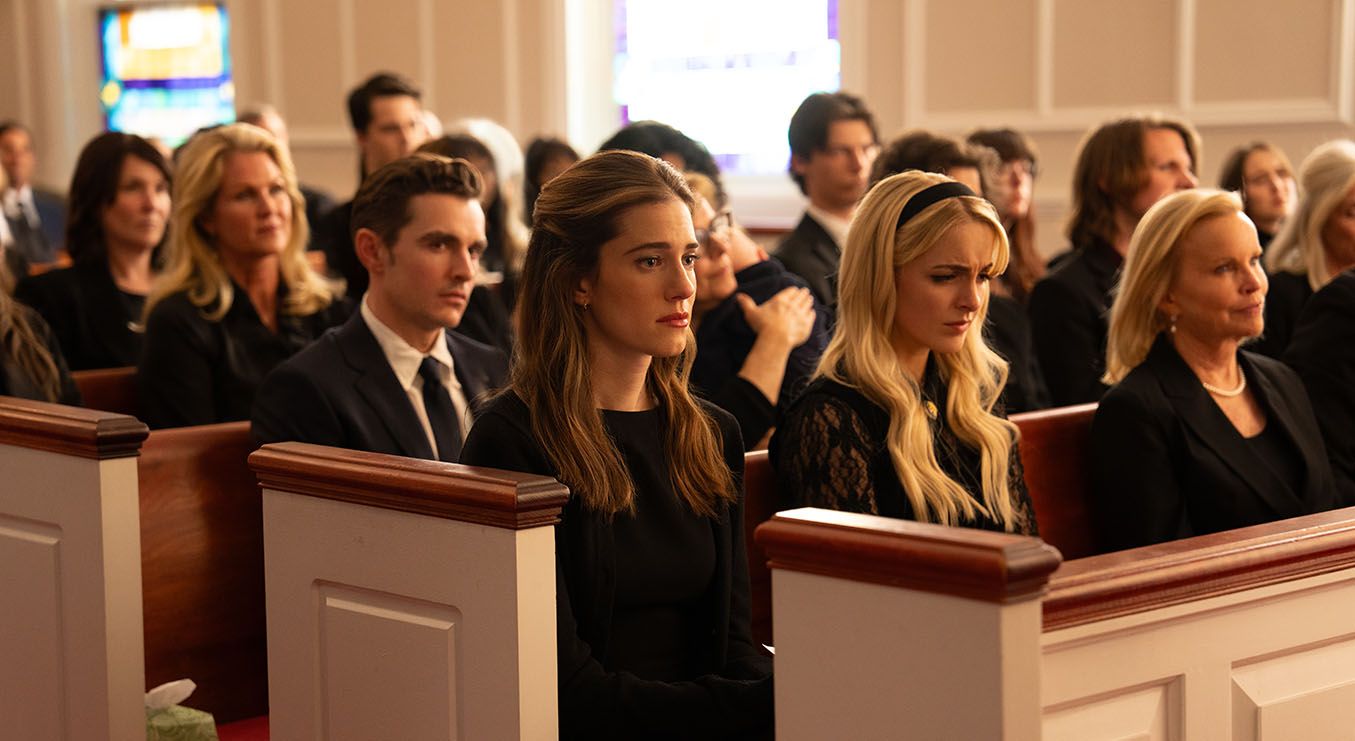
There are some movies you go into expecting to feel a little something. And then there are movies like Regretting You, which quietly sneak up on you, tap you on the shoulder, and say, Hey, remember all that stuff you buried? We’re going to talk about that now.
At its core, Regretting You is a familiar story. A devastating accident. A marriage revealed to be built on lies. A family forced to pick up the emotional debris left behind. On paper, this is not a new plot. People cheat. People die. The living are left to figure out what to do with the truth.
But what makes Regretting You compelling isn’t the shock – it’s the aftermath. The movie isn’t interested in spectacle so much as it’s interested in reckoning. In what happens after the worst thing has already occurred. In how grief can coexist with rage, relief, guilt, and sometimes freedom.
The story centers on Morgan Grant (Allison Williams), a former teen mom who has spent most of her adult life being practical, responsible, and painfully accommodating. She did everything right. Or at least, everything she was told she was supposed to do. Then a car accident takes her husband Chris (Scott Eastwood) and her sister Jenny (Willa Fitzgerald) – and with them, the illusion that her life was built on honesty.
Because here’s the real gut punch: they weren’t just in the car together. They were having an affair. (Relax. The trailer tells you this. I’m innocent.)
And this is where Regretting You makes its smartest move. It refuses to force Morgan into the “grieving saint” role. She doesn’t perform forgiveness for the comfort of others. She doesn’t collapse into hysterics to prove she loved hard enough. Instead, she does something far more radical: she decides to live.
After a single, cathartic act of property damage that functions as emotional release, she keeps it pushing. She redecorates. She reclaims space. She starts saying the quiet part out loud. And honestly? Werk.
Allison Williams brings a deeply satisfying energy to Morgan: the overly stressed, underappreciated, ignored adult who has finally reached her limit. It’s grown teen mom energy in its fully evolved form. Not bitter, not cruel – but done. Done cushioning everyone else’s feelings. Done carrying shame that was never hers to begin with. Watching Morgan choose herself isn’t played for laughs, but there is a sharp, dark humor in how unapologetic her awakening becomes.
Running parallel to Morgan’s story is her daughter Clara Grant, played by the always-excellent Mckenna Grace. Clara is grieving her father while also trying to make sense of who he really was, and that kind of grief hits differently. Grace captures the rawness of teen loss without romanticizing it. Clara is angry, defensive, impulsive, and deeply human.
Enter Miller Adams (Mason Thames), the brooding, soft-spoken love interest who brings us back to that all-consuming intensity of teenage romance. The kind you’re grateful you survived but still kind of miss. Because let’s be honest: there was a time when making out was the Friday night plan, and that felt like everything.
Grace and Thames have real chemistry. Not the overly polished, algorithm-tested kind, but the awkward, earnest, lived-in kind. Their relationship exists inside a high school love bubble, sure, but the issues they’re navigating are real: grief, loyalty, fear, and the pressure to grow up faster than they’re ready for. What’s refreshing is how the film allows them to have hard conversations without treating their emotions as trivial just because they’re young.
There’s also a standout performance from Dave Franco as Jonah Sullivan, the quiet, yearning, emotionally restrained “good guy” who has been holding his tongue for far too long. And yes, I’ll admit it: I didn’t think this would be the year I fully internalized that a Franco brother is, in fact, an adult. (Time is fake. We all agree.) But here we are.
Franco’s performance is understated in the best way. Jonah is the kind of man who has learned that being nice often means being invisible. Watching him slowly step out of that self-imposed silence is one of the film’s more subtle emotional arcs. He’s not flashy. He’s not savior-coded. He’s just… present. And that presence matters.
If there’s one critique worth lingering on, it’s that Regretting You doesn’t spend enough time on the affair itself. I wanted more backstory on how Chris and Jenny crossed that line. Not to justify them – absolutely not – but to understand the emotional logic that led there. A few flashbacks. A conversation or two. And yes, I wanted to see those letters they teased. I know we’re not supposed to care about the people who shattered lives, but listen, I’m nosy. Show me the damn letters.
Still, the choice to keep the focus on the survivors rather than the betrayers is thematically consistent. This isn’t a story about infidelity as scandal. It’s about betrayal as a rupture – and what it takes to rebuild something honest from the wreckage.
Regretting You offers a grounded, emotionally resonant story with a dash of dark humor and a lot of empathy for women who are tired of swallowing their truth. It understands that grief isn’t linear, love isn’t pure, and sometimes healing looks less like forgiveness and more like choosing yourself without apology.
If you’re into romantic dramas that sit in the mess, let the emotions breathe, and trust their characters to be imperfect, this one’s for you. It may not reinvent the genre, but it earns its place within it. And sometimes, that’s more than enough.
