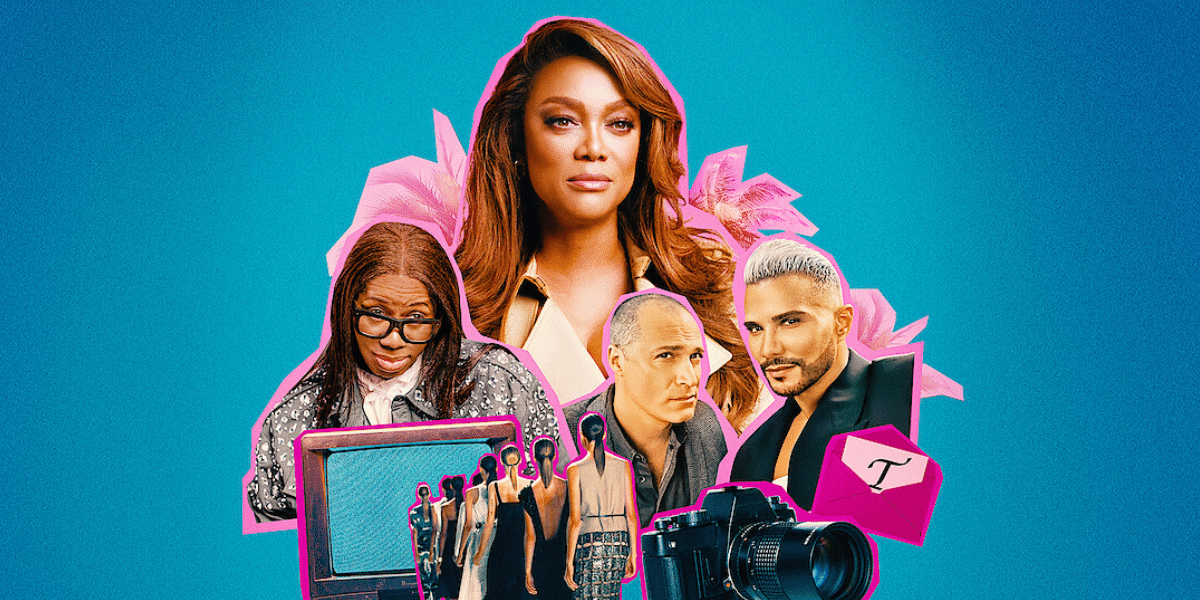
The newly released America’s Next Top Model documentary on Netflix does not reveal anything particularly shocking. It confirms what we knew in the early 2000s: the industry was cruel, the drama was manufactured, and the trauma was monetized. What unsettles is not the chaos of the past, but the refusal to name it plainly in the present.
For years, ANTM sold itself as empowerment. “I want to see you be fierce.” “I was rooting for you.” “The world is brutal.” It was a masterclass in motivational rhetoric wrapped around humiliation. The documentary revisits iconic moments, reframing them as cultural artifacts, but the dominant defense remains the same: modeling is tough, the industry is harsh, and the show was just preparing contestants for reality.
That logic is sociologically convenient. It positions abuse as pedagogy.
The problem is not that fashion is competitive. The problem is that America’s Next Top Model reproduced and amplified the very hierarchies it claimed to critique. Contestants describe being coerced into exploitative photo shoots, pressured into racially insensitive scenarios, and even sexually assaulted.
As someone who modeled as a young woman, I remember internalizing the calculus of never enough. Not thin enough. Not tall enough. Not the right kind of different. I knew I would never be famous. I still stepped in front of the camera anyway, because the promise of visibility is intoxicating. What ANTM did was set up an entire generation of girls to believe that humiliation was the price of ambition. That degradation was a rite of passage. That if you cried, you were weak, and if you didn’t cry, you were marketable.
The documentary attempts to balance critique with nostalgia, as though time itself softens harm.
Tyra Banks remains the gravitational center of the narrative. She has spent decades sculpting a public persona that hovers somewhere between mentor, monarch, and mannequin. In the documentary, she listens to former contestants recount trauma, and yet her language rarely moves beyond abstraction.
Her defense is often that “the world is brutal,” but America’s Next Top Model was not a passive reflection of industry cruelty. It was an active participant in manufacturing it.
There is something frigidly hyper-performed about Tyra’s affect, as though authenticity is carefully measured and dispensed. Watching the documentary, I found myself waiting for a crack in the veneer. A moment of raw accountability. A sustained acknowledgment that the machine she built hurt people.
Instead, we get deflection dressed as context.
From a social justice lens, this is where the documentary becomes culturally revealing. Tyra Banks is a Black woman who broke barriers in an industry structured by racism and Eurocentric beauty standards. That fact matters. It matters deeply. Yet breaking through a system does not automatically dismantle it. The documentary reveals the uncomfortable truth that marginalized people can become gatekeepers of the hierarchies that once disadvantaged them.
Several former Black contestants speak candidly about racial dynamics on set, about the ways casting, editing, and challenge design reinforced stereotypes. Darker skin framed as “ashy.” Ethnic ambiguity commodified. Accents exaggerated. Cultural identities stylized into spectacle. These are not minor missteps. They are patterns that align with what scholars call racial capitalism — the extraction of profit from racialized imagery and difference.
The show thrived on spectacle. On pitting women against each other. On tears, breakdowns, and confessionals filmed under fluorescent lighting. It taught viewers that sisterhood was fragile and that proximity to power required competition.
And yet, the documentary leans heavily on nostalgia. On “that was the era.” On early 2000s television being wild and unfiltered. This framing risks minimizing accountability by placing harm inside a time capsule. Yes, reality TV in that period was brutal. But brutality is not an aesthetic. It is a choice.
The most damning segments are those recounting sexual misconduct on set. Cameras rolling. Producers present. A young woman’s discomfort ignored. In any other workplace, this would be a lawsuit waiting to happen. On reality television, it became a storyline. That is not preparing someone for a harsh industry. That is normalizing abuse.
There is a sociological concept called performative empathy — the public display of concern without structural change. Watching Tyra respond to former contestants’ pain felt uncomfortably close to that. There are moments of acknowledgment, but little ownership. The through line remains self-preservation.
What troubles me most is not that America’s Next Top Model was messy. It is that the documentary suggests the mess was inevitable and justifiable.
It is not.
We can hold complexity. We can recognize Tyra Banks as a trailblazer and still critique the empire she built. We can acknowledge that reality TV in the early 2000s was unregulated and still demand reflection in 2026. We can understand the fashion industry’s brutality and refuse to romanticize it.
This documentary could have been a reckoning. It could have modeled what accountability looks like when someone with power admits, without qualification, “We hurt people.” Instead, it feels like a PR recalibration.
