When Encanto came out, a lot of people talked about generational trauma, family dynamics, and pressure. Those themes are certainly there. But among many Latina viewers, another reaction surfaced repeatedly. We talked about responsibility. Obligation. The exhausting feeling of being needed. We talked about Latino family expectations and Mirabel’s struggle to find her place within a family that seemed to value each person according to what they could contribute.
What I rarely saw discussed in either community is the figure standing just outside the story. Not the daughter who stays. The daughter who leaves.
In many Latino families, love is measured through presence. It lives in crowded holiday tables, birthdays that somehow involve three generations, last-minute visits from relatives, and the quiet assumption that important moments should be experienced together. Family is not simply part of life – it is the structure around which life is organized.
Growing up, I never questioned that structure. It felt as natural as gravity.
Only later did I realize that some of us eventually move beyond it, not because we love our families less, but because life pulls us elsewhere. A career opportunity, a degree, a relationship, curiosity about the wider world, or simply the desire to discover who we might become in a place where nobody has known us since childhood.
Leaving often feels exciting at first. The world expands. New possibilities appear. You begin building a life that belongs entirely to you.
What nobody tells you is that distance eventually changes its shape. At some point, it stops feeling like freedom and starts feeling like absence. I learned this while living abroad.
One afternoon, my mother called to tell me she had been diagnosed with an autoimmune disease. The kind that does not arrive dramatically, but quietly rearranges the future.
I do not remember exactly what she said afterward. What stayed with me was the effort in her voice, that careful steadiness mothers sometimes adopt when they are trying not to frighten their children.
After we hung up, I excused myself from work and walked to the bathroom.
I locked the door, put in my earphones, and pressed play on a song I had loved for years: “Mother’s Love” by Hardcore Superstar. There is a lyric that has always undone me: “Sitting here holding your hand / I don’t want to sing this song for you when you’re gone.” I stood there in a bathroom thousands of miles from home and cried until the song ended.
Then I washed my face and returned to work.
For a long time afterward, I carried a question that I suspect many women eventually ask themselves: What kind of daughter leaves?
Years later, another moment unsettled me in a completely different way.
I was calling my parents to share good news – I had been accepted into a professional training program in Mexico.
At some point during the conversation, we switched to video and suddenly I noticed things I had somehow missed. My father’s hair was much whiter than I remembered. The lines around my mother’s eyes seemed deeper.
Nothing dramatic had happened. No single moment explained the change. Time had simply passed, quietly and continuously, while I was somewhere else building a life of my own.
What startled me was not that they were aging. It was the realization that I had not witnessed it happening. I had not seen the gradual arrival of those white hairs or the slow deepening of those lines. Time had been passing in that house, in those faces, and I had missed it. Not in one dramatic moment, but incrementally, invisibly, the way distance always takes what it takes.
That particular kind of grief is difficult to describe because it is not tied to a single event. It arrives through accumulation. Through the realization that the people you love most are changing in ways you can no longer observe day by day.
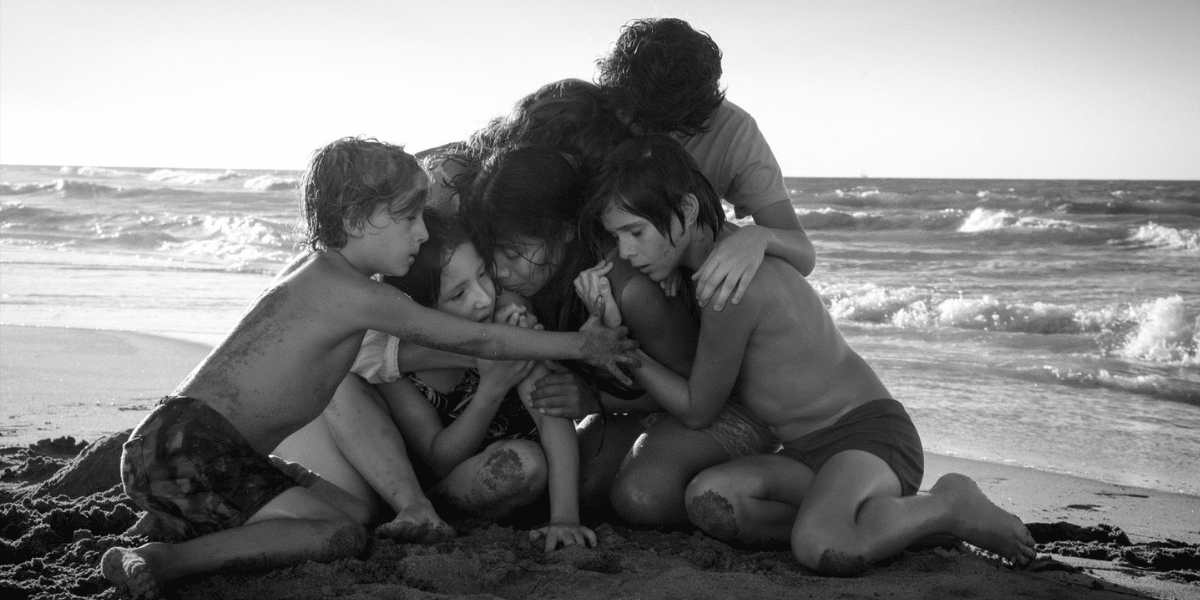
Watching Roma years later, I recognized a version of that feeling.
Much has been written about Alfonso Cuarón’s film as a story about memory, class, and social change. What stayed with me was something simpler: presence.
Yalitza Aparicio’s Cleo witnesses ordinary afternoons, family arguments, private heartbreaks, and the moments that eventually become family history. Her importance comes not from grand gestures but from the accumulation of small acts of care, from remaining close enough to observe life as it unfolds.
For those of us who have built lives far from home, that kind of presence can feel unexpectedly painful to watch. Not because it is unfamiliar, but because we understand exactly what it means.
Many Latino families teach, often without ever saying it outright, that showing up matters. Being physically present matters. Witnessing matters. Distance does not erase those values. If anything, it sharpens our awareness of them.
Encanto approaches the same tension from a different direction. Beneath the fantasy, the film understands how easily love, responsibility, and identity can become entangled within a family system. Mirabel spends much of the story trying to understand her place within the family and worrying about what happens when she cannot fulfill the role expected of her. What many Latino viewers recognized was not the magic itself, but the emotional logic beneath it.
There is even a word for that cultural gravity: familismo, the belief that family loyalty and closeness should remain at the center of life. Within that framework, leaving rarely feels neutral. And for daughters especially, it rarely feels simple.
Across Latino storytelling, the ideal daughter is often the one who remains close to home, helping care for relatives, maintaining traditions, and participating in the invisible work that keeps families connected across generations. The daughter who leaves occupies a more uncertain space. Her departure is rarely a rejection of the people she loves, yet distance has a way of transforming certainty into doubt. Even when leaving was the right decision, many daughters find themselves wondering about the cost of their absence.
Guilt has never been particularly interested in logic. It survives explanations. It survives supportive families, successful careers, and the certainty that leaving was necessary. It returns in quieter moments: a birthday attended through a phone screen, a family gathering viewed through photographs, a parent who suddenly looks older than they did the last time you saw them.
Some days I can look at my own life and feel certain I made the right choices. Other days, after noticing something newly fragile in my mother’s face or hearing a song that takes me back to that locked bathroom thousands of miles away, the question returns.
What kind of daughter leaves?
Maybe the honest answer is that she is the daughter still learning how to carry two lives at once: the life she is building and the family she never truly leaves behind.
Perhaps that is what neither Roma nor Encanto fully resolves. Love does not become simpler when we leave. It simply learns how to travel.
Some daughters leave home.
Others spend the rest of their lives carrying home with them.
