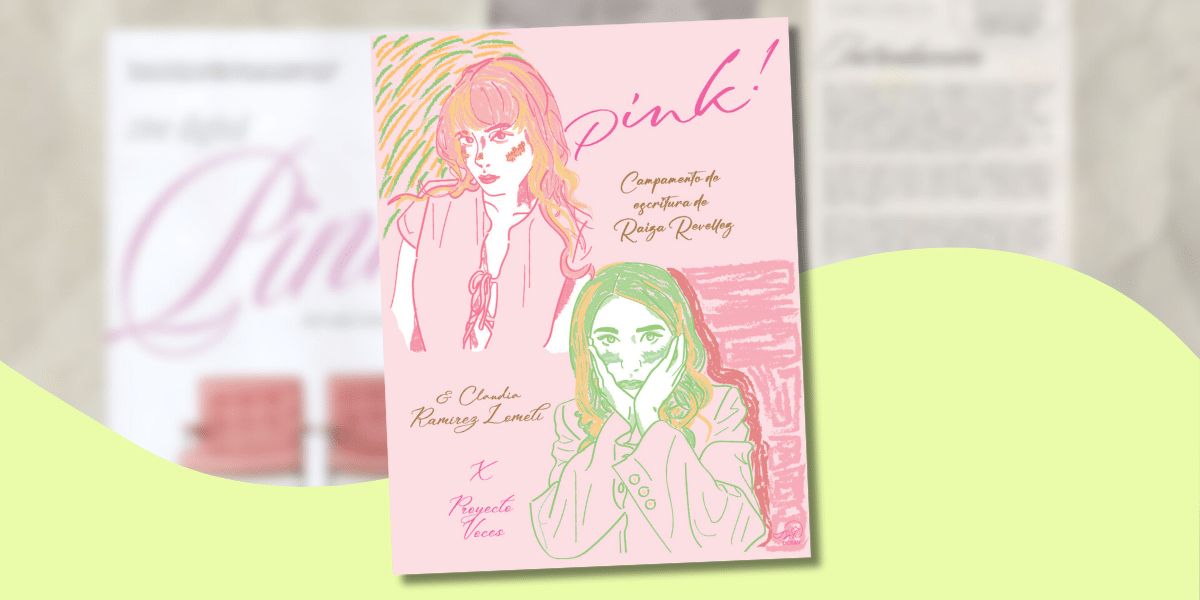
The next wave in Mexican publishing isn’t coming from universities or corporate houses – influencers are brewing it in Instagram stories, YouTube videos, and BookTok feeds. At the center of this shift are Raiza Revelles and Claudia Ramírez Lomelí, two bestselling authors who turned their digital followings into incubators for young writers.
Through online writing camps, Revelles and Ramírez encourage teenagers and aspiring authors to see themselves not as hobbyists but as legitimate voices. Their mantra, “si escribes, ya eres escritor,” challenges the idea that creative authority rests only within institutions. Instead of rigid syllabi, these camps offer encouragement, community, and the notion that fanfiction writers and notebook scribblers could claim the title of “author.”
Camp graduates are carrying the momentum forward. Some began publishing through VOCES, my bilingual blog. That effort soon grew into PINK!, a digital zine that merged student writing with influencer mentorship and independent editorial practices. For contributors, seeing their words published helps them cross the line between fan and author.
This model reflects broader shifts in Mexico’s literary ecosystem. Traditional publishing, as editor Montserrat Flores noted, often prioritizes marketability over creativity. Independent projects like PINK! allow room for joy, experimentation, and community. Flores emphasizes that such projects are not marginal: they belong to a long-standing countercurrent to homogenization.
Influencer-driven communities also show how powerful validation can be. Michelle Ortiz, a BookTok creator with more than 284,000 followers and now an author, admits in the zine’s introduction that she once doubted her ability to write. What changed was finding grassroots communities that normalize uncertainty and make progress visible. Writing, she explains, became less a solitary discipline and more a practice strengthened through companionship. PINK! embodies that same lesson: collective authorship transforms individual fear into shared growth.
For decades, Mexican publishing has been defined by institutions, universities, publishers, and critics, but online influencers are changing the terrain. Their work bypasses these gatekeepers, creating a parallel economy of cultural authority grounded in community trust rather than institutional recognition.
That trust often develops parasocially. As Horton and Wohl observed in 1956, media figures can feel like companions. For today’s readers, years of watching book hauls or livestreams produce intimacy with creators like Revelles and Ramírez. When such figures invite audiences into authorship, the gesture carries the weight of friendship rather than bureaucratic selection.
The algorithm adds another layer. BookTok does not simply recommend books – it actively produces taste. As Ted Striphas has argued, platforms shape what becomes visible or desirable. For writers in PINK!, legitimacy comes less from literary prizes and more from likes, stitches, and comments. Digital ecosystems thus became formative arenas, influencing them as much as any syllabus.
This collective ethos challenges the myth of writing as solitary. As both Revelles and Ramírez stress, communal spaces (whether camps, blogs, or zines) counteract isolation. Online, parasocial trust develops into genuine collaboration, democratizing authorship and validating new voices while building networks of support.
Revelles and Ramírez say their mission is simple: to create more writers in Spanish. After years in the industry, they knew how discouraging it could feel to want to write but not know where to begin. “Facing the blank page is intimidating, isn’t it?” they remind participants. That challenge led them to launch their camps two years ago. The goal was not just to teach craft but to help young writers take the leap into authorship. “Your voice matters. We want to hear you. We want to read you,” they tell campers, encouraging teenagers and aspiring authors to claim legitimacy even before publishing.
The camps quickly became collaborative spaces where learning flows both ways. Guest speakers offered insights rarely found online: Paola Carola explained how to make a living from books, Brenda Algozino introduced literary editing, and author Benito Taibo gave a moving talk on “the power of words,” inspiring everyone to keep reading and writing.
These dynamics have precedents. Fanfiction archives, Wattpad, and self-published zines have long been laboratories for experimentation. What once was dismissed as amateur now fuels innovation. PINK! crystallized this tradition in Mexico, turning informal practices into formalized publication and allowing emerging voices to dialogue with established authors.
The project was also bilingual. As editor and translator, I worked to ensure these voices resonated across Spanish and English. Translation was essential: preserving rhythm and tone while making Latina voices accessible beyond national borders. In a landscape where Spanish dominates, bilingual production became both cultural and political, refusing to let language restrict readership or empathy.
The broader significance lies in the method: no one waited for permission. A camp became a blog, a blog became a zine, and a zine became part of Mexico’s independent literary movement. By relying on digital platforms and collective trust, young writers demonstrated that publishing need not be confined to institutions.
PINK! is more than a student project. It signals how Mexican publishing might evolve when influencers, independent editors, and emerging writers collaborate horizontally. Legitimacy no longer depends solely on universities or publishers but on communities who read, share, and believe. Literature today is not locked in academic halls or corporate offices – it thrives in timelines, comment sections, and the hands of young writers willing to publish before anyone gives them permission.
