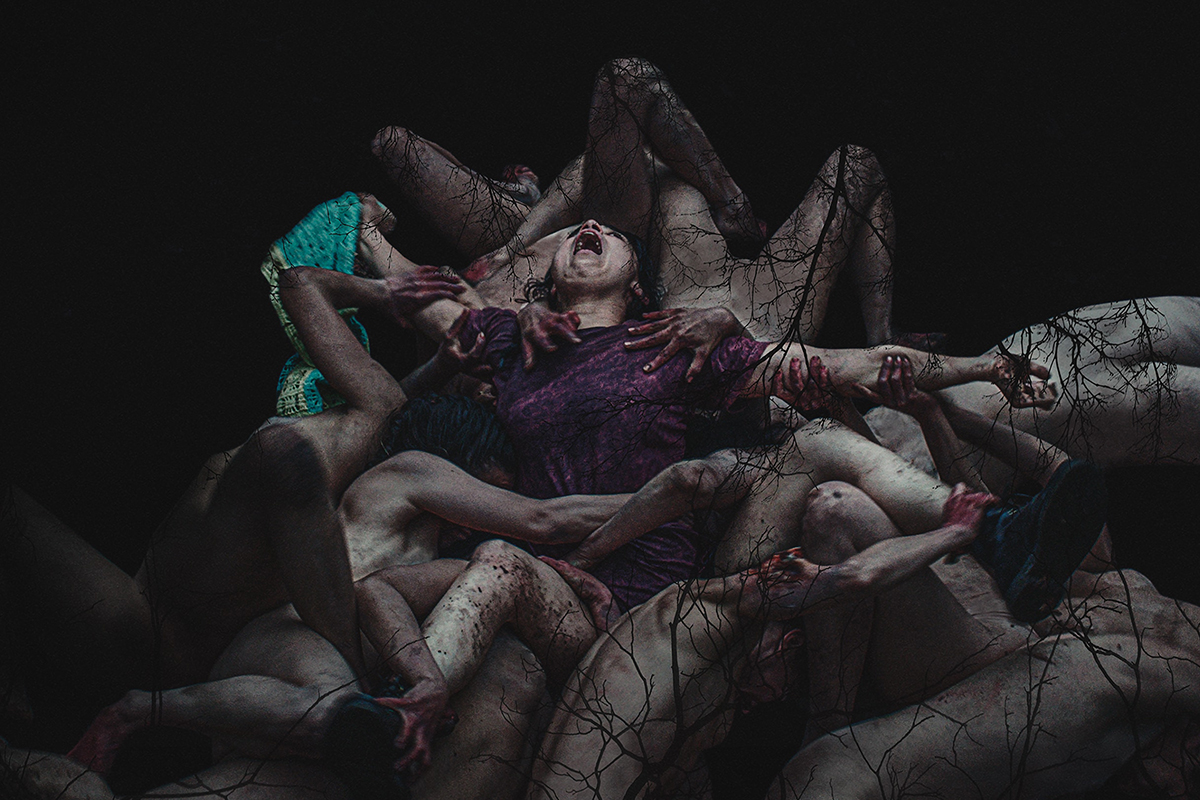
In Huesera: The Bone Woman, the sound of cracking bones becomes the film’s heartbeat, a chilling reminder that sometimes, horror is born within. Indeed, the film’s true terror is not in its demons or jump scares but in the suffocating expectations of motherhood.
For decades, horror has cast Latinas as the witch or the ghost. We have been the haunted, the possessed, or the ones whispering in Spanish right before the credits roll. Growing up, I unconsciously absorbed those images without question. Films like The Nun and countless others painted us as supernatural or hyper-religious women who could summon spirits – but rarely speak for ourselves. Even outside horror, Hollywood often borrowed that mystique for dramatic flair. Remember Bad Boys for Life? Mexican actress Kate del Castillo plays Isabel Aretas, a cartel queen who literally practices brujería to avenge her husband’s death.
These portrayals did not appear out of thin air. They echo our colonial past. Think of folklores like La Llorona, the weeping woman who drowned her children and roamed the earth in guilt. Over time, that myth fused with cultural stereotypes of Latinas as dangerous, sinful, or spiritually burdened.
When we’re only the ghost or the haunted, audiences stop seeing our humanity. And that invisibility runs deep. A 2023 USC Annenberg study found that less than 5% of all directors were Hispanic/Latino and less than 1% of all top-grossing film directors from 2007 to 2022 were Hispanic/Latinx. Horror, like much of Hollywood, has long mirrored those exclusions both on and off screen.
Then came Huesera: The Bone Woman.
Directed by Mexican filmmaker Michelle Garza Cervera, the film turned horror inward and critics noticed. With a 97% rating on Rotten Tomatoes and 81% on Metacritic, Huesera is one of the most original horror films to depict our identity. Garza Cervera’s debut feature went on to win two awards (the Best New Narrative Director Award and the Nora Ephron Prize) at the Tribeca Film Festival, cementing her as one of the most exciting new voices in contemporary horror.
Huesera follows Valeria (Natalia Solián), a pregnant woman who should be happy, at least that is what everyone around her insists. But instead of glowing, she cracks. Literally. Her body becomes a battleground, haunted not just by a supernatural presence but by the unbearable weight of what it means to be a “good woman.” And the film radically presents Val not as a bad person, nor as lazy or selfish. She is simply a woman doing what she wants instead of acceding control to an oppressive structure.
Huesera does not appear in isolation. It’s part of a growing wave of Latinx horror reclaiming identity through the horror narrative. Films – like Rosario (2025), which follows a young woman who discovers her grandmother’s hidden ties to witchcraft and must confront the intergenerational silence surrounding faith and guilt and like Mal de Ojo (2022), a folkloric tale where matriarchal strength battles superstition – carry this movement forward. Even thrillers like Disappear Completely (2022) support that same impulse to center Latinx characters. Together, these films mark a cultural shift, highlighting how Latinas are no longer just the haunted but also the storytellers.
Building upon this momentum, Garza Cervera uses horror as a metaphor not just for monsters, but to confront identity. In an interview with Paste Magazine, she said, “Motherhood is such an institution, it defines our lives completely, like it tells you how your life path has to be.… To me, that is suffocating.” That suffocation feels familiar to many of us who have been told what kind of women we must become – mothers, caretakers, sacrificers. Watching Huesera, I realized Val’s fear was not childbirth, it was the loss of self that comes with it. What struck me most is that the real monster isn’t hiding in the dark. It’s all around us in patriarchy and the terror of conformity
Perhaps, what makes Huesera revolutionary is not just its scares, but also its tenderness. Garza Cervera treats her protagonist with empathy, allowing fear to coexist with longing and shame with freedom. It is a story where the heroine is not punished for her doubts, but transformed by them. This is the kind of representation Latinx women have been denied for too long: not the exotic or the possessed, but the complex and the human.
By blending folklore and realism, Huesera reclaims fear as narrative power. It is a film that insists our fears of motherhood, identity, or tradition are worth listening to. They are, in fact, what make us real.
Maybe that is the lesson. Horror has always mirrored the anxieties of a culture. And now, with filmmakers like Garza Cervera behind the camera, those mirrors are finally reflecting us back not as myths, but as women with stories to tell.
Maybe the real horror was never in the ghost stories about us, but in how long it took for us to start telling them ourselves.
