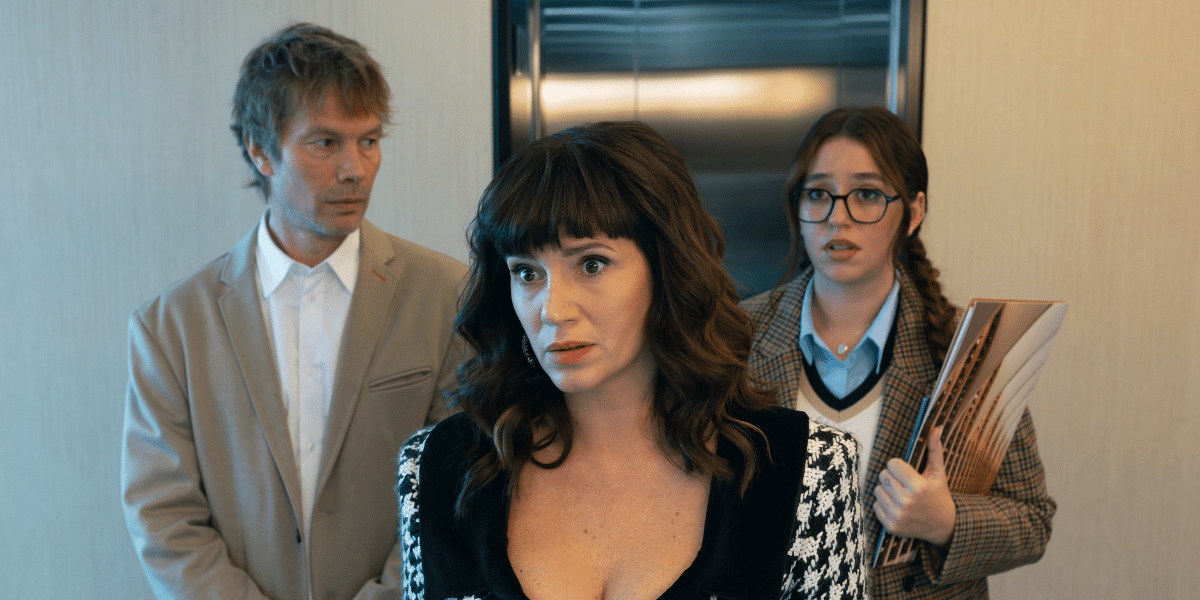
Argentine television has featured a parade of unforgettable female characters: from the rebelliousness of Muñeca Brava and the charm of Floricienta to the raucous frenzy of Patito Feo. More recently, audiences fell for the pathologically envious Victoria Mori (Griselda Siciliani), a protagonist as flawed as she is fascinating, immediately connecting with a massive audience. Since its premiere in September 2024, Envidiosa has secured a spot in Netflix’s Global Top 10, exploring the pitfalls of social expectations, the urgency of mental health, and the importance of being true to oneself.
Written entirely by Carolina Aguirre, this show explores female identity through the contemporary archetype of a woman who finds herself in crisis as she approaches 40 because she hasn’t followed the “social script” of marriage and motherhood. Feeling that time is running out, Vicky deals with jealousy and frustration that put her on the verge of a breakdown. Amid romantic misadventures and therapy sessions, the plot reveals how unchecked envy can result in sabotage. Beyond its biting humor, this story shows that therapy offers a path toward change and emotional stability.
After winning Best Comedy at the Martín Fierro Awards, Envidiosa enters its fourth and final season at the height of its success. With a ten-episode season, the show establishes itself as one of the few Latin American Netflix series to achieve a planned conclusion, giving its fans the ending the story deserves. These new episodes raise the bar and delve deeper into Vicky’s evolution, inviting us to reflect on the true meaning of happiness and the challenges of chosen families.
How Does Envidiosa End?
In its early installments, Envidiosa introduced us to a Vicky caught in a frantic race against her surroundings and herself. We witnessed her struggle to be “chosen,” her inability to celebrate others’ achievements, and her relentless search for a fairy-tale husband. Fortunately, the fourth and final season presents us with a less judgmental, much more human Victoria, ready to chart her own path.
After dreaming for so long of starting a family, Vicky and Matías (Esteban Lamothe) finally decide to live under the same roof. But the move comes with some “baggage” she hadn’t anticipated – her partner’s preteen son. Her apartment, once a sanctuary of single life, turns into an emotional battlefield bereft of privacy. In this new ecosystem, Vicky must navigate a confusing version of motherhood she never imagined. She’s unsure of her role in raising the child, what authority she holds, or what’s really expected of her. It doesn’t help that the boy keeps a diary dedicated to tearing her down as a woman and a human being.
For his part, Nicolás (Benjamín Vicuña), Vicky’s former love interest, returns as a strategic client with the most tempting offer. Of course, his presence reignites the ghosts of the “old Vicky,” the one who’s determined to define her identity through a trophy husband. Torn between Matías’s genuine warmth and the social status offered by the architect, Vicky faces the ultimate test of her personal growth: deciding whether she can maintain her independence and newfound maturity or if she will fall back into her old, harmful patterns. True to the spirit of the series, her psychologist (Lorena Vega) is the key to helping her confront her remaining demons.
Endiviosa Remains as Strong as Ever
For those who have been following Envidiosa from the start, it goes without saying how flawless Siciliani’s performance is as the selfish, temperamental, vulnerable, and deeply intense Vicky. For the uninitiated, suffice it to say that her performance is a balancing act: the actress takes the character from erratic chaos and hilarious pathos to a raw humanity. She moves us to empathize with her, even in her most excessive moments. Openly verbose and theatrical, Siciliani gives it her all, and her performance is elevated by the dedicated cast that surrounds her.
It must be admitted that the series’ title lives up to its promise: not a single episode goes by without the plot teaching us something about envy and anxiety. Throughout its seasons, the story maintains impeccable thematic consistency, reaffirming that envy, far from being a moral failing, serves as an indicator of our unfulfilled desires. The Argentine comedy invites us to ask ourselves: What am I missing that I see reflected in others? And it teaches us that, if managed properly, this feeling can become a powerful opportunity for self-knowledge and personal growth.
Over the course of its run, Envidiosa has ventured into increasingly complex territory: from the grief of a breakup to emotional dependence to childhood wounds to the trauma of abandonment – and everything in between. In this final season, the series takes on a new dimension and reaches its most mature point by challenging the notion that biological motherhood and traditional marriage are the only paths to personal fulfillment.
And the Lessons are Just as Important
The long-awaited final chapter of Envidiosa invites us to reflect on the prejudices surrounding blended families and shows us that happiness can take forms that don’t always fit traditional molds. The therapy sessions continue to play a fundamental role: they provide the safe space where Vicky tries to bring order to her life and express her concerns about her new reality.
Alongside her incisive therapist, she reluctantly comes to understand that, sometimes, love must coexist with past histories, other people’s children, and roles that aren’t always clearly defined. As Siciliani explained to La Nación, the central theme of the season is Vicky “dismantling the image she created of what happiness supposedly was and what a woman of a certain age should aspire to.”
Envidiosa bids us farewell by reminding us that personal transformation is possible, but not magical. It requires a courageous commitment to the truth and responsible therapeutic support, which, as the show so clearly demonstrates, is a good thing.
Should I Watch It?
Envidiosa is genuinely unlike any other romantic comedy on TV today and deserves your attention. Four seasons later, Vicky Mori bids farewell to the therapist’s couch and to the audience in style.
From unwanted loneliness to the challenges of living together, the final season puts our beloved Envidiosa to the test like never before. And her journey, as always, is incredibly funny, human, and revealing. With a rather satisfying conclusion, the series invites us to embrace our imperfect humanity and celebrate our chosen family as a valid and genuine source of well-being and happiness. Even though she was sometimes unbearable, we’re going to miss Vicky.
There’s a lot to love here.
