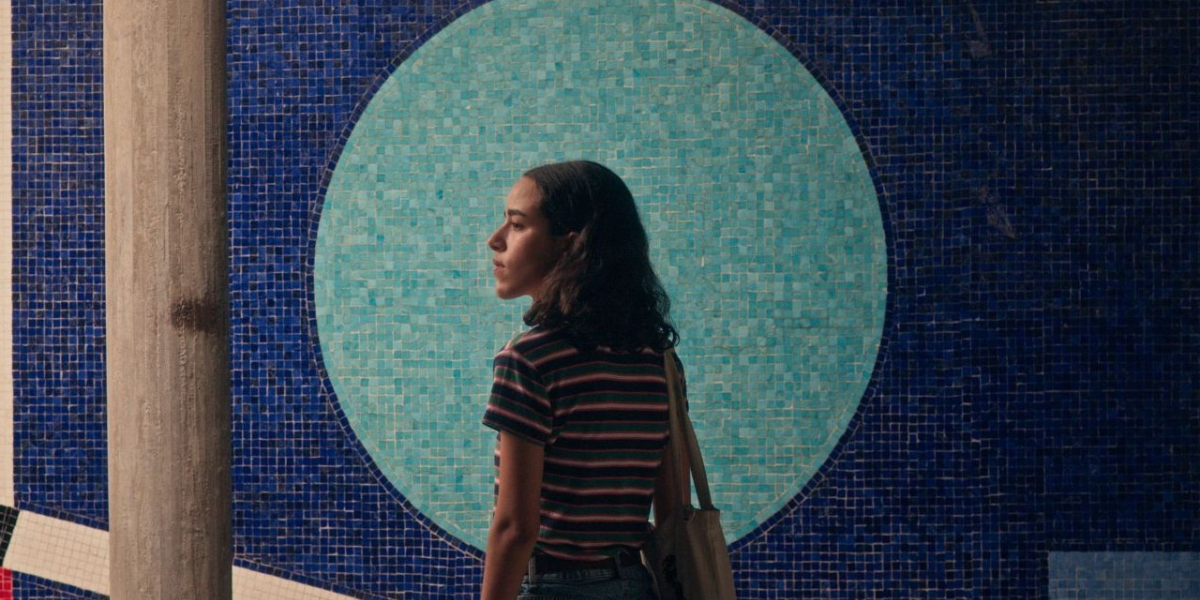
The grounding nature of a home may seem like an unassuming subject for a film. However, in Lorena Alvarado’s feature debut, Lost Chapters (Los Capítulos Perdidos) peels back the surface quiet and pulls at a deeper, more melancholy thread.
Ena (Ena Alvarado) is back in Caracas after spending some time abroad. There, she splits her time caring for her grandma (Adela Alvarado), who is living with memory loss, and working at her father’s (Ignacio Alvarado) bookshop. One day in the stacks, she finds a postcard asserting that the famous Venezuelan composer and writer who created the song “Alma Llanera,” Rafael Bolívar Coronado, wrote a novel titled Elvia. While Ena and her father begin wandering around Caracas in search of the elusive novel, Alvardo shows us slice-of-life vignettes, anchoring us to something deeper: the bittersweet passage of time.
As someone who has a family member currently living with Alzheimer’s, the moments where Ena’s grandmother fails to remember a son living in another country or where the beautiful lilies by her bedside came from hit me especially hard. The movie’s title, Lost Chapters, gestures not just at the time with family Ena lost while abroad, but also the pieces of memories her grandmother will never recover.
The film equates the two, the passage of time and loss of memory, reminding us that all we can do is try to be as present and patient as possible. A poem Ena’s grandma used to recite with her sisters now takes coaxing to remember. Later, we see Ena working on memorizing the same poem, trying to keep the memory of her grandma and compensate for some of what she missed in her time away.
It’s a mood Alvarado captures well in this debut by focusing on depicting her characters’ day-to-day experiences. Rain against palm tree leaves in the window, Ena and her grandmother sitting on the couch and talking to each other – Alvarado captures these simple pleasures with a steady eye, using the camera as a witness.
Clocking in at an hour and seven minutes, it would be easy to dismiss Lost Chapters as slight or aimless. However, Alvardo’s relish in these small moments is the point. According to the press notes, the director originally planned to make a documentary, but then switched to a semi-fictionalized account of Alvarado’s own homecoming. Certainly, every time we see Ena, acting as a stand-in for Alvarado, she’s trying to walk the line between recapturing lost time and crystallizing the present moment, so she can take it with her when she has to leave again.
The film deeply expresses the tension between home, the past, and the unstoppable march of time. With a lingering camera, it bathes the archives and bookstores Ena and her father visit with warmth and nostalgia. Shelves of well-loved books, the eyes of ancestors looking out, a hint of text on a microfilm viewer screen, here the details are as essential as the larger tableau. With these techniques, Lost Chapters raises the minutiae of everyday life to a refreshingly important level. Everything matters, especially when it is all slipping away, all the time.
At a time when the film industry wants to focus on larger stories and spectacle, it’s heartening to see a new voice championing the small details that give life its texture. A film like Lost Chapters helps us remember to cherish the present, even in the face of unstoppable forces. That alone makes it worth seeking out.

Lost Chapters begins its theatrical run July 24 at the IFC Center in New York.
