In 2023, the World Meteorological Organization (WMO) reported that between 1970 and 2021, climate-related catastrophes resulted in over 2 million deaths and economic losses of $4.3 trillion. Behind those staggering numbers is everything from agriculture to transportation, greenhouse gases to fossil fuels, all eroding coastlines, causing natural disasters, and rising sea levels. We feel it every day here in Puerto Rico, even as we’re still dealing with the aftermath of Hurricane María, which hit eight years ago on September 20.
And though the future seems bleak, I scoured the internet to find folks working to address the challenges of climate change as we approach this anniversary of Hurricane María. Check out my short list of films and one show addressing the climate crisis with creative solutions. Because future generations depend on us, and we only have one Madre Tierra.
Content Warning: Triggering subject matter, please prioritize your emotional and psychological well-being.
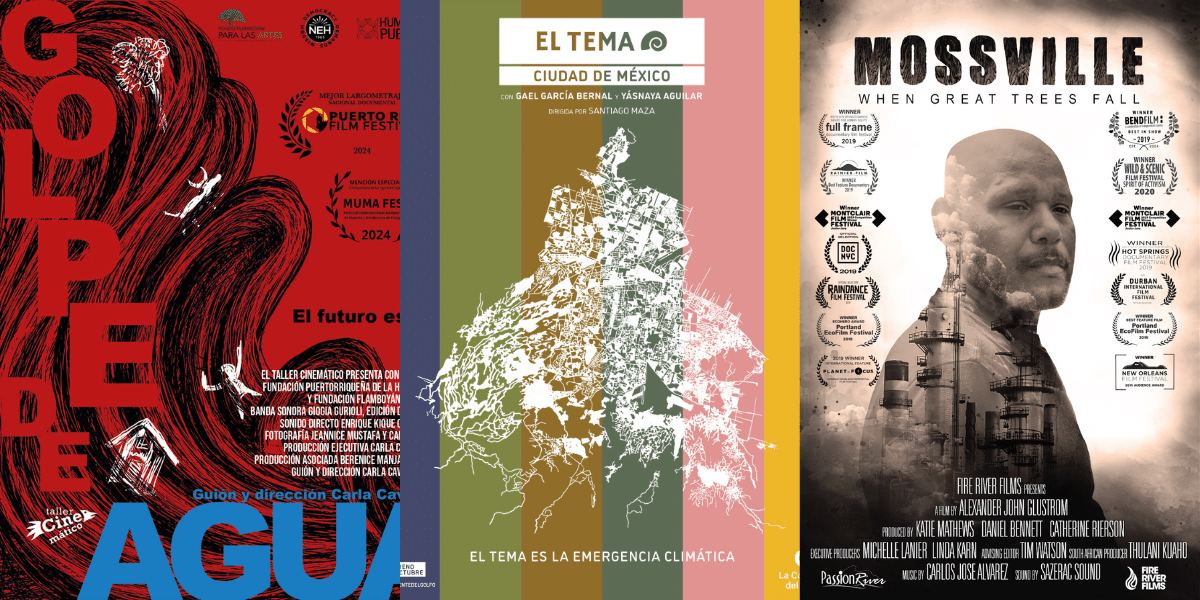
#1. Golpe de Agua (Puerto Rico, 2025)
August to October are the Caribbean hurricane season’s peak months. With the eighth anniversary of Hurricane María fast approaching, many here are on heightened alert.
Carla Cavina’s poignant documentary, Golpe de Agua, is a poetic story of Puerto Rican resistance and resolve. More than a chronicle of events, the film takes us on a post-2017 Hurricane María journey that questions the notion of “progress” amidst climate change and fragile communities left to fend for themselves.
Interviews with architects, planners, a meteorologist, and community leaders break up archival footage, contextualizing years of governmental neglect where profit reigns. Golpe de Agua serves as a reminder of what many of us have always known: solo el pueblo salva al pueblo.
#2. Ice Edge, The Ikaaġvik Sikukun Story (Alaska, 2022)
“I want to see my great great grandchildren. I want them to wake up to an earth that is liveable. I want them to go out and enjoy everything I see when I’m out in the country – the animals that we take to survive on because if we don’t do anything, there’s gonna be nothing out there. The oceans will die – and we’ll be extinct.” These warning words of Iñupiaq Elder Council Member Ross Schaeffer summarize this 80-minute documentary film that bridges Indigenous ancestral knowledge with Western science and technology.
Iñupiaq for “ice bridges,” the Ikaaġvik Sikukun story is focused on Kotzebue, a Native community in northwest Alaska, where the arctic sea ice is disappearing. It’s narrated via audio from behind-the-scenes meetings with local Elders and a visit to a local high school. Combined with aerial drone footage that shows the decline in seal habitat, Ice Edge, The Ikaaġvik Sikukun Story gives us a glimpse of what’s at stake for these Indigenous peoples.
#3. Africa’s Cooked & Sinking Communities (Cameroon, Kenya, Nigeria, 2023)
Home to 30% of the world’s mineral reserves, the African continent is long revered for its lush landscapes and richness of natural resources. With such vast treasures also comes exploitation – think mining and extraction.
Corporate Accountability and Public Participation Africa (CAPPA) prepared this 27-minute short documentary centered on the communities of Taita Taveta County (Kenya), Kambele (Cameroon), and Ayetoro (Nigeria). Featured at the United Nations COP 28 in Dubai as a way to highlight the dire situation people in those areas live with, the film exposes the impacts of severe year-long droughts, changing weather patterns, ocean surges, and oil extraction plants.
CAPPA Executive Director, Akinbode Oluwafemi bluntly summarizes it as, “The West owes Africa and the Global South climate debt. The time to start paying is now.”
#4. El Tema (Mexico, 2021-2022)
La Corriente del Golfo production company created this two-season, six-part docuseries exploring the climate crises in various parts of Mexico across the themes of water, air, carbon, energy, oceans, and food. Weaving conversations with Indigenous farmers, human rights activists, academics, and experts, hosts Gael García Bernal and Yásnaya Aguilar take viewers along a solutions-driven journey for local as well as global impact.
The second season centers on Mexico City. As the world’s fifth-largest city according to population, their climate change struggle is huge. Throughout, we listen to farmers, activists, and academics echo a common sentiment: the only way to address climate change is as a collective. Whether it’s via eco-friendly public transportation like the city’s mototaxis and ciclotaxis or processing families’ compost in innovative ways to reduce waste or working toward zero single-use plastics, citizens are eagerly working together for a more sustainable existence.
#5. Mossville: When Great Trees Fall (Louisiana, 2020)
There can be no conversation about climate change without also discussing environmental racism and environmental (in)justice. Set in a once flourishing Black rural town, Mossville: When Great Trees Falls exposes how corporate insatiable greed on two continents leads to land grabs, displacement, and erasure.
The feature documentary explores the sinister tactics of SASOL (South Africa Synthetic Oil Limited), an entity created to counter international oil sanctions during the apartheid era. It builds its Secunda plant on the Mother Continent, establishing a billion-dollar industrial plant in the U.S.
Told through the eyes of Mossville residents who date their family history there to the early 1800s and citizens of Zamdela Township in South Africa, the parallels are jolting: toxic chemicals in the air, bulldozers, buyouts, and demolitions leaving these communities with diseases and heartbreak.
#6. Tarcila (Perú, 2020)
Survival of her people and culture is what drives Indigenous Quechua activist, Tarcila Rivera Zea. For over four decades, she has fiercely advocated for the women and youth of her hometown Ayacucho in the south-central Andes region.
This 15-minute short is about empowerment, community, and continuity. Rivera Zea shares her personal story of leaving home at 10 to learn Spanish and work in Lima. She also recalls the 1980s “movimiento indio” where the machista leaders paid plenty of lip service to communities like hers but little action.
Using her extensive U.N. affiliation, the journalist-turned-activist is politically engaging women’s voices to ensure the longevity of her people, working to ensure they are not forced to leave their homes like she did. Tarcila offers a perspective of what is possible when Indigenous communities are the priority.
