For Women’s History Month 2026, I want to remind you that writing is political. I know I have been guided by thinkers like bell hooks and Judith Butler, who are significant to understanding anti-oppressive and feminist thought. Their writing is largely circulated in Canadian institutions, and though I acknowledge their importance, I always wanted to understand more about Canadian activists. As I learned about many significant thinkers via my studies, I couldn’t help but wonder: where are the Latinas?
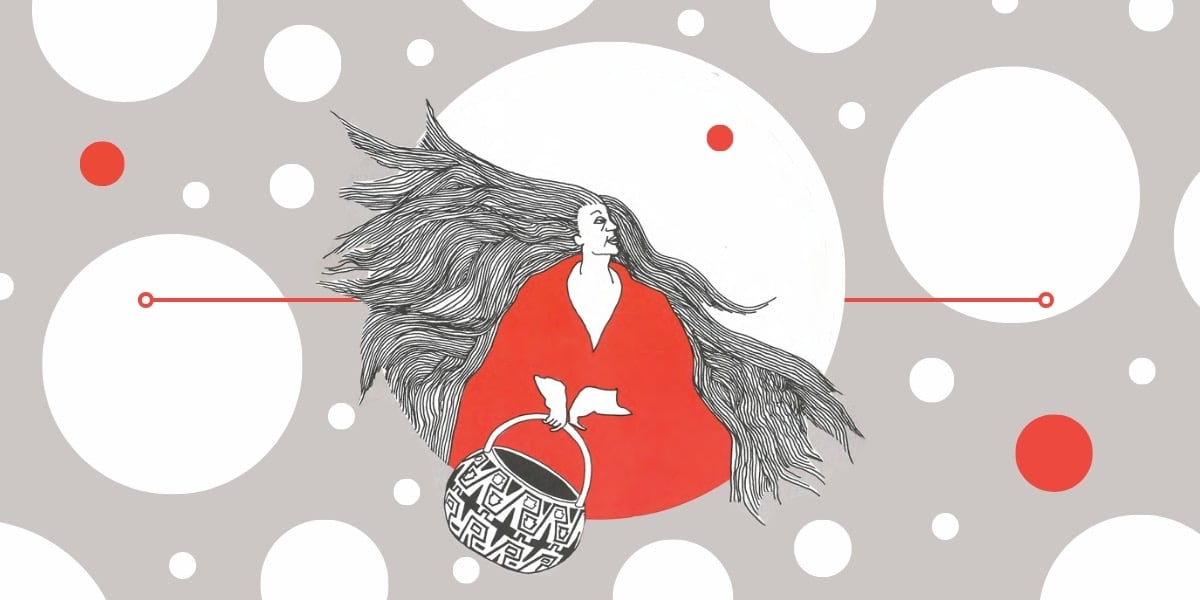
I know the Latin American population in Canada is smaller than the U.S., but I figured there had to be some kind of history of our community here. I was right. Eventually, I found a treasure, perfect for sharing during Women’s History Month 2026: the bilingual feminist magazine, Aquelarre. Published in Vancouver starting in 1989, the issues span into the ‘90s, and cover a multitude of topics: violence against women, Indigenous resistance, and immigration. The pages feature both Spanish and English essays, poetry, and more.
The magazine is joyfully rich with Latinas – it’s a space to be loud and create community. Let me take you into the archive.
A “collective of Latin American and Canadian women” founded Aquelarre. In their first issue, they explain their title refers to an “illegal gathering of witches,” who we’d now call “union leaders, women in exile, political prisoners, mothers of the disappeared” etc.
Hugh Hazelton explains in the book Latinocanadá that in the ‘60s and ‘70s, political turmoil in various Latin American countries caused a huge wave of immigration into Canada: “Most immigrants were refugees who were often from the most idealistic, progressive, and artistically involved sectors of their societies and who had never considered leaving their homelands until they were driven out by the military dictatorships that took root first in Brazil in 1964, then in Uruguay in 1972, Chile in 1973, and Argentina in 1976.”
Aquelarre’s collective was largely made up from this group of people. Carmen Rodríguez and Irene Boisier, for example, came from Chile, where Nora Nadir came from Argentina.
The introduction of issue one adds, “We also share an increasing confidence in our capabilities as women and the conviction that together, we can find new ways to advance and reach our destinations. We have power, we are witches.”
They emphasize that the identity of Latin American women includes “those of us who never left, those who left and continue to be ‘Latinas’ in far-away lands,” and “those who left and then returned.” Addressing the discourse of who “counts” as Latina, this section reinforces the idea that our identities as Latinas are not monolithic, and our relationship to identity can be fluid based on how we (or our families) move in the world.
Sometimes I wonder what it would have been like for my mother, a new immigrant to Canada at the time, to have access to a magazine in both English and Spanish, published by women like her. I can only imagine it would have been comforting to know there is community here.
Aquelarre is striking as a historical text (Eva Urrutia, for example, recounts her personal experience of the Argentinian dictatorship in a 1995 issue). But I can’t stop thinking about its value as a means for visibility. Despite being published before I was born, I find inspiration, comfort, and belonging in being able to read the Latin American women who have been here before me, doing important work in the literary scene and creating connections with other communities.
Aquelarre published women who were Indigenous, Black, and Asian – whether their identity intersected with being Latina or not. For example, in their “First Nations Women of the Americas: 500 Years of Resistance” issue, Aquelarre features reflections from Indigenous women from the Squamish, Lower Similkameen, and N’Quatqua Nations. These Nations are located in what is colonially known as “British Columbia,” and the authors reflect on a cultural exchange they did with the Mapuche people of southern Chile. Aquelarre also published Kenyan author Lynne Wanyeki and Asian Canadian women, such as Haruko Okano and Sky Lee.
Aquelarre is a powerful resource and a testament to what is possible when we are committed to anti-oppressive writing. As such it offers, powerful lessons for Women’s History Month 2026 and the months and years to come. As a Latina writer myself, I’m nothing but grateful to have found this archive and I know it will shape my own writing. Given the lack of visibility Latinas face in Canada, Aquelarre is an important imprint of our history.
