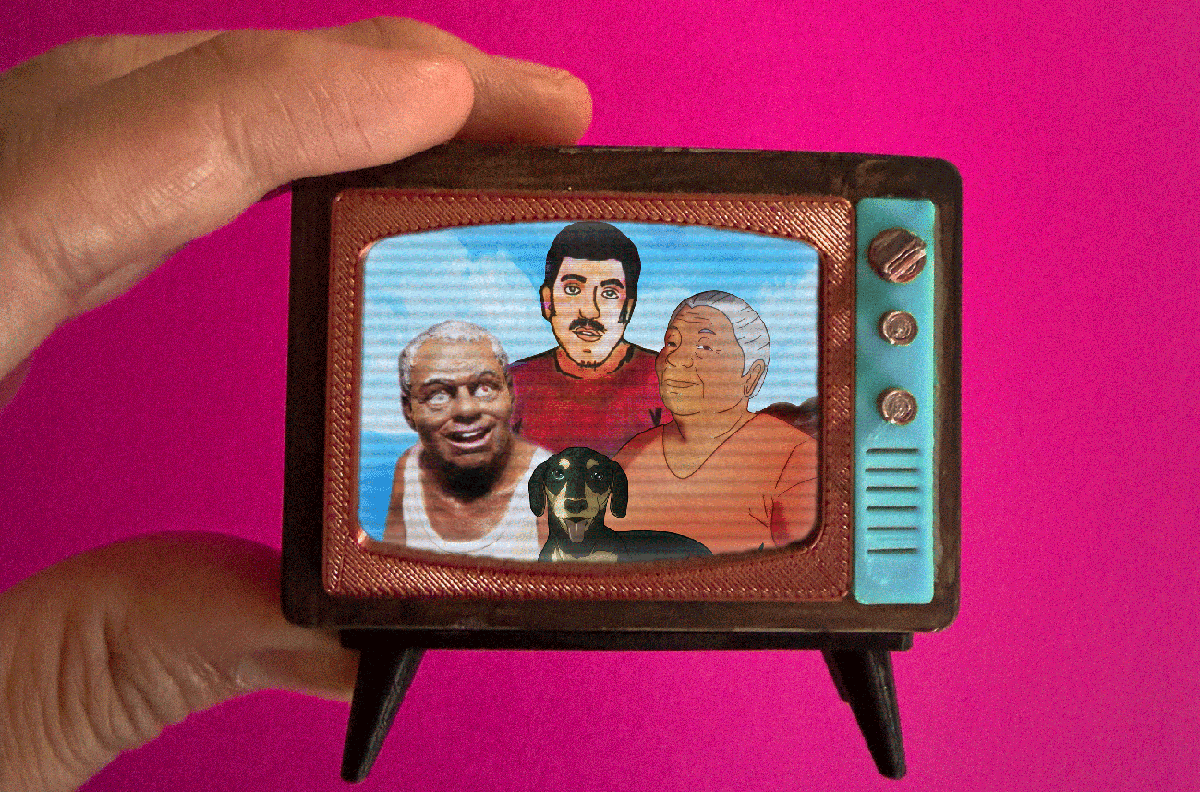
What do we do in the face of life’s impermanence? This is one of the questions raised by the experimental 2026 Sundance documentary, TheyDream. Puerto Rican filmmaker William D. Caballero reckons with this question and answers it by creating.
Caballero’s medium – filmmaking with various kinds of animation – becomes a kind of alchemy as the documentary goes on. Using audio from interviews with his loved ones, childhood cassette tape recordings, and animation techniques like stop motion, rotoscoping, and hand-drawn animation, Caballero is able to pay homage to and even resurrect lost family members throughout the film.
TheyDream is a deeply personal work that chronicles Caballero’s family life, from his childhood through adulthood, charting out the often complicated emotions that come with aging family members. We get to meet Caballero’s whole family, from his charismatic father to his spunky grandmother to his selfless mother.
The devotion and care with which Caballero brings back to life his departed family members is truly impressive – at one point, he uses audio from recordings of his father, then films himself performing the tape to rotoscope over later, creating a visual element and bringing back his father from a certain place and time through his craft. It’s compelling to watch Caballero painstakingly recreate conversations and memories through his work. Emotionally, though, it is almost too much to bear.
We watch as over the course of six years or so, Caballero loses multiple family members (and a pet) to illness and time, all making their inevitable exits unfortunately close to each other. On the one hand, surviving so much loss is an impressive feat in itself. On the other, the pacing and construction of the ITVS documentary make the losses feel relentless.
Instead of focusing on the art and Caballero’s beautiful homage, the documentary undercuts itself by building a cloying dread. Nearly every story beat is driven by the loss of a loved one, overwhelmingly piling on. Witnessing Caballero’s increasing losses via saccharine musical cues begins to feel almost like a cynical construction, as if the film doesn’t trust us to recognize just how awful these deaths are.
I understand the impulse to preserve our loved ones, but the doc so focuses on its acts of resurrection that it eschews more interesting, thornier themes. For instance, late in the film, Caballero has to contend with his last conversation with his father, one that laid bare the older man’s homophobia and racism. The film lets the conversation hang over the last third of the film, without delving into the question it clearly raises – how do we memorialize complicated, imperfect people we love?
Getting more insight into the actual creative process Caballero uses to create these animations and sequences would have been nice, too. There are moments where he illuminates why or how he’s doing something in conversation with his mother (who becomes his co-creator in the second half of the film). But these remarks just leave me hungry for more, particularly as a way to break up and give context to the parade of deaths on offer.
As I watch my loved ones age, I am starting to grapple with what it will look like when I have to step up to the plate as a caretaker or even what it will look like when they pass. Aging makes the passage of time feel both cruel and joyful. It’s a bittersweet inevitability to finally reach the point where you begin to understand your parents and grandparents, and then have to say goodbye. In this respect, Caballero’s impulse to chronicle and pay them homage is understandable and even admirable. I just wish TheyDream handled it more gracefully.
