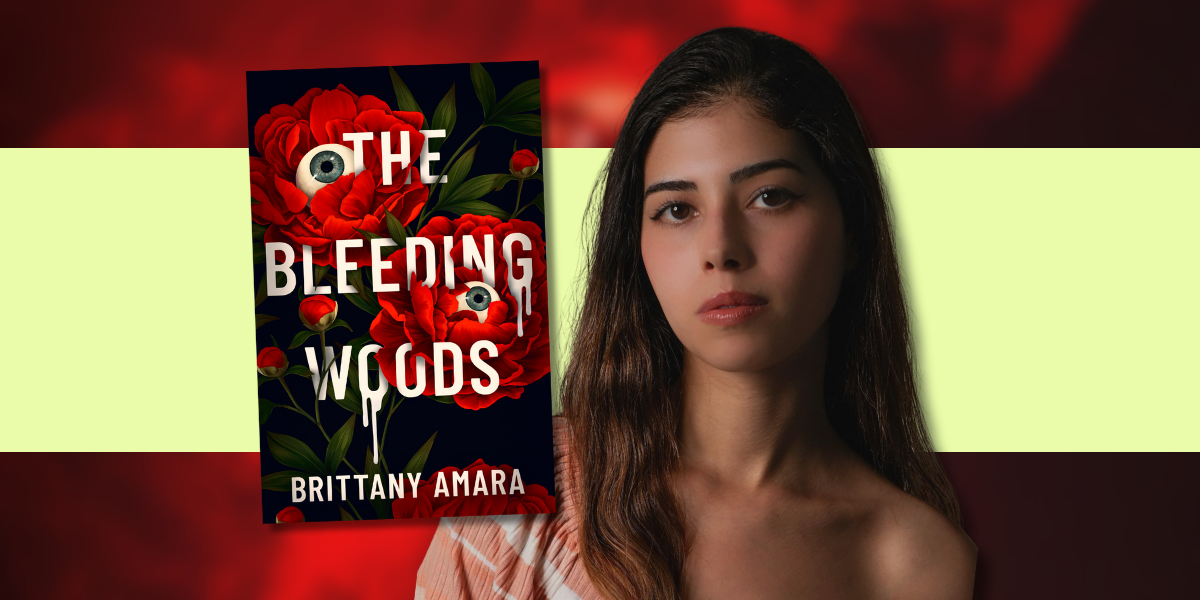
I’m still not entirely sure how it happened. On an intellectual level, I know what went wrong. I can track the footsteps of my former self, padding hopelessly into a forest darker and more despondent than she ever could have imagined. Still, in my heart, I can’t figure out how I came to hurt myself the way I did. I can’t imagine what caused me to treat myself, a woman I once loved, with so little care.
A few years ago, I developed a restrictive eating disorder that consumed (almost) all of my light. My days were built upon counted calories and pervaded with obsessively dysphoric thoughts. I couldn’t make it through a single hour without thinking: Am I pretty enough? Am I skinny enough? If I’m smaller, will I be safer? If I’m weaker, will people love me more? All I truly wanted was to feel worthy. Worthy of being held, preserved, and protected. Worthy of respect, appreciation, and acceptance. In this world, women are taught that we must earn such luxuries. We’re taught that our value is intrinsically, inseparably tied to our beauty, and an invisible audience determines the boundaries of such beauty. I stopped eating to win their heart.
I wrote The Bleeding Woods to heal my own.
On one blustery, but otherwise uneventful Autumn day, I sat at my computer and pulled up a document I hadn’t so much as glanced at in nearly a decade. The words The Woods, as it was titled, hung in mighty Comic Sans at the top of the page. Below it, four thousand words I’d written when I was twelve years old. Together, they formed a juvenile but passionately told short story. In it, a wraithlike glimmer of the girl I once was whispered to me. If we get stronger, what might we become?
At the time, it was a terrifying thought to consider. For so long, I’d focused only on being tiny and manageable in body and in being. Still, my spectral younger self invited me with unwavering love to explore the shadows, embrace the darkness, and process the pain. On the page, I could be more than pretty, quiet, and well-behaved – I could be towering and monstrous.
Clara Lovecroft, the protagonist of The Bleeding Woods, isn’t me, but she is alchemy. In her, I sought to find my greatest fears and offer them the space to heal. Just as I’d been restricting my calories to maintain a certain shape, Clara consumes pills that dilute her DNA, ensuring she stays human. Just as I’d concealed parts of me that I feared would get rejected, Clara suppresses anything and everything in her that isn’t agreeable. She begins her journey as a ballerina, performing for an audience of silhouettes on a stage mimicking the world I inhabit. As the story progresses, she trades her tutu for teeth and becomes a monster, but a monster of her own design.
While her deepest fear is unconditional self-acceptance, Clara must also overcome external opposition in Jasper. He might be a devilishly handsome forest demon, but he’s also a perfect mirror to her monstrosity. To me, he represents a special kind of darkness that can emerge in the process of healing, a vengeful plume of smoke that obscures true recovery. Instead of saying, “I was hurt, and therefore, I’ll heal others,” Jasper says, “I’m in pain, and therefore, I must become a force of it.”
He claims to be Clara’s salvation, but he isn’t. Hate never is.
At times, The Bleeding Woods is angry and violent. At times, it’s cloudy and dreamlike in a way that still puzzles me. In writing it, there were moments aplenty when I worried a scene might be “too much” for that same unseen audience. Too bloody. Too sexy. Too poetic. Too blunt. Well-behaved women aren’t supposed to write rage, gore, and bloodshed. We aren’t supposed to sprinkle a little spice over our work or shatter any patriarchal expectations. We aren’t supposed to be messy, complex, or confusing. Well-behaved women are pretty and quiet, tiny and manageable.
I didn’t want to be well-behaved anymore.
When a scene felt too bloody, I made it bloodier. When a scene felt too steamy, I made it steamier. If my voice leaned into poeticism, I let it. If I felt a bit more brusque, I kept my sentences short and not-so-sweet. Writing The Bleeding Woods wasn’t just about telling Clara’s story, but about unlocking a fearless, unapologetic authenticity within me.
Just beneath my conscious perception, crafting this novel was mending my heart. It wasn’t just a project to work on, but thousands of words to live for. I had to eat, because I had a story to tell. I had to recover, because I had something to share. Out there, somewhere, I knew there might be a woman just like me, wondering if her well-being is worth fighting for. I had to keep going, through the best days and the worst, so that she could find this story and maybe, just maybe, see her struggle within it.
The Bleeding Woods is a horror story about a young woman hiding a dangerous secret. It has a bit of science fiction, a touch of family drama, and a splash of dark romance. There’s a wolfishly tempting forest demon and a tiny love triangle. There are dream sequences, mind control, mad science, and government conspiracies. It’s a happy little mess of things that made me smile when my smiles were in short supply. For that, I will be forever grateful for it.
My gratitude multiplies tenfold at the thought that this story, and the one behind its creation, might help just one other beautiful human being out there. So, when it reaches who it must, I hope it leaves them happier, more hopeful. and less afraid to love their darkness until it turns back to light.

The Bleeding Woods is currently available for pre-order and will be available nationwide on October 14, 2025.
