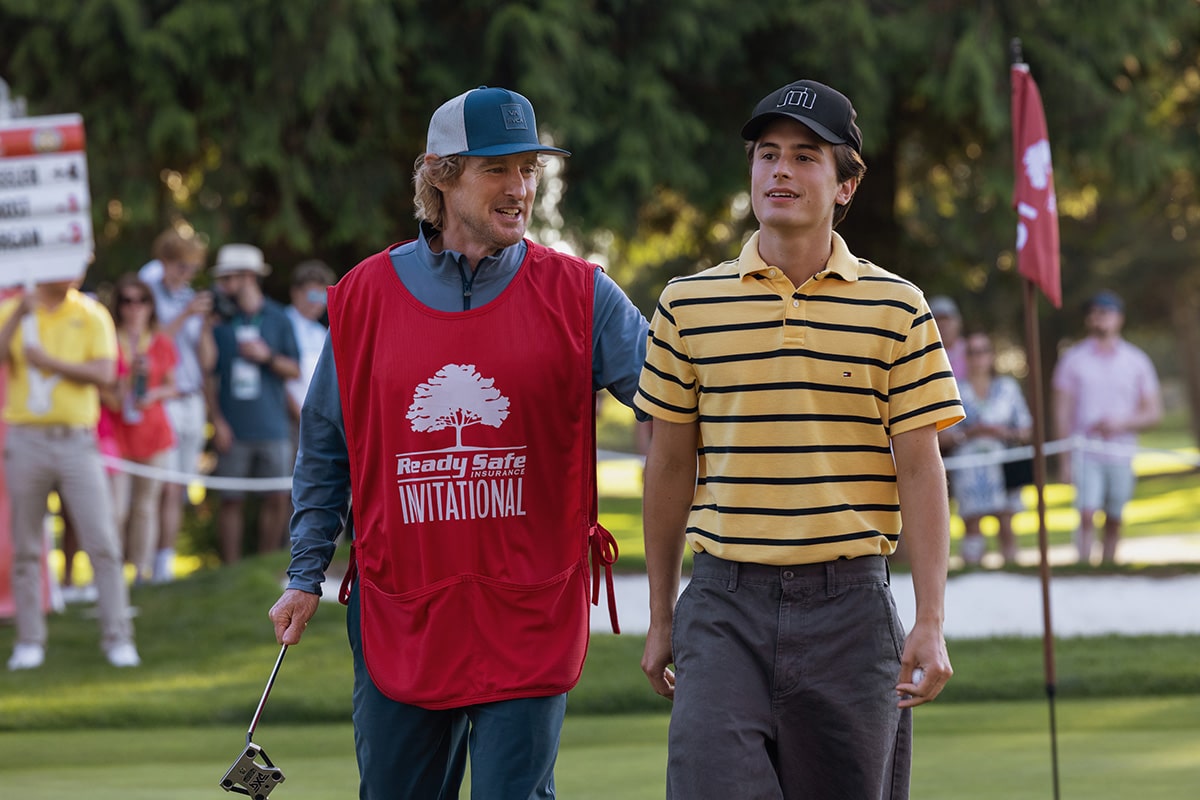
Many people are linking Ted Lasso with the Apple TV+ comedy, Stick – and it’s not just because they share a streaming platform. Both shows center around sports, sharp comedic dialogue, and families shaped by difficult circumstances. But what truly connects them is the emotional depth. They both explore themes like mental health, grief, and social pressure, proving that comedy can be a powerful vehicle for much more than laughs.
The comedy follows Pryce (Owen Wilson), a former golf legend who now drives a dented sports car, hoards junk in his home, and sells golf clubs for a living. When he meets Santi (Peter Dager), a talented but aimless teenager, Pryce finds a new sense of purpose. First, though, the former legend must win over a skeptical crew: the grumpy teen himself, his protective mother Elena (Mariana Treviño), Pryce’s best friend Mitts (Marc Maron), and his ex-wife Amber-Linn (Judy Greer), who ends up funding their golf-tournament road trip in a battered RV.
Stick excels at bridging generations and cultures. One standout feature is the effortless Spanglish between mother and son —a fluid, natural blend that never feels forced. The Mexican actress nails it with expressive glances and gestures, while Dager, the Miami-born actor with Venezuelan and Cuban roots, brings a lived-in authenticity to the bilingual banter. He embodies a generation unafraid to own their heritage and language, and it shows.
But this isn’t just a coming-of-age story. The show uses humor to navigate generational gaps and cultural tensions – including a hilarious scene on the correct use of pronouns. That’s where Zero (Lilli Kay) enters: a strong-willed, opinionated Gen Z woman who challenges Santi’s worldview with her takes on capitalism, feminism, and veganism. Though she’s divisive at first, Zero becomes a more rounded character as the series progresses, especially in episode 8, “Clark the Mark,” where her subtle vulnerability finally breaks through the surface.
By then, we’ve already uncovered Pryce’s hidden grief. He may seem like a laid-back, washed-up man-child, but the pain he carries is deeper than it appears. In “Dreams Never Remembered,” he allows himself to imagine the life he didn’t get to live – not in big moments, but in small, mundane ones. What he longs for isn’t fame or milestones, but quiet connections: yelling “Turn the music down!” from the foot of the stairs. The toy in the toilet. The noise. The mess. Every day moments his son never got to experience.
Grief weaves throughout the first season. Pryce can’t talk about his son – if he stays in that memory, he doesn’t know how to come back. Mitts, meanwhile, is frozen by the loss of his wife. But together, with this newly formed makeshift family, they start to thaw. Slowly, they begin to re-engage with life.
The season closes to the tune of “Cecilia,” just as Santi faces his own heartbreak. He’s found a mentor and a father figure in Pryce, only to be let down again by his real father, who shows up briefly now that the spotlight is on his son. It’s a painful twist, but his chosen family rallies around him, ready to catch him when he inevitably breaks.
With its mix of humor, heartache, and redemption, Stick uses the lightness of comedy to explore the weight of life, ending on a note equal parts sweet and glorious. The final image – underscored by a song no Gen Z teen would likely choose, yet made timeless by its emotional weight – is a reminder of why Owen Wilson was one of comedy’s biggest names in the early 2000s: he knows how to make you laugh, but also how to make you feel.
I want to see more of Stick and its brilliant Spanglish, which puts two strong Latino characters front and center in meaningful, well-crafted roles. Looking ahead to a second season, I’d appreciate less tension around generational differences – not because the topic isn’t relevant, but because the show shines brightest when it avoids moralizing or guilt-driven speeches. Instead, it thrives when those contrasts unfold naturally, through humor, connection, and the quiet humanity that defines its strongest episodes.
