
At Latina Media Co, Mujeres Problemáticas is where we dissect the media we consume, demand better representation, and celebrate the stories that center Latinas on our terms. In this piece, cultural critic Denise Zubizarreta and writer Stephanie Belk Prats join forces to explore the legacy of the only U.S. film ever blacklisted: Salt of the Earth. Together, we unravel what it meant then — and why it matters now.
Before the term “Latino representation” ever hit a Hollywood pitch deck, there was a film so subversive, so unapologetically ahead of its time, that the U.S. government tried to erase it.
Released in 1954, Salt of the Earth was the first — and remains the only — film to be officially blacklisted in the United States. At the height of McCarthyism, when accusations of communism could ruin careers overnight, this independent production became a lightning rod. It was deemed “communist propaganda” not because of any covert messages, but because it was anti-racist, pro-union, and — perhaps most threatening to the establishment — feminist.
The aptly named film Salt of the Earth does not star Grace Kelly. It does not feature a luminous Judy Garland ascending to stardom under the white lights of the Broadway stage. Nor does it feature Joan Crawford at the height of her popularity, as she dispatches pithy lines from the set of a dusty frontier town while wearing a striking scarlett lip, every curl perfectly coiffed.
The movie does not feature anyone from Hollywood for that matter. The film’s leading lady, Rosaura Revueltas, was one of the only professional actors on set. The rest of the film was mostly staffed and performed by working-class Mexican-Americans and their families — the subjects of the film.
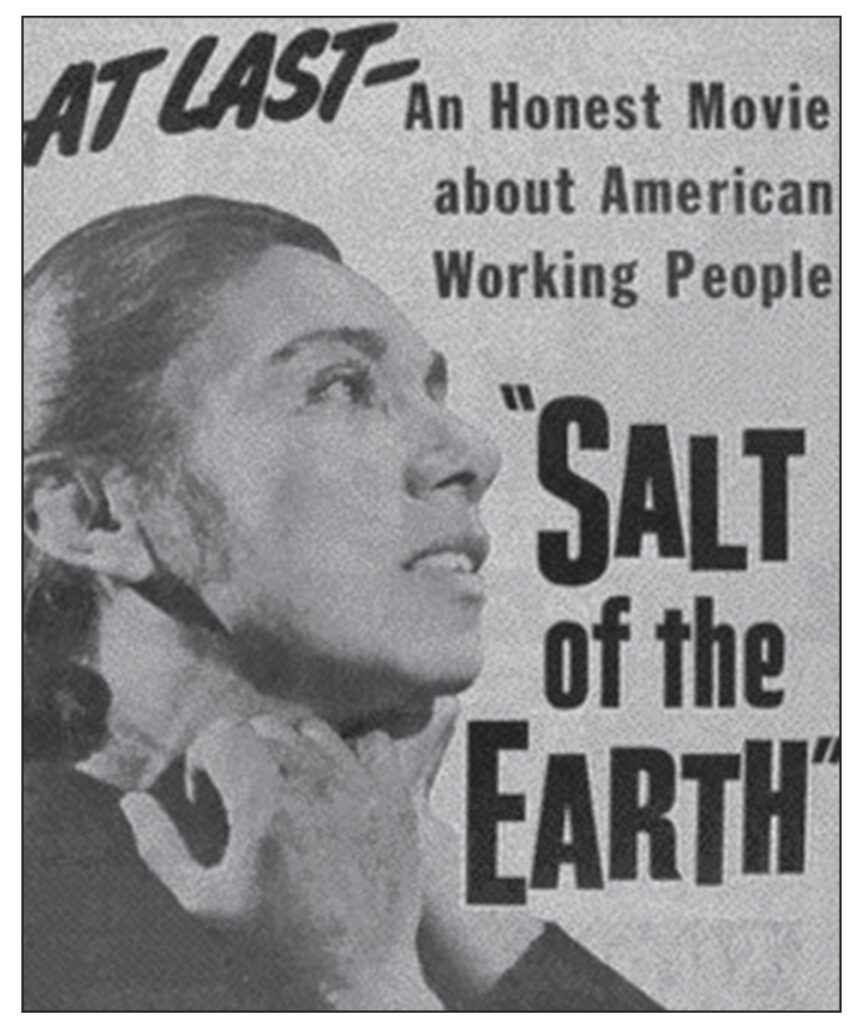
Based on real events, the film dramatizes the 15-month labor strike of Mexican-American miners in New Mexico courageously fighting for safer working conditions and wage parity with their “Anglo” counterparts.
Its creators were already marked men: the director (Herbert J. Biberman), the writer (Michael Wilson), and the producer (Paul Jarrico) had all been blacklisted by Hollywood for alleged communist ties. They teamed up to produce a film grounded in the real-life 1951 labor strike of Mexican-American miners in New Mexico. The story was incendiary to those in power because it spoke the truth — about racism, classism, and gender inequality in America — and it dared to center Latinos not as villains, but as heroes. The film’s star, Revueltas was also blacklisted. She never worked in Hollywood again.
The U.S. government didn’t just object to the film. It tried to stop it from being made. Revueltas was deported during production. The FBI followed the filmmakers. The film reels were seized and hidden. Theaters were warned not to screen it. Its existence became a threat.
But despite all that — or maybe because of it — Salt of the Earth remains one of the most powerful and radical pieces of American cinema.
At the center of that story is Esperanza Quintero (Revueltas), a miner’s wife who transforms from a submissive partner into a revolutionary leader. Her husband Ramón Betances, played by real-life union leader Juan Chacón, initially resists her growing political consciousness. But when the miners are banned from picketing under the Taft-Hartley Act, it’s the women who take the line — and Esperanza becomes the movement’s soul.
Women with children strapped to their chests face tear gas, moving cars, and jail time. They are battered, bruised, but never broken. From a jail cell, Esperanza demands baby formula for her newborn and inspires the others to keep fighting. Through community-led resistance, the miners win better wages and living conditions.
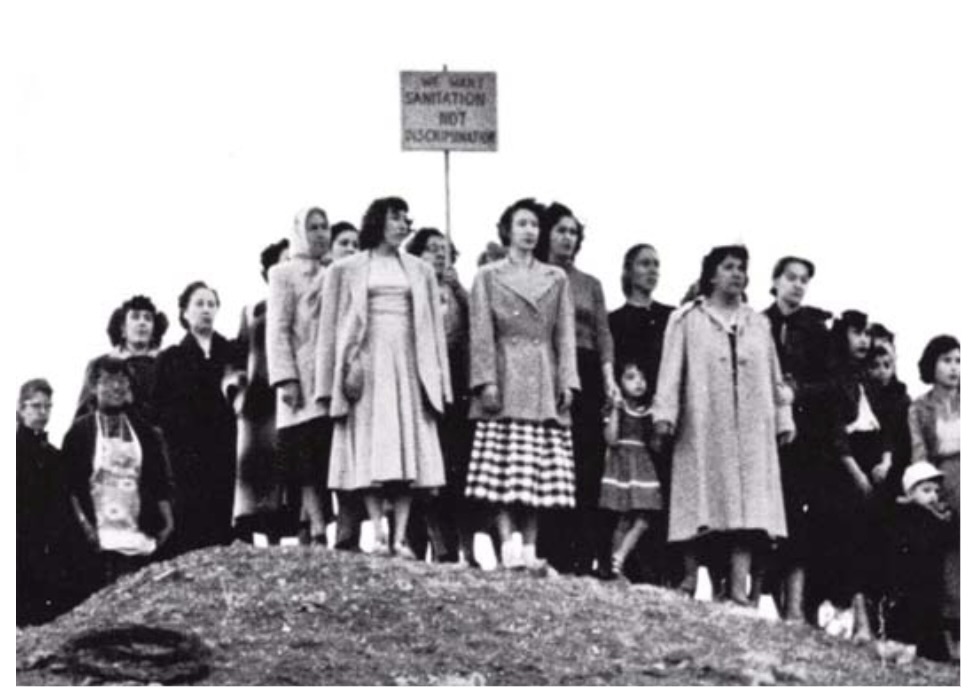
The radical brilliance of Salt of the Earth wasn’t just in its message — it was in its method. It put working-class Latinas at the center of a film not as stereotypes, but as complex, commanding forces. Esperanza wasn’t a maid or a mistress. She was a revolutionary.
Perhaps most striking of all was the film’s depiction of Latino integrity, especially in Esperanza’s. Her commanding performance captured the strength we often see in the women in our own lives — fierce, relentless, principled. Watching her cracked something open in both of us. We didn’t realize how starved we were for that kind of representation until we finally saw it.
Growing up, we’d both seen moments of representation — glimpses of ourselves and our communities on screen — but discovering Salt of the Earth hit differently. For Stephanie, who had never seen the film before, the experience was revelatory. The fact that such a bold, radical film had existed for so long without her ever hearing about it said everything: films like this were rare to begin with, and even rarer to be remembered. They don’t fit the sanitized version of history that white nationalist narratives want to center, so they’re buried. Forgotten. Hidden. We’re taught not to dig. Not to ask. Not to remember. But Salt of the Earth reminds us why we must. Because the stories that shake us, that shift our understanding — those are often the ones they most want us to forget.
The “dangerous Latino” archetype remains a boogie-man of the white nationalist imagination: hoards of shady foreigners invading their hard-working towns to steal their blue-collar jobs, assault their quiet, manicured streets with violent gangs, and seduce their hapless husbands and unsuspecting wives through their irresistible sexual prowess and uncontrollable promiscuity. These were the roles we were cast in; ones we never had a hand in constructing.
This narrative didn’t disappear — it evolved. Today’s political climate still relies on those same stereotypes to stoke fear and justify cruelty.
Trump may not be McCarthy, but he’s working from the same playbook: demonize the marginalized, romanticize white nationalism, and weaponize the media to rewrite reality. It’s why films like Salt of the Earth are more than historical artifacts — they’re warnings. He conjures the same tropes to justify his vicious attacks on Latino communities and military-style immigration raids, propagating racist myths to justify the implementation of equally racist policies.
Salt of the Earth embodies many ideals, and chief among them is this: reclaiming authorship over our stories asserts the meaning inherent in our own lives. More than ever, we need art told from our point of view. Because without it we’re just plot devices to push forward the narrative of white nationalism.
