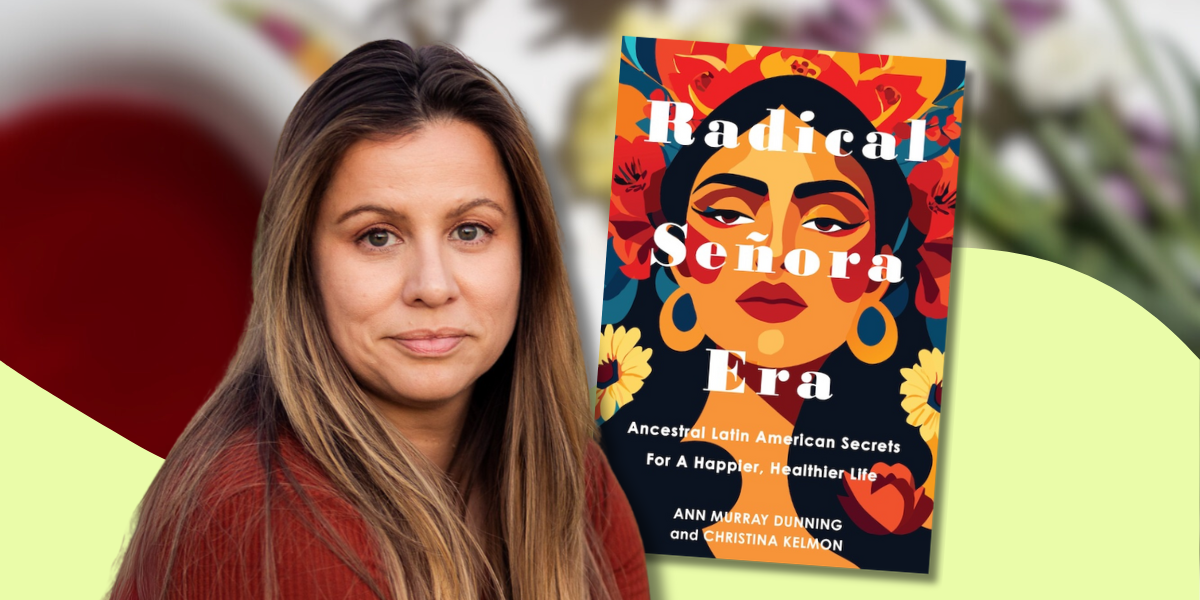
My Radical Señora Era co-author and I were not expecting to go TikTok viral, especially with videos that had nothing to do with our skincare brand. But we were looking at over 1 million views and thousands of comments that revealed just how deeply our message resonated.
One was a very simple, 7-second video, where I was wearing a gardening hat, set to the throwback song Sabor a Mi by Eydie Gorme and Los Panchos. It said, “If you’re a Latina and want to leave hustle culture behind this year and collect fresh eggs every morning… Be our amiga.”
This message clearly struck a chord with Latinas of all walks of life, Gen Z Latinas, women in midlife, working women, stay-at-home moms, college students.
The idea was simple. In our culture, Latinas have to outwork everyone just to prove we belong, most of us have a unique pressure to be perfect both in the home and our careers, and we are more likely to be the primary caregivers of both our parents and our kids. In that culture, we are never told that our worth isn’t measured by how perfectly we show up for everyone else.
What we didn’t inherit was the permission to rest, to say no, or to choose ourselves first.
We weren’t the only Latinas telling our community this message. Raquel Reichard was writing a book called Self-Care for Latinas, Ana Flores from We All Grow Latina was also exploring the topic of being done with the hustle, and Latina walking clubs and book clubs were popping up all over the country, telling fellow women to sit down and just have some tecito.
It was then and there that we created the life-changing Radical Señora theory. It says that if you’ve made it in the job, career, or school of your dreams, but still feel that something is missing, the problem may be bigger than you.
You live in a culture that’s layered with economic inequality, that pushes extreme consumerism, and that birthed a concept called “hustle culture,” which glamorizes overwork, toxic productivity, and a scarcity mindset.
These companies, obsessed with their bottom line, dangle perks designed to keep you in the office longer. But there’s a cost to your health, your peace of mind, and your relationships. You become isolated.
We are also living in a hyper-individualistic society, when our ancestors were community-oriented, and everything they did benefited others in some way.
In my career in Silicon Valley, I had a front row seat to the rise of hustle culture – the glorification of sleeping under your desk, working weekends, and treating burnout like a badge of honor. I watched as tech companies preached “change the world” while quietly exploiting the relentless drive of young people, and in particular women, BIPOC, and immigrants, who believed that overwork was the only ticket to belonging.
It was sold to us as ambition, but in reality, it was a scam. For me in particular, it meant pushing myself to work unconscionable hours and weekends to build my small marketing company, while forgetting my roots.
On San Francisco’s trading floors, my cofounder and co-writer Christina Kelmon was the only Latina in a sea of finance bros, outworking everyone to prove she belonged. What seemed like success was, in reality, a path of quiet self-destruction. She was often underestimated and put in compromising situations that left her feeling more like a novelty than a respected professional. The weight of that culture pushed her into panic attacks so severe that she ended up asking her mom to take her to the ER.
You’ll read in the book how that marked the end of her career in finance.
We also recognize that the call to slow down isn’t new. Black Women have been leading this movement through works like Tricia Hersey’s Rest Is Resistance, where Hersey, one of our academic heroes, reframes rest as an act of liberation from systems built to exploit the labor of her community. Her philosophy is why we now see unapologetic self-care mantras – a declaration that in heavy political times, rest and joy are not retreat, but self-protection.
Our book Radical Señora Era builds on that radical legacy, reclaiming slow living for Latinas who were taught, like so many others, that worth comes only through overwork.
So what does this rest look like? That’s where the Señora Life comes in. In the book, we reclaim things the women in our family tree did for many generations. Focusing on the home, planting a little garden, baking if you enjoy it, carving out a moment each day to sit down and enjoy your favorite tea. Mundane everyday things that we started to devalue when we wanted to lean in and become boss babes.
We took this concept and called it radical. We are in our radical señora era because we are taking only the good parts of our ancestors’ domestic lives and chucking the bad parts: machismo, marianismo, classism, self-sacrifice without reciprocity, and the idea that a woman’s worth is measured only by how well she serves others. Instead, we embrace everyday rituals – gardens, tea, shared meals, books, community – as acts of self-care and joy.
We’re still ambitious as hell – but we create guardrails and strong boundaries at work so that our work ethic does not get taken advantage of. To be in your Radical Señora Era is to choose rest over depletion, community over isolation, and joy over endless striving. It’s a reminder that our lives are not meant to be burned out in service of someone else’s bottom line. They are meant to be lived, fully, tenderly, and on our own terms.
