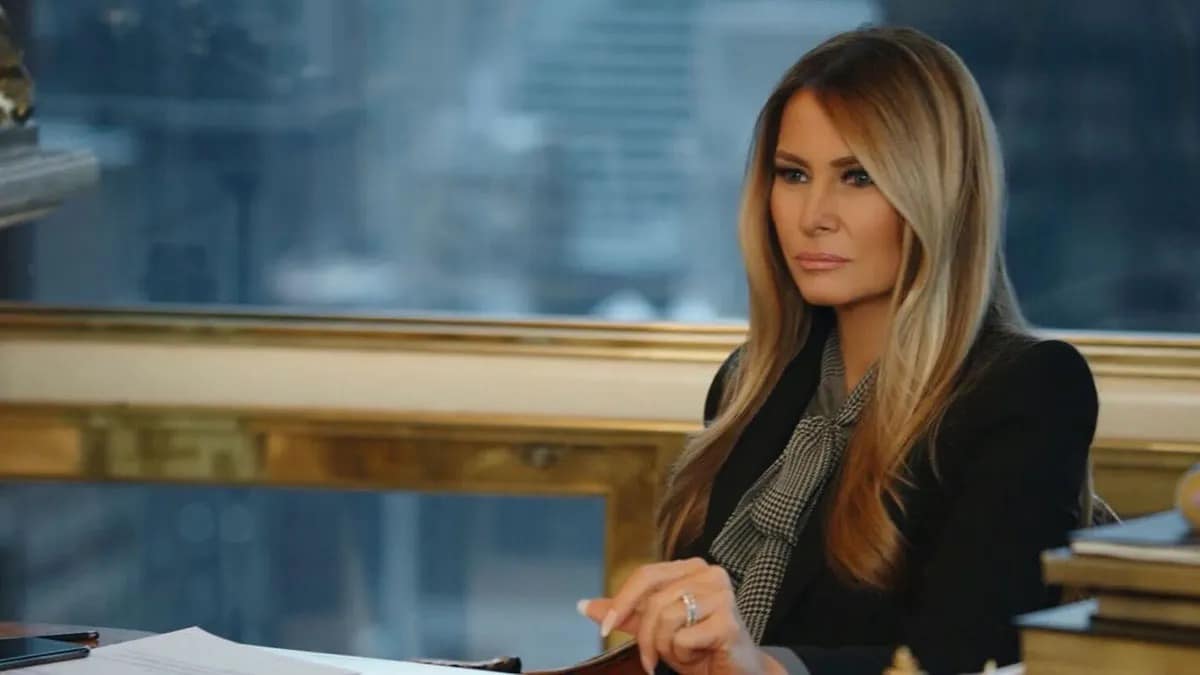
There is a particular pressure in media culture that insists every cultural artifact deserves engagement. Watch it. Stream it. Review it. Feed the machine so you can critique the machine. But sometimes refusal is the critique. Sometimes, the most honest review is declining to participate in the spectacle at all. That is my position on Amazon Prime’s Melania.
I am not watching it. I am not paying to see it. And I refuse to perform neutrality about a film that reads, from its premise to its rollout, like a polished exercise in political image laundering.
This is not a tantrum. It is media literacy.
Melania is myth maintenance. Its very existence signals an attempt to rehabilitate, romanticize, or recontextualize a political figure whose public image is inseparable from a broader ideological project. You do not have to screen a film to recognize when its framing is doing political labor.
This is where propaganda enters the conversation. Not as a cartoonish villain twirling a mustache, but as a sophisticated form of storytelling. Propaganda is most effective when it does not look like propaganda. It looks like access, intimacy, and an invitation to empathize without interrogating.
Cinema has always been a preferred instrument for this kind of persuasion. Authoritarian regimes understood early that images bypass defenses faster than policy papers ever could. Spectacle softens scrutiny. Personality eclipses structure. When audiences are encouraged to emotionally invest in a figure, the systems surrounding that figure become background noise.
That is the architecture Melania appears to inhabit. Refusing to watch is not about pretending the film lacks an audience. It is about declining to subsidize its narrative project.
What makes this rollout particularly jarring is the theatrical framing. A documentary of this nature playing in select cinemas transforms viewing into a kind of ritualized allegiance. Attendance becomes a quiet declaration. You are not just watching a movie. You are participating in a shared affirmation.
Melania is prestige gloss applied to political ego maintenance.
And it is not harmless. Visual propaganda thrives on repetition and aesthetic seduction. When audiences are repeatedly exposed to curated images that frame power as aspirational, criticism begins to feel like bad manners rather than civic responsibility.
Call it narrative conditioning. Call it political branding. The effect is the same. The audience is invited into a story that flatters allegiance and discourages friction. That is propaganda at its most effective: not loud, not crude, but sleek enough to pass as culture.
Director Brett Ratner adds another layer of discomfort that cannot be waved away as irrelevant biography. Ratner’s history of sexual misconduct allegations, which surfaced prominently during the #MeToo movement, complicates any claim that this film exists in a vacuum of artistic intent. When a project positioned around image rehabilitation is helmed by a figure whose own public record is fraught, the optics stop being incidental. They become part of the text.
This is not guilt by association. It is context. Media does not float above the conditions of its production. Who tells the story shapes how the story functions. Ignoring that reality is itself a kind of narrative surrender.
Refusal, then, becomes a small act of resistance against automatic consumption. In a media economy that measures success in clicks, streams, and ticket sales, attention is currency. Withholding it is not censorship. It is editorial judgment exercised at the level of the viewer.
Critics are often told that you cannot meaningfully condemn what you have not consumed. That assumes all engagement is equal. It is not. We make informed decisions every day about where to direct our time and money based on available information, patterns of representation, and historical precedent. Cultural criticism does not require blind sampling. It requires literacy in how media operates.
The existence of Melania is itself worthy of critique. My refusal is not about moral purity. It is about refusing to confuse access with truth. A documentary can illuminate. It can also obscure with better lighting. When the line between those functions blurs, skepticism is not cynicism. It is civic hygiene.
There are films that demand to be seen because they challenge power, complicate narratives, and widen the frame of public understanding. Melania, by every signal available, is moving in the opposite direction. It is a monument to image management at a moment when image management is already distorting political reality.
So I am opting out. Not quietly, not apologetically, but deliberately. Because sometimes the sharpest review is the one that says: this spectacle does not deserve my eyes, my money, or my complicity.
