In 2024, the romantasy genre casually raked in an estimated $610 million in U.S. sales, single-handedly pushing the entire fantasy book market up by 62 percent. It is an absolute gold rush. According to Infegy, there were 691,000 BookTok mentions of the word “romantasy” in 2024 alone. Spend sixty seconds scrolling over there and you’ll see what this cash flow looks like – cinematic book trailers and dramatic annotations of “enemies-to-lovers” scenes where a morally gray Fae prince utters “Who did this to you?” But beyond the massive virality of blockbusters like Rebecca Yarros’s Fourth Wing or Sarah J. Maas’s A Court of Thorns and Roses lies a more progressive shift. Latina authors and readers are actively occupying this hyper-lucrative space to wage a cultural rebellion.
To understand the weight of this shift, you have to look at what traditional publishing has historically demanded from Latinx literature. For decades, literary gatekeepers consistently treated our pain as our only marketable commodity. The market only validated our voices only when we chronicled the lucha, the grinding poverty of American Dirt, the brutal cartel violence of mainstream narco-thrillers, or the inescapable weight of generational trauma and deportation.
Demanding joy is a radical act of boundary-setting. The explosion of Latina-authored romantasy proves that femme Latinx creators are done offering their wounds for mass consumption. We are claiming divine power and writing unapologetic happily-ever-afters. In a culture that conditions us to anticipate struggle as the baseline, we’re focused on narratives where the central crisis is a slow-burn romance or the revolution is in a magical duel. Latina romantasy is rewriting the rules of what we are allowed to consume.
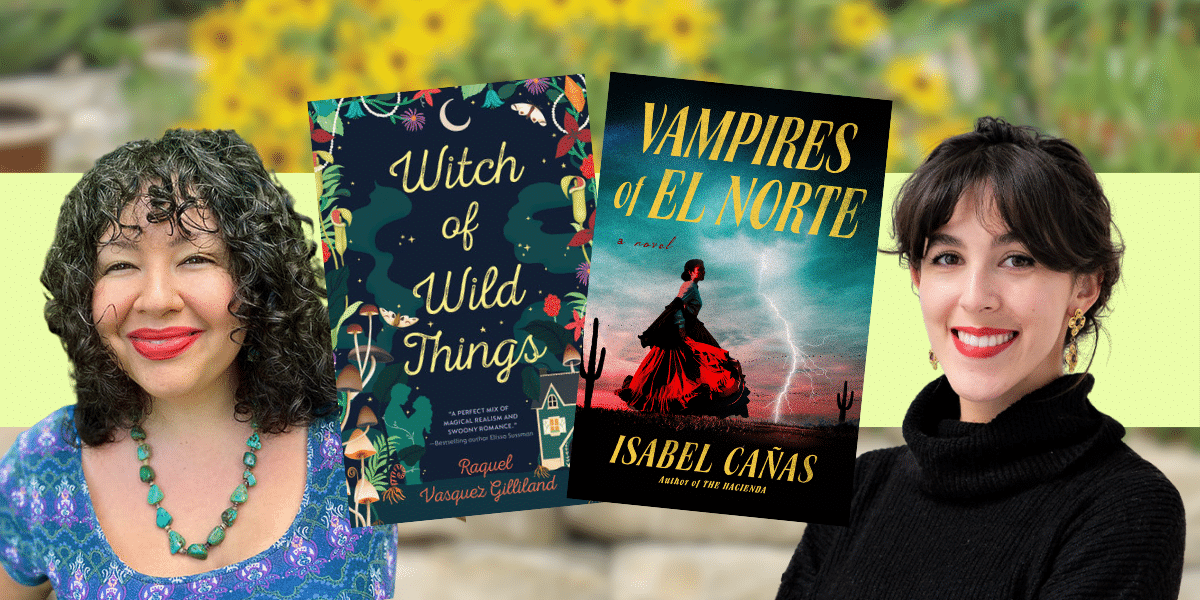
Take Raquel Vasquez Gilliland’s Witch of Wild Things as a prime example. The novel follows Sage Flores, a woman working her way through a very real family curse. Every woman born to the Flores bloodline inherits a specific magical ability, and Sage possesses an uncanny knack for plant magic – she talks to flora and the flora talks back. But Sage is also carrying the crushing grief of losing her youngest sister, Sky in a tragedy that fractured her family and kept her running from her hometown for eight years.
In older iterations of Latinx fiction, Sage’s trauma would become her entire narrative. Gilliland refuses to play that game. While the book honors the reality of grief, it actively rejects the idea that trauma must be the sole defining factor of a Latina’s life. Instead, the story insists on Sage’s right to softness. She returns home, starts cataloging rare heritage plants, and runs straight into Tennessee Reyes, the high school crush who broke her heart fourteen years ago after they fell for each other over anonymous AOL Instant Messenger chats.
What unfolds is a lush, gorgeous second-chance romance where Sage experiences real love. Her love interest is emotionally present, deeply caring, and consistently cooks for her, acting as a safe harbor in a world that constantly demands for her to be strong. The magic of the book is in watching a femme Latinx character slowly realize she does not have to endure her pain alone, proving that we are allowed to have complicated family dynamics and swoon-worthy romance at the same time.
If Gilliland uses romantasy to secure softness, Isabel Cañas uses it to reclaim raw power. Vampires of El Norte places her story in the 1840s, right on the violent edge of the Mexican-American War. We follow Nena, a curandera and the daughter of a wealthy rancher, who is trying to survive Anglo settlers’ land grab. As if colonial displacement were not enough, literal vampires are roaming the countryside, draining vaqueros in the dead of night.
Cañas builds a brutal historical backdrop, but she refuses to make Nena a passive victim. Usually, stories set during this era treat Mexican women as collateral damage. But here, Nena is fiercely capable, wielding her healing skills like a weapon, defying her parents’ suffocating expectations, and riding into battle to protect her home.
Then there is Néstor, her childhood best friend and a working-class vaquero who fled years earlier after mistakenly believing a vampire had killed Nena. When the war forces them back together, the tension is electric. Cañas uses her high-stakes environment to forge a fiercely protective romance that bridges a massive class divide. Néstor respects Nena’s lethal competence, treating her as an equal rather than a damsel in distress. By the time they are slaying monsters side-by-side, their love story functions as an act of defiance against a world trying to erase them. Cañas proves that historical romantasy can give marginalized women agency and the breathless romance history books erase.
This digital-first romantasy boom represents a pure declaration of independence. For too long, the literary world demanded that Latinx authors hand over their scars for approval. Now, by writing themselves into magical realms and demanding the softest, most fiercely protective love stories, these writers are reclaiming our right to dream.
Latinx romantasy is a complete rejection of the trauma plot. We do not have to earn our happily-ever-afters through suffering. We can simply write them into existence, put on a crown, get laid, fall in love, and rule the damn world.
