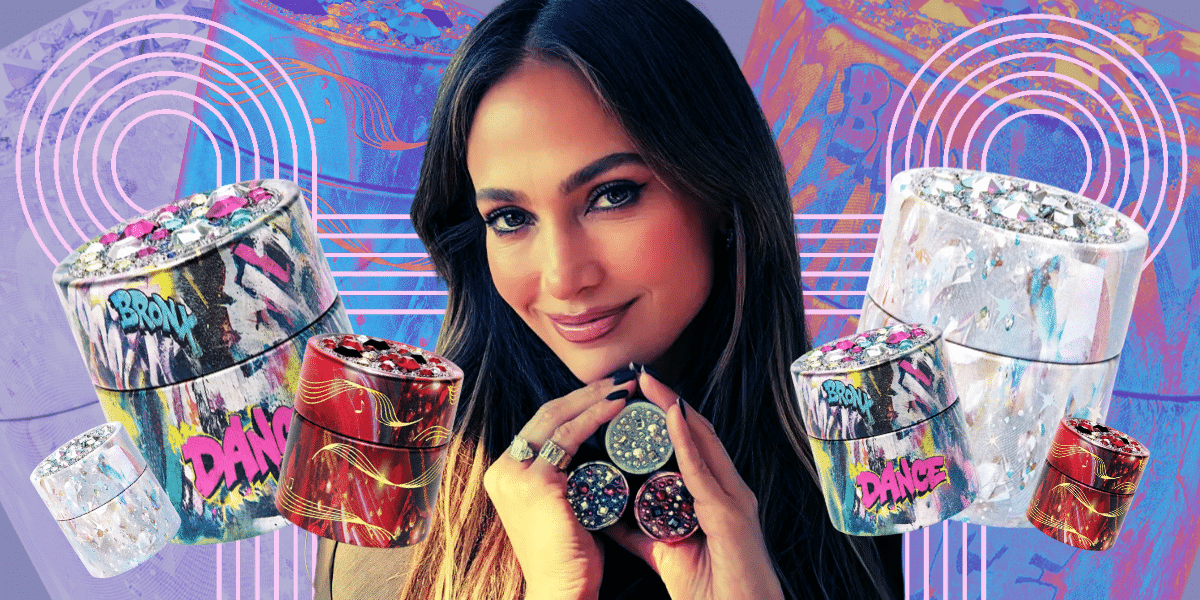
I am begging celebrities to remember that the rest of us have bills. Jennifer Lopez, a woman who has spent decades reminding us she’s still Jenny from the Block, is now selling a limited-edition lip balm covered in Swarovski crystals for $150. Yes, $150. For lip balm. The thing we’ve been buying at CVS since middle school, usually while grabbing a Diet Coke and pretending we didn’t need anything else.
As an elder millennial, I have questions. Does it moisturize my lips or refinance my house? Does it come with a personal appearance by J.Lo? Will it make my student loans disappear?
Because for $150, I expect more than hydration. I expect intervention.
And before someone tells me it’s a luxury collectible, I understand the concept. I have a fine arts degree. I appreciate design, craftsmanship, and the occasional completely unnecessary sparkly object. But understanding why something exists doesn’t mean I have to pretend its price makes sense.
The Celebrity Beauty Industrial Complex
Celebrity beauty brands are hardly new. Rihanna’s Fenty Beauty helped reshape conversations around inclusive shade ranges. Selena Gomez’s Rare Beauty has built an identity around mental health advocacy and accessible prestige cosmetics. These brands demonstrate that celebrity involvement can bring something meaningful to the industry.
And the financial incentives further explain some of this trend. According to Circana, U.S. prestige beauty sales reached $25.5 billion during the first nine months of 2026, up 5% from the same period in 2025. Mass-market beauty sales reached $57.4 billion, increasing 7%. That’s a lot of money moving through an industry that sells both practical necessities and emotional aspirations.
McKinsey’s 2025 State of Beauty report estimated the global beauty industry at $450 billion. Interestingly, its research also found that consumers were becoming more skeptical of hype and increasingly concerned with whether products actually delivered value.
Imagine that. People would rather spend money on a product with a perceived skincare benefit than a decorative container.
Groundbreaking.
The AI of It All
Then there’s the advertising.
JLo Beauty’s Beso Bling promotional video has drawn criticism for visuals described as AI-generated, featuring enormous fruit rolling through city streets alongside the jeweled products. Viewers have questioned the artificial-looking imagery and the apparent absence of traditional creative production.
Now, I’m not inherently opposed to AI. I’m certified in AI ethics and governance, and I’ve spent considerable time researching how these technologies affect creative industries, labor, and public trust. And that’s exactly why this bothers me.
If you’re marketing a $150 luxury product, why does the advertising appear to prioritize synthetic spectacle over the human creativity that luxury brands supposedly celebrate?
Think about the photographers, production designers, animators, editors, and visual artists who could contribute to a campaign like this. AI can be a legitimate creative tool, but using it to replace human creative labor shows a company’s values.
Apparently, there’s room in JLo’s budget for Swarovski crystals but not for the people who make advertising beautiful.
The irony gets better.
In 2024, Lopez publicly discussed unauthorized AI advertisements using her likeness to sell skincare products. Two years later, her own brand is facing criticism over apparently synthetic promotional imagery.
These aren’t identical situations. Unauthorized impersonation is fundamentally different from a brand choosing AI tools for its own campaign. But the contrast highlights how complicated our standards become when technology moves from threatening a celebrity’s image to potentially benefiting their business.
When Did Being a Fan Become a Financial Obligation?
Then there’s the fact that Lopez’s Bronx upbringing is central to her brand. It’s part of what made her success resonate with so many people, particularly Latinas who rarely see themselves represented as global superstars. That representation matters. Her accomplishments matter. But representation doesn’t automatically make every business venture empowering.
We can celebrate a Latina building an entertainment empire while questioning whether the empire’s latest offering is worth our money. Those positions aren’t contradictory. And we should be especially careful about confusing criticism of a wealthy celebrity’s business decisions with an attack on her cultural identity.
I’m not interested in tearing down successful Latinas. I’m interested in asking why we’re expected to financially support every product they attach their names to. Because there is a difference between celebrating someone’s success and being treated as an endlessly renewable revenue stream.
Your Money Deserves Better
Here’s what concerns me most about the celebrity beauty economy: the assumption that emotional attachment can substitute for consumer value. There is nothing inherently wrong with buying luxury cosmetics. If you have $150 to spend on a crystal-covered lip balm by Jennifer Lopez and it brings you joy, enjoy your shiny little treasure.
But consumers deserve transparency about what they’re purchasing, why it costs what it does, and whether the marketing reflects the product’s actual value.
Maybe the backlash suggests we’re finally starting to ask those questions out loud.
I don’t need J.Lo to be relatable. She’s Jennifer Lopez. I know she isn’t standing in the CVS aisle debating whether to buy Carmex or wait until payday. But I would appreciate an industry that stopped treating ordinary consumers as walking wallets with parasocial attachments. Because I work hard for my money, and so do millions of other people.
Jennifer Lopez may still be from some Block in the Bronx, but at $150 for lip balm, I’m reminded how happy I am to be from Jersey.
