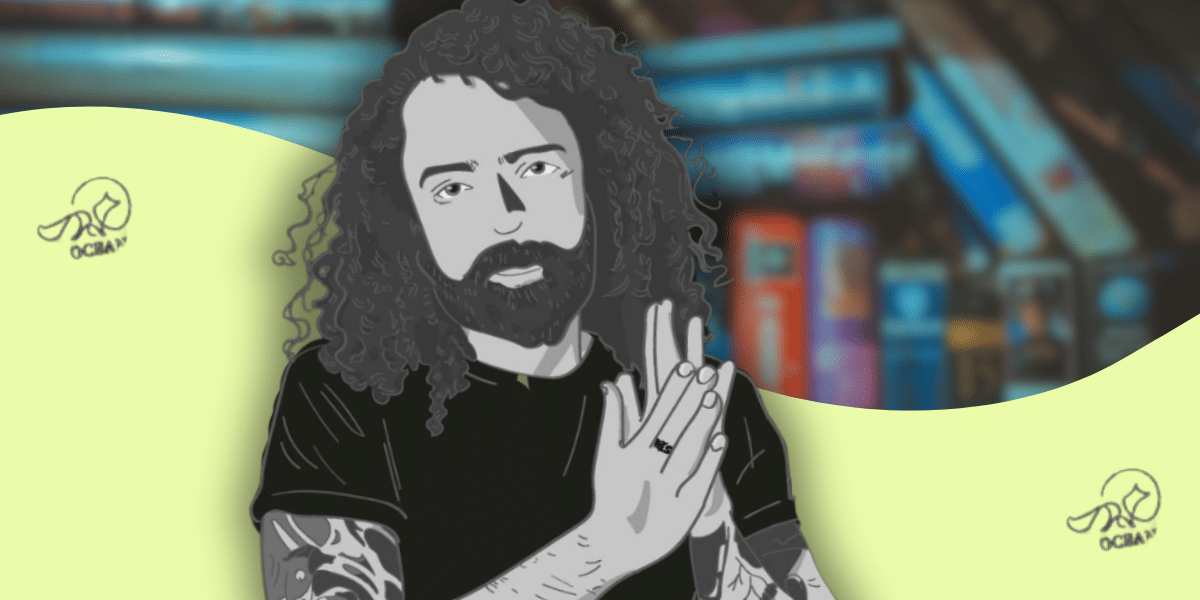
There’s an intimacy in the way Javier Ibarreche talks about movies. Not the lofty detachment of a critic’s column or a festival panel, but something closer to a friend catching you after class, urgency spilling out: you have to see this. His voice doesn’t hover above you – it leans in. Fast, funny, almost breathless, he crams decades of cinema into ninety seconds, and somehow you walk away both satisfied and hungrier.
That is the rupture. For decades, cultural commentary belonged to the credentialed few – critics, editors, academics. Now, platforms like TikTok and YouTube invite anyone to step into the conversation. The gates are down. Ibarreche proves that authority no longer rests in institutions but in the ability to translate cinema into the language of everyday life, in the charisma to hold an audience’s attention as tightly as a film’s opening shot.
His craft lies in compression. In the time it takes to scroll past a meme, he can pinpoint a film’s pulse and tell you why it matters. Herbert Simon, a pioneer in cognitive psychology, observed that “a wealth of information creates a poverty of attention.” The internet has only made that truer. Attention is the scarcest currency, and Ibarreche spends it wisely. By turning complex analysis into sharp fragments, his “micro-criticism” becomes its own form of meaning-making. As Zeynep Tufekci notes, platforms reward immediacy, emotion, clarity, and Javier Ibarreche has made those the tools of his trade.
It is no accident that his rise coincided with the pandemic. In those suspended months, when nights blurred into mornings and isolation pressed hard, media habits shifted. We streamed endlessly, sought comfort in binge-watching, and leaned into parasocial connections for company. Ibarreche wasn’t just tossing out movie tips; he was creating a sense of collective viewing. If we all pressed play on the same film, maybe we weren’t entirely alone.
Audiences don’t look at him the way they do a critic on a newspaper masthead. They look at him like a friend whose taste they trust. Horton and Wohl’s theory of parasocial interaction explains this uncanny intimacy: a one-sided bond that still feels mutual. TikTok amplifies that sensation. With Ibarreche, trust flows not from expertise on a pedestal but from the warmth of someone who insists that Bergman and Barbie can live side by side in our playlists. His community grows not only from what he knows but from how he makes people feel.
What emerges is a new kind of cinephilia. One rooted in Latin America. For too long, theories of cinephilia have been written from Europe or the U.S., wrapped in exclusivity and coded jargon. Ibarreche reframes it. Cinephilia here is playful, irreverent, democratic. A Marvel blockbuster and a Mexican indie can coexist in the same feed. An arthouse film becomes less intimidating without losing its rigor.
Communication scholars call tastemakers “cultural intermediaries.” Today, influencers like Ibarreche embody that role. He is not merely a comedian or actor or TikToker. He’s a curator of trust, shaping what millions in the region watch and how they interpret it. That is what makes his presence radical. His videos carve space for Spanish-speaking audiences in a digital landscape still dominated by English. He renders the industry legible without diluting it, turning even the most forbidding films into something you might queue up on a Tuesday night with friends.
The implications extend beyond his career. If Ibarreche can transform passion into a classroom without walls, reaching millions, the path is open for other Latin creators. Demystifying the industry expands access and cultivates influence. Online, influence can become power, the power to shift narratives about what Latinos watch, to slip local films into the same conversation as global blockbusters, and to claim cinephilia on our own terms.
In the end, what makes his work unforgettable isn’t only his encyclopedic love of cinema. It’s the way that love insists on being shared. In his quickfire recommendations, you hear the critic and the comedian, the scholar and the fan. You hear the reminder that films are not meant to be hoarded but lived together, even if that togetherness now happens through the glow of a phone screen.
During those endless pandemic nights, many of us pressed play on what he urged us to watch. That was his greatest gift: not just titles or streaming links, but a way of spending our lives with attention, curiosity, and joy for the stories that shape us.
And so the story of Javier Ibarreche is not simply about TikTok. It’s about what happens when Latin America begins to narrate its own cinephilia, fast, funny, unfiltered – and when, for once, the world pauses long enough to listen.
