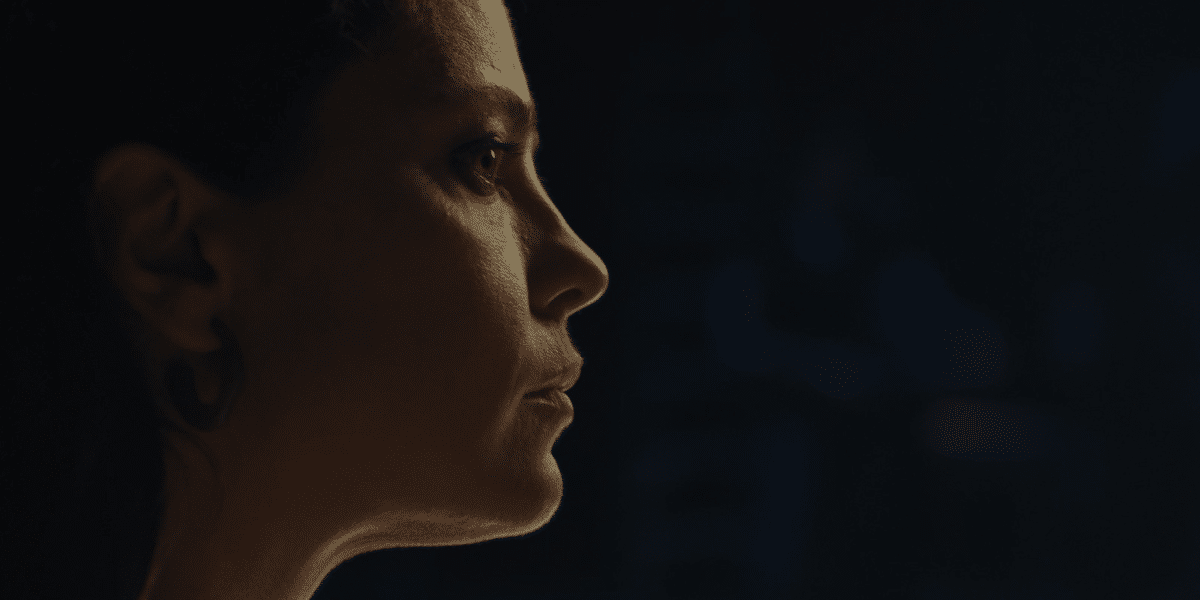
Belén (2025) is Argentina’s International Feature Film entry for the upcoming Oscars. The story is a true one, and it follows Belén, a pseudonym for a real woman who is falsely imprisoned for having an abortion, when she really had a miscarriage. Belén is held for over two years in Tucumán, Argentina, before being released in 2016. By telling her story, the film shows us a society that’s happy to predetermine a woman’s guilt when it comes to questions around abortion.
Unaware she’s pregnant, Belén goes to the hospital presenting with severe abdominal pain. The doctor determines she’s having a miscarriage at 22 weeks, which is considered the second trimester. It’s important to know that it’s entirely possible to be pregnant for this long and not know it – there’s even a term for it – a cryptic pregnancy.
Contextualizing its story, Belén covers Argentina’s sociopolitical environment, harassment, and a movement for justice. For example, in the film, when Soledad Deza (Belén’s lawyer) goes on TV to spread awareness about her wrongful imprisonment, the media gets busy debating the ethics of abortion – despite Deza noting that Belén didn’t have one. The actual case and woman at its center get lost in the cultural debate, despite her real and pressing needs.
According to Amnesty International, in Argentina at the time, abortion was allowed “when the life or health of a pregnant woman is at risk or when the pregnancy is the result of rape” and “miscarriages or other complications during pregnancy.” Despite a doctor’s diagnosis, the hospital found a fetus and attributed its death to Belén with no evidence, punishing her for it. Though this may seem like a one-off, faraway accident that happened in Latin America, it’s not. Belén is both a reminder and a warning: when abortion is criminalized, we risk harming anyone with a uterus, and it’s already happening.
In the U.S., Selena Maria Chandler-Scott, Brittany Watts, and Amari Marsh all faced criminal charges after miscarriages between 2023 and 2025. According to Pregnancy Justice, between 2022 and 2023 alone, there were over “200 cases in the U.S. in which a pregnant person faced criminal charges for conduct associated with pregnancy, pregnancy loss, or birth.” It’s not only the risk of prosecution that makes abortion bans harmful but also how they influence who gives and gets urgent care.
In Texas, where abortion is banned after six weeks, Josseli Barnica died of a miscarriage in 2021 after being denied medical attention. In her case, the fetus still had a heartbeat, even though the miscarriage was declared inevitable. Though the law claims doctors can intervene in the case of a “medical emergency,” it’s not clear what that means. Part of the issue is that the tools for treating miscarriages and abortions are “identical,” leading healthcare workers to hesitate or fear prosecution in cases where they need to treat miscarriages. Fast forward to 2025, and the Trump administration has now rescinded guidance “requiring hospitals to provide abortions to women in medical emergencies regardless of various state bans on the procedure.”
There are many reasons why someone may need an abortion. Clinically, “placental abruption, bleeding from placenta previa, preeclampsia or eclampsia, and cardiac or renal conditions” may require an abortion or else risk death of the pregnant person.
However, when we begin restricting abortions – whether through absolute bans or with exceptions– we put lives at risk. Belén’s case happened in 2014, and though abortion right in Argentina and the U.S. advanced for a while after that, they are now being rapidly peeled away. Somos Belén, a book published in 2019, also covers Belén’s story. In Spanish, the back cover reads: “How many other Beléns are there in the world? How many women have died because they were afraid to go to a hospital for an abortion, spontaneous or induced, terrified of being accused of murder?”
The reality is we might require medical care due to a miscarriage or abortion one day, and restrictive laws are a violation of human rights. The legacy of Belén is important, not just because it’s a critical moment for human rights, but also because her story is repeating across the globe. Available to stream now on Prime Video, Belén is introducing audiences to the importance of reproductive rights, calling them to urgent action. Fight for our rights by educating yourself about abortion, signing up for action updates, or donating to an abortion fund.
