I love a good B-movie. I love the audacity of them. The commitment. The “we are doing this and we are not apologizing” energy. Thy Will Be Done arrives at that exact frequency – loud, moody, scored within an inch of its life – and bless it, it never once tries to be subtle.
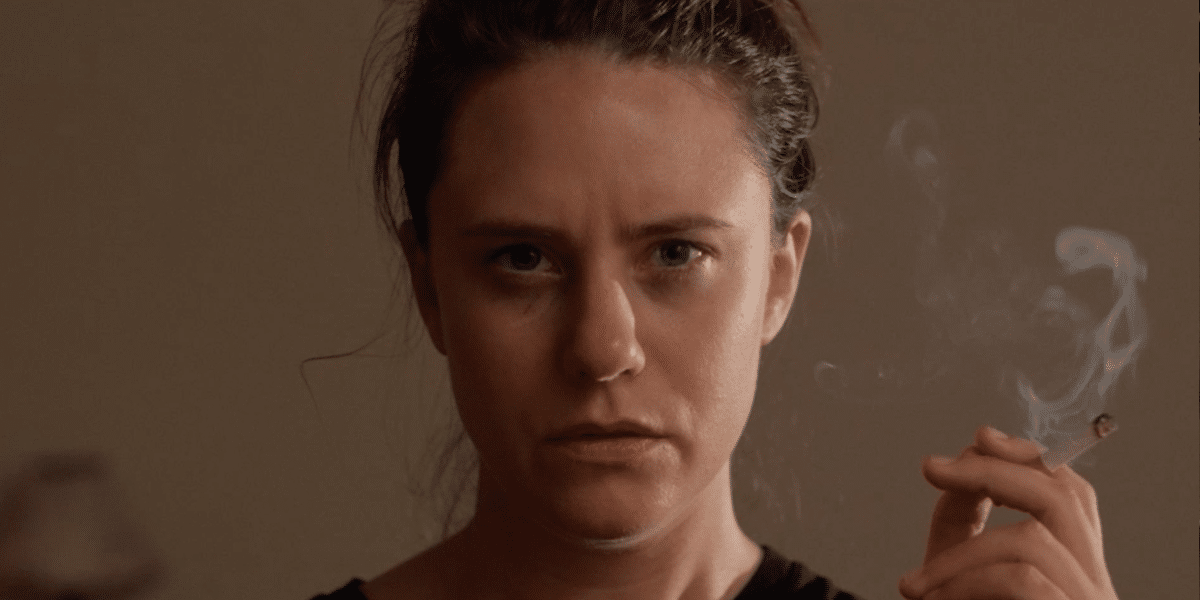
Directed by Jazz Securo and written by Michael Ferree, the film follows Detective Stefani Bennett, a salt-of-the-earth inner-city cop navigating a rash of mysterious deaths while simultaneously discovering that she is clairvoyant. Because of course she is. She seeks guidance from Father Arland Anthony and her late father’s police partner, who is a long-time family friend. If you’re thinking, “Ah yes, a priest, a dead father, and a woman whose instincts no one believes,” you’re already ahead of the screenplay.
And yet, the formula works.
Courtney Gains, Doug Bradley, and Kurt Angle populate this spiritually murky landscape with the kind of seriousness that only makes a B-movie better. No one winks at the camera. No one says, “We know this is wild.” They play it straight. That’s the magic trick.
Before we even get to the murders, though, we have to talk about the music – the score is essentially another character. I genuinely spent the first few minutes wondering if I had accidentally turned on the trailer instead of the film. The soundtrack announces itself with authority. It does not gently accompany scenes. It baptizes them in volume. It is mood-forward cinema.
But here’s the thing. The soundtrack slaps. It’s overwhelming, yes, but it’s also kind of dope. It’s as if the film is asking, “Can you handle this much feeling?” And honestly, sometimes I can.
Detective Stefani Bennett is operating on two frequencies – homicide detective and psychic daughter of unresolved paternal grief. In the B-movie universe, unresolved paternal trauma is practically a job qualification. And to the film’s credit, it leans into that rather than away from it. Stefani isn’t guided by procedure so much as gut instinct and inherited spiritual anxiety.
Every time she says something intuitive and the men in the room dismiss her, there’s this feeling of a collective eye roll. We have been here before, seen a spiritual gift framed as hysteria. But Thy Will Be Done makes it entertaining enough that you don’t mind the familiarity.
And then there’s Father Arland Anthony.
The priest is creepy from the first line. Not ambiguous creepy. Not slow-burn unsettling. Which, frankly, makes the plot sort of brilliant. Thy Will Be Done revels in the tension between organized religion and moral absolutism.
There’s a murder scene that, for a brief second, feels like it wandered in from Wild Things – glossy, slightly excessive, maybe intentionally camp. I laughed. I’m not sure if that was the point, but B-movies thrive in that delicious space between serious and absurd. You are never entirely certain if the film is in on its own joke. That uncertainty is part of the pleasure.
Underneath the genre trappings, though, there is something quietly interesting happening. The film positions Stefani’s clairvoyance not as a spectacle, but as a burden. The murders become almost secondary to Stefani’s real, internal investigation, which asks how do you trust your intuition in a world that consistently tells you it is irrational?
Is this film polished prestige cinema? Absolutely not. It is messy. It is loud. It occasionally feels like it’s one dramatic cue away from imploding. But there is something deeply satisfying about watching a movie that knows exactly what lane it’s in and refuses to apologize for driving fast in it.
Thy Will Be Done is not here to reinvent the thriller. It is here to give you psychic flashes, paternal angst, ecclesiastical tension, and a soundtrack that could bench-press your skepticism. And honestly, sometimes that is exactly what a Friday night calls for.
In an era obsessed with prestige television and algorithm-approved seriousness, there is something refreshing about a film that leans into pulp. It’s campy without being lazy. Earnest without being naïve. A little unhinged. A little too loud. Just self-aware enough to keep you guessing.
If cinema is confession, then this one is whispered through a wooden screen, half-shadowed and slightly dramatic. And if you’re willing to meet it at its frequency, you might just enjoy the sermon.
