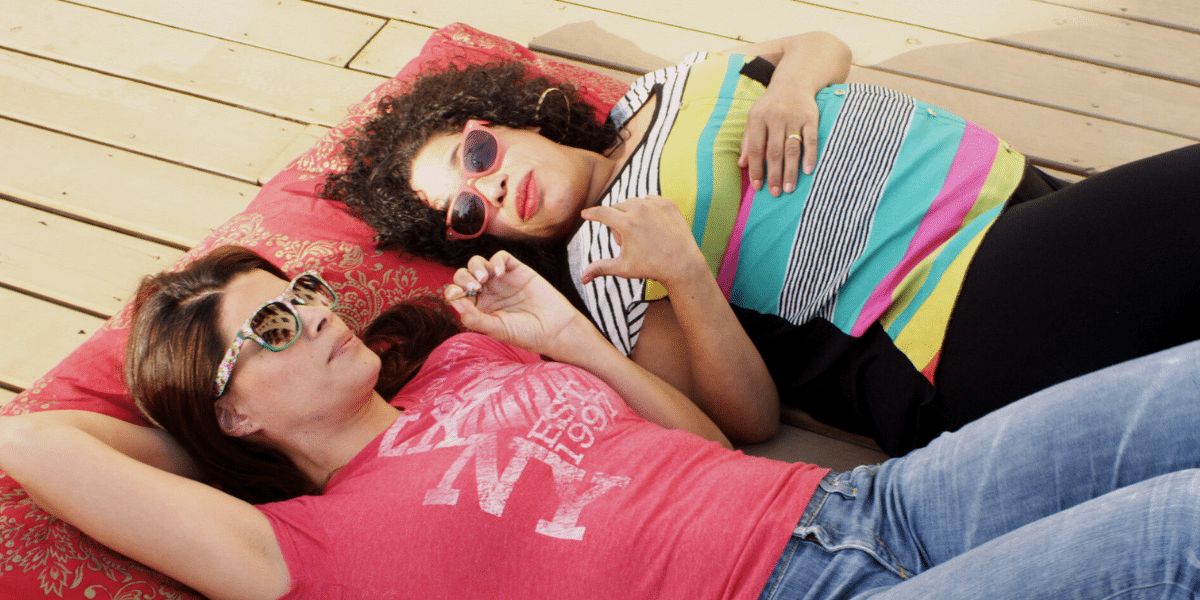
In 2013, I wrote and directed a short film called Stereotypically Me, about a Latina writer who must kill her stereotypical muse to make it in Hollywood. But killing the stereotype doesn’t free her, it just clears the stage. New muses arrive immediately: genre hybrids, cultural archetypes, versions of Latina, all of them auditioning for the same role as her loyal muse. Thirteen years later, I understand more clearly the frustration that inspired the film. The killing of authenticity is never one act. It is slow, polite, and administrative. Nobody hands you a knife. They hand you notes.
The notes are never “be less Latina.” Saying that out loud would cost someone a job. Instead, the system launders itself through the language of craft, of marketability, of universality – and places the burden on you. Can grandma speak English? Would this story travel better outside the Bronx? Can we make the Santera more relatable? Each note is reasonable on its own. Each one costs you un chin of yourself. And because you want to work, because you have rent and a kid, and a dream that has waited long enough, you take the note. You modify the sofrito to make it more palatable. You tell yourself, it is a business after all.
Yet there are costs and here’s the first – eventually you stop needing the notes because the executive moves into your head rent free. You catch yourself cutting the achos and dimelos, and before anyone asks, renaming the tía, relocating the story to a neutral nowhere. Changing the title to something more mainstream.
You become your own translator, then your own censor, then a writer you no longer recognize. The Latina muse in my film died in one scene. The real muse dies in revisions, draft by draft, until one day you sit down to write and you cannot hear her at all. That is the price they ask of you for being authentically Latina – your voice.
You pay the second fee with the work. A story made for everyone belongs to no one. Strip the culture of its roots, and you have a story any room could have written – you’re no longer needed. We were told specificity was a liability. Specificity is the entire product.
The third cost is the one that causes concern for our future. Every white-washed script is a kid in El Barrio or East LA who grows up fluent in everyone else’s stories and a stranger to their own. It’s a crowdsourced identity, funded by everyone who thinks they know us better than we do. Our parents and grandparents lived lives of migration, loss, and survival – yet, we don’t tell their stories enough. Is it for fear of making some people uncomfortable? Assimilation does not just cost the writer. It costs the history of our voices and experiences.
I revived Stereotypically Me this year, and watching it now, the satire plays differently. I made a film warning against killing the muse, then spent years negotiating with her.
So this is what I know in 2026, all these years since premiering Stereotypically Me: The industry sometimes asks us to fade gradually, agreeably, one note at a time, in the name of “development.” The only real counter is becoming unapologetically Latina: Don’t remove the culture and don’t overthink it. Restore the accent over the correct inflection. Move the story home, to the place where it was born. The muse is just waiting for you to trust what your ancestors already knew – a life fully lived in your own language is not a liability, it is the gift you were meant to share.
