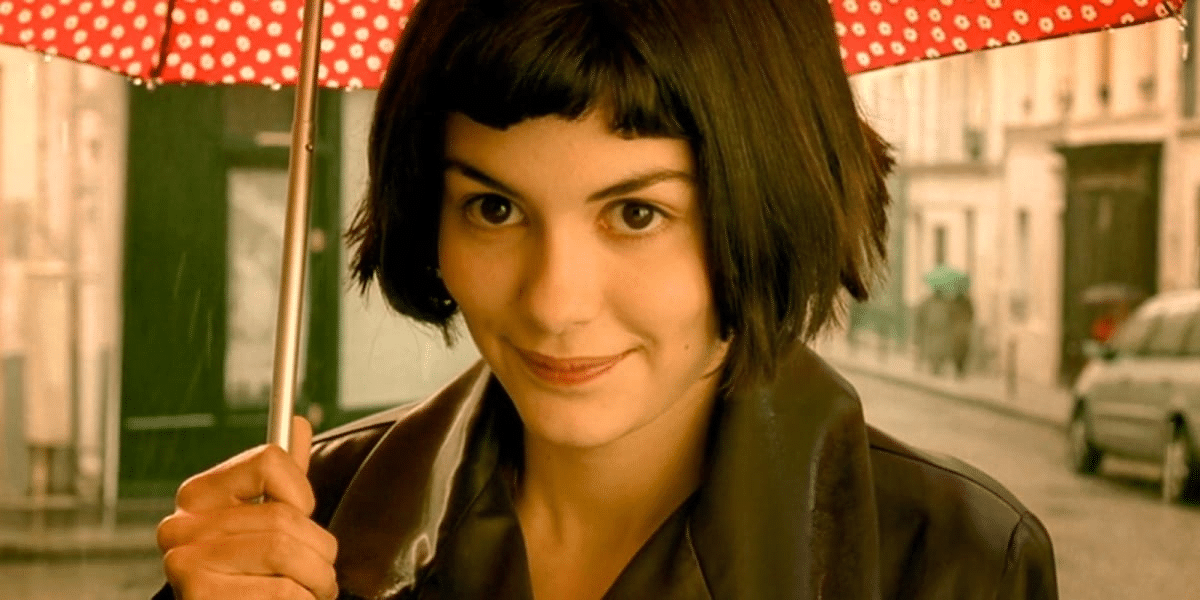
Naïve film narratives annoy me. I won’t lie, though, I was excited about catching Amélie on the big Boricua screen for its anniversary. But all that whimsy of whiteness hits differently this time around. The feel-good vibes of a quirky young Parisian waitress (Audrey Tautou) performing small, anonymous acts of kindness had me rolling my eyes. To be clear, I’m not diminishing the impact of those little gestures of joy, it’s just I caught myself thinking the main character clearly had a lot of free time on her hands – and not very many real-life problems.
With 25 years since I first saw the French flick in New York City, I’m quicker to spot sexist overtones and harmful gender stereotypes.
Like the one surrounding Madeleine (Yolande Moreau), the lonely landlady of the building where Amélie lives. Despite her cheating husband running away to Panamá with his secretary, the grieving woman keeps a large framed picture of the man in the living room. Desperately clinging to the past, she shares with Amélie stacks of love letters he wrote during their courtship. From these, Amélie schemes to console Madeleine by crafting a fake letter from her deceased husband, whose body was suddenly “recovered” in South America. I found both Madeleine’s eternal mourning and Amélie’s manipulative meddling exasperating.
Then there’s the vibrant color palette – and its obvious lack.
The film is filled with bright, highly saturated hues. Director Jean Pierre Jeunet and cinematographer Bruno Delbonnel use dominant warm reds, lush greens, and golden yellows to create a nostalgic, magical version of the City of Lights. Scarlet tones symbolize Amélie’s passion for helping others – it’s ubiquitous in her apartment and wardrobe. Meanwhile, green represents hope and healing, mostly from her emotionally starved childhood. The various amber shades conjure warmth and liveliness, enhancing the whimsical storyline’s imaginative nature.
With all of this obvious eye-capturing stimuli, there’s one huge gap in the project’s palette choice. Aside from the simple-minded Lucien (played by French-Moroccan actor Jamel Debbouze) and the photo booth guy (Ticky Holgado), everyone I noticed on screen is white. Having spent a lot of time in this famed European city – including at the time when the film took place – I’ve always known Paris as a multicultural urban beauty. I was romantically involved with a French-Algerian man and that certainly played a role in the folks I hung out, but even so, when I reflect on my time there – including in the arrondissement that serves as the film’s backdrop – I see streets and shops full of beautifully melanated faces.
Apparently, Jeunet preferred his white-washed, “fairy tale” version to a more accurately inclusive one, immigrants and all. In his nostalgic imagination, there is no room for a more flavorful city. Well, as we say en français, tant pis pour lui. He missed out on an opportunity to draw more of us, precious people of color, to the film.
As for the tender rendezvous scene where Amélie and Nino (Mathieu Kassovitz) finally meet, I’ll admit, it made me smile. Still, I keep thinking of us fierce Latina women and how none of us would wait around for destiny to make magic like that. Many of us are active participants in our romantic lives. No games, no nonsense, no play pretend cuento de hadas.
Twenty-five years is a lifetime, and that’s how long it’s been since this film came out.
In that time, I’ve experienced enough to see how the whimsy of whiteness reinforces structural inequalities. A white woman behaving or dressing like Amélie is just eccentric, a “magic pixie dream girl,” whereas BIWOC doing so are disorganized, incompetent, or even dangerous. That’s why we learn to navigate spaces strategically – for our safety and survival. And that is something all of the Amélies of the world will never fully grasp.
